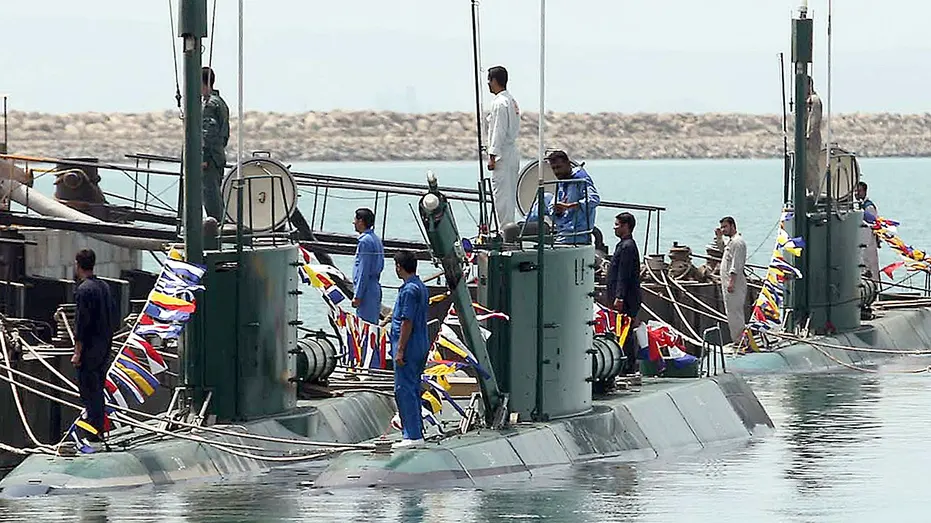
SouthernWorldwide.com – Iran has announced the deployment of its small submarines to the Strait of Hormuz, positioning them as an “invisible guardian” amid ongoing tensions and previously rejected peace proposals between Tehran and the U.S.
This announcement comes as analysts offer a nuanced perspective on the strategic impact of these Ghadir-class mini-submarines. While acknowledging their potential to pose a threat to U.S. naval forces, experts point to limitations in range, firepower, and endurance that would likely blunt any significant strategic advantage.
The submarine deployment was notably highlighted by Bloomberg and initially reported by the semi-official Tasnim News Agency. Rear Admiral Shahram Irani, the commander of Iran’s navy, referred to these light submarines as the “dolphins of the Persian Gulf” in statements to Iranian state media.
This move by Iran also coincides with its efforts to assert greater control over the Strait of Hormuz, with Tehran now defining the zone of its influence as considerably larger, according to Reuters reports.
A retired U.S. Navy submarine warfare officer, Thomas Shugart, elaborated on the inherent operational constraints faced by these small diesel-electric submarines.
Shugart explained that the use of diesel engines for snorkeling and battery recharging could generate detectable sounds. Furthermore, the snorkel mast, when extended above the water, presents a visible target for radar detection by patrol aircraft or helicopters.
These submarines are specifically designed for shallow-water environments like the Strait of Hormuz. They are capable of operating quietly for limited durations using battery power.
However, Shugart noted the absence of an air-independent propulsion (AIP) system, a feature common in more modern diesel-electric submarines. This means they will eventually need to surface to snorkel and recharge, making them more susceptible to detection and potential destruction.
Read more : Musk's China Trip Coincided with OpenAI Trial, Judge's Warning Issued
The Ghadir-class submarines are reportedly operated exclusively by the IRGC Navy and are all assigned to the Southern Fleet.
Shugart cautioned that any remaining Ghadir submarines, if deployed, might be capable of laying mines and posing a threat to merchant shipping. However, he expressed skepticism about their ability to present a serious challenge to U.S. Navy warships, and certainly not to U.S. submarines.
He concluded with a personal observation, stating he would not feel comfortable operating on such a vessel in the current geopolitical climate.
In a separate but related development, the U.S. Navy confirmed on May 10 that a U.S. Navy Ohio-class nuclear-armed submarine had arrived in Gibraltar. This port visit serves to underscore the U.S.’s capabilities, flexibility, and its unwavering commitment to its NATO allies, according to a statement from U.S. Sixth Fleet Public Affairs.
The statement further emphasized that Ohio-class ballistic missile submarines are undetectable launch platforms for submarine-launched ballistic missiles, representing the most survivable component of the U.S. nuclear triad.
Meanwhile, Shugart’s assessments come at a time when the Strait of Hormuz remains effectively a choke point, with commercial tanker traffic significantly disrupted. This situation is exacerbated by ongoing military activities and the continued U.S. blockade of Iranian ports.
Reports indicate that the United Arab Emirates and South Korea have reported new strikes on stranded vessels. Concurrently, the IRGC has reportedly increased its activity with fast-attack craft.
President Donald Trump has previously asserted that Iran’s navy has been “completely obliterated.”