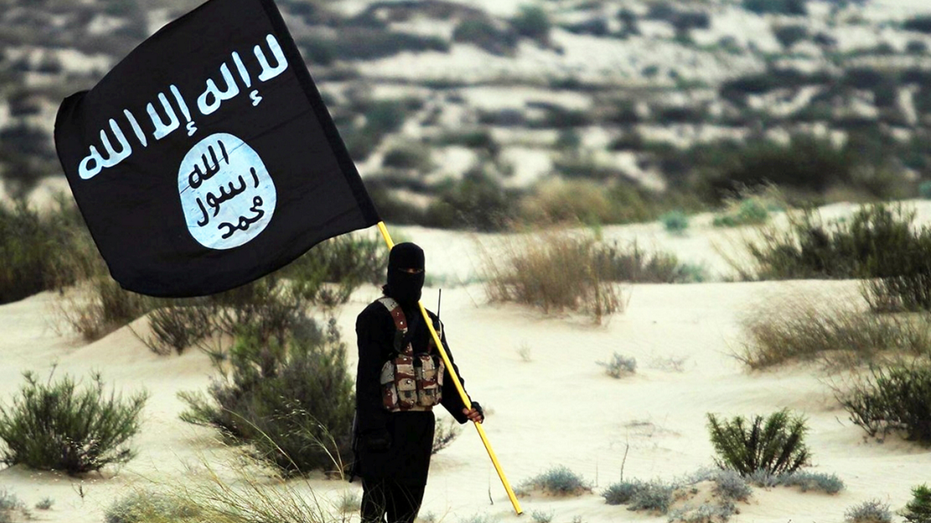
SouthernWorldwide.com – A targeted U.S. strike on May 16 successfully eliminated Abu-Bilal al-Minuki, identified as ISIS’s shadow commander in West Africa. This operation, described by an extremism analyst as leveraging one of the most difficult forms of intelligence to detect, managed to penetrate defenses that had protected al-Minuki for years through extensive local networks.
While the killing represents a significant blow to ISIS’s global network and disrupted operations in northeastern Nigeria, the group’s overall leader, Abu Hafs al-Hashimi al-Qurashi, remains at large. This development underscores the growing threat of ISIS in Africa, which is increasingly becoming the epicenter of the movement’s global activities.
The analyst noted that al-Minuki would have avoided modern communication tools like smartphones. Instead, he relied on courier-based communication and constant movement between small, dispersed camps. This clandestine operational style made him exceptionally difficult to track.
TRUMP TARGETS ISIS IN NIGERIA AMID WARNINGS SAHEL REGION IS BECOMING ‘EPICENTER OF TERRORISM’
The reference made by President Donald Trump to “sources who kept us informed” strongly suggests the use of human intelligence, or HUMINT. This form of intelligence is notoriously challenging for targets to detect or counter, making it a highly effective tool for operations like the one that led to al-Minuki’s demise.
The precision strike demonstrated the capability to penetrate established defenses that had been in place for an extended period. This indicates a significant intelligence breakthrough.
Mohammed, the analyst, elaborated that al-Minuki would have relied on deep local networks. These are the same networks that the Nigerian military has struggled to penetrate for over a decade, highlighting the persistent challenges in combating terrorism in the region.
MS NOW GUEST SUGGESTS TRUMP STRIKE IN NIGERIA WAS RACIALLY MOTIVATED VIOLENCE
Read more : Frequent Museum Visits Linked to Slower Cellular Aging
“His operational security would have been severe,” Mohammed stated. He further explained that despite meticulous operational security, two factors often lead to the compromise of even careful targets: the passage of time which can reveal patterns, and the inherent difficulty in countering human intelligence sources.
“Despite severe operational security, al-Minuki was ultimately compromised through persistent human intelligence,” Mohammed observed. He added that al-Minuki likely knew he was a marked individual, indicating a sustained effort to track him.
ISIS FIGHTERS STILL AT LARGE AFTER SYRIAN PRISON BREAK, CONTRIBUTING TO VOLATILE SECURITY SITUATION
The Nigerian army characterized the strike as a “meticulously planned and highly complex precision air-land operation.” This operation took place on Saturday, between midnight and 4 a.m., in Metele, a location within Borno State in northeastern Nigeria.
U.S. Africa Command, or AFRICOM, confirmed the strike’s location in northeastern Nigeria. Communications from the Nigerian army specifically pointed to the Metele region as the site of the operation.
Despite this tactical success, the current ISIS “caliph,” or overall leader, Abu Hafs al-Hashimi al-Qurashi, remains at large according to available reports.
Al-Qurashi reportedly assumed leadership following the death of his predecessor in Syria. This succession highlights the continuity of ISIS leadership, even as key figures are eliminated.
“He is deliberately faceless, with analysts describing this line of leaders as the ‘caliphs of the shadows,’” Mohammed explained. He noted that al-Qurashi took over leadership after Turkish authorities killed his predecessor in 2023.
While the exact whereabouts of al-Qurashi are not publicly known, reports suggest he traveled from Syria or Iraq, possibly through Yemen, to Somalia’s semi-autonomous Puntland region. This movement indicates a strategic relocation of leadership.
“This is where the financial hub also sits, meaning the entire center of gravity of the organization — leadership, finance, operational direction — has been quietly relocating to Africa for years,” Mohammed stated. This observation points to a long-term strategic shift by ISIS towards Africa.
RUSSIAN MERCENARIES REPLACE WESTERN FORCES AS ISIS SURGES ACROSS AFRICA’S SAHEL REGION
Data compiled by the Armed Conflict Location & Event Data Project corroborates this regional shift. The data indicates that more than two-thirds of all global Islamic State activity now occurs in Africa.
“Africa has transitioned from a peripheral theater to the operational and financial center of global ISIS activity,” Mohammed elaborated. He emphasized that Africa is no longer a secondary focus but the primary theater for ISIS operations. The funding for these operations is largely local and extractive, derived from activities like taxation, ransom, and smuggling, which contributes to the resilience of these networks.
“Al-Minuki, for example, rose through ISWAP and operated across the Lake Chad Basin and into the wider Sahel,” he further noted. This highlights the internal progression and operational reach of key figures within ISIS.
“Still, staking out al-Minuki is the most significant blow to ISIS’ global leadership architecture since the al-Baghdadi raid in 2019, executed in the theater that has quietly become the group’s beating heart,” Mohammed concluded. He stressed that this strike was not an isolated event but part of a broader, ongoing effort.