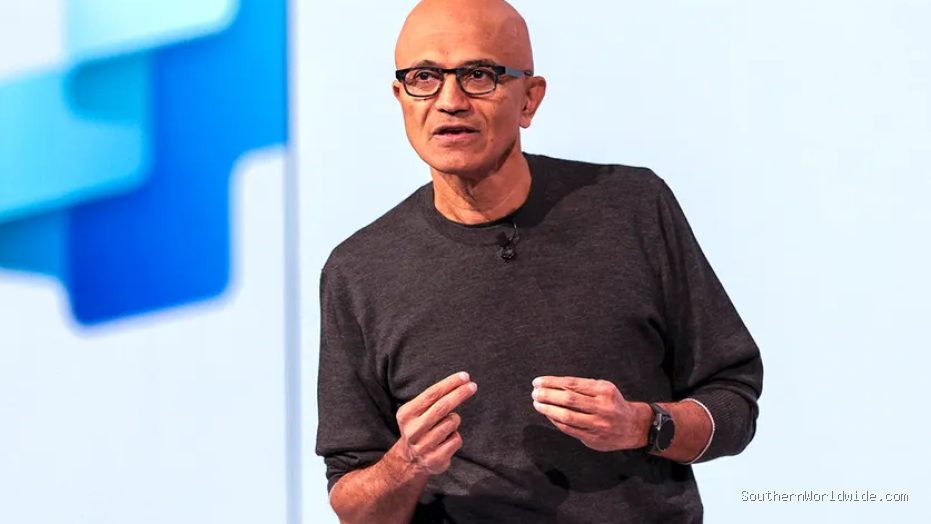
SouthernWorldwide.com – In a significant development for the tech industry, Microsoft has announced substantial job cuts, signaling a strategic shift towards artificial intelligence investments. The tech giant is set to eliminate approximately 4,800 positions, which represents about 2.1% of its global workforce. This move is part of a broader restructuring aimed at prioritizing AI advancements and other long-term business objectives.
The company has emphasized that these layoffs are not a direct replacement of jobs by AI but rather a realignment of resources to focus on future growth areas. This decision comes at a time when the artificial intelligence race is intensifying across the tech landscape.
Adding to the momentum in AI development, OpenAI has unveiled a new enterprise offering named ChatGPT Work. This innovative solution is designed to leverage the capabilities of its popular chatbot to automate and manage various workplace tasks. It aims to streamline operations across a wide range of applications and files, enhancing productivity for businesses.
The integration of AI into everyday work is becoming increasingly prevalent, with companies seeking ways to optimize their processes. ChatGPT Work represents a significant step in making advanced AI tools more accessible and practical for corporate environments.
Meanwhile, in a testament to the ongoing innovation in technology, Google, in collaboration with researchers from the University of California San Diego, is exploring a novel way to repurpose old smartphones. These outdated devices, often discarded due to battery degradation or outdated features, are being reimagined as small-scale cloud servers.
The idea is to harness the remaining processing power of these old phones, turning them into a distributed computing network. This initiative highlights a creative approach to resource utilization and sustainability within the tech sector, finding new life for technology that might otherwise end up as e-waste.
The impact of technology is also being felt in the world of sports, particularly in the realm of professional football. Lenovo’s AI-powered solutions are reportedly having a direct influence on the FIFA World Cup experience. While specific details of the match between Colombia and Portugal are highlighted, the underlying theme is how AI is enhancing various aspects of sports, from performance analysis to fan engagement.
The article mentions a thrilling match where Colombia secured a late victory against Portugal. While this specific game outcome is a narrative element, the broader point is the increasing integration of advanced technology in sports broadcasting and analysis, potentially influencing how games are played and perceived.
Beyond corporate restructuring and technological innovation, the food industry is also embracing AI. Taco Bell is significantly expanding its use of artificial intelligence at its drive-thrus. The fast-food chain has announced a new strategic partnership with an AI voice provider, aiming to enhance the customer experience through automated ordering systems.
This move by Taco Bell underscores a growing trend of AI adoption in the service industry, focusing on efficiency and customer convenience. The implementation of AI voice technology at drive-thrus is expected to speed up order taking and reduce errors.
The artificial intelligence boom is not only reshaping industries but also influencing the real estate market. In the San Francisco Bay Area, a fierce bidding war is underway for luxury homes, with some properties selling for more than $1 million above their asking price. This surge in demand is partly attributed to the growing presence of AI companies and the influx of talent in the region.
The concentration of AI-related businesses and the associated economic activity are creating a highly competitive market for high-end properties. This trend reflects the significant economic impact of the AI sector on local economies and housing markets.
In a different regulatory development, the state of Oregon is implementing a new rule that will significantly impact data centers and other large energy consumers. Starting on Wednesday, electricity bills for these entities will increase. The stated purpose of this measure is to allow for lower electricity rates for other customers, aiming for a more equitable distribution of energy costs.
This regulatory adjustment highlights the challenges of balancing the energy demands of burgeoning tech infrastructure with the needs of residential and smaller commercial consumers. The rising power consumption of data centers, often driven by AI and cloud computing, necessitates such policy considerations.
Security in the digital realm is also a critical concern, and Apple is taking proactive steps to address it. The company has released a security update that is being presented as more crucial than typical software patches. This emphasis suggests that the update addresses significant vulnerabilities, urging users to prioritize its installation to protect against fast-moving threats from hackers.
In an era where cyber threats are constantly evolving, timely security updates are paramount. Apple’s heightened communication around this update underscores the importance of user vigilance and prompt action to maintain device security.
Looking towards the future of the workforce, new data suggests a correlation between AI adoption and job security. American workers who do not engage with artificial intelligence in their roles may face a higher likelihood of layoffs compared to those who regularly utilize AI tools.
This insight points to a potential shift in the job market, where proficiency in AI technologies could become a key factor in career longevity and adaptability. Companies are increasingly seeking employees who can leverage AI to enhance their performance and contribute to innovation.
The burgeoning demand for memory storage, largely driven by the artificial intelligence revolution, is prompting significant investment in the semiconductor industry. Micron’s CEO, Sanjay Mehrotra, has detailed the company’s substantial $250 billion investment in the U.S. This move is a direct response to the unprecedented demand for memory solutions fueled by AI advancements.
The chipmaking giant’s investment underscores the critical role of memory and storage in supporting the complex computations required for AI development and deployment. This strategic investment aims to bolster domestic chip production and meet the escalating needs of the AI era.