SouthernWorldwide.com – NASA announced the four astronauts who will crew the upcoming Artemis III mission on Tuesday. The announcement, made at the Johnson Space Center in Houston, marks the beginning of over a year of mission-specific training for the crew.
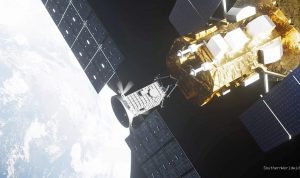
The Artemis III mission is slated to launch into Earth orbit next year. Its primary objective will be to test rendezvous and docking procedures with the lunar landers being developed by SpaceX and Blue Origin. This is a crucial step before NASA can successfully land astronauts on the moon again in 2028.
Artemis III Mission Objectives
The Artemis III crew will be tasked with mastering the same operational procedures that will be conducted in lunar orbit during a subsequent mission. This preparation is essential for America’s first moon landing in nearly 55 years.
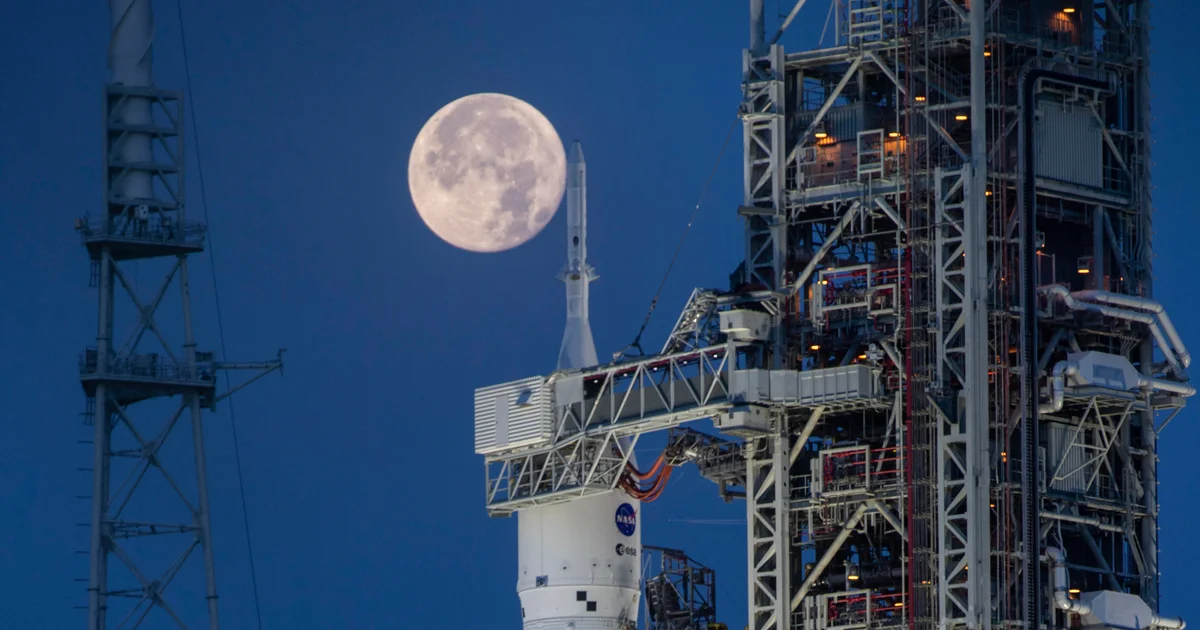
The mission will utilize the Orion capsule, launched atop NASA’s Space Launch System rocket. The flight profile is designed to mirror NASA’s Apollo 9 mission in March 1969. During Apollo 9, three astronauts tested the lunar excursion module in Earth orbit, following Apollo 8’s successful lunar orbit mission.
Similarly, the Apollo 10 mission tested the lunar module in orbit around the moon before Apollo 11 achieved the historic first moon landing in the Sea of Tranquility in July 1969.
The Artemis program’s equivalent of the Apollo 8 mission, which involved Artemis II commander Reid Wiseman, Victor Glover, Christina Koch, and Canadian astronaut Jeremy Hansen on a flight around the moon, was successfully completed in April.
NASA’s Moon Landing Strategy
Currently, Artemis III is the sole planned test flight before NASA’s targeted moon landing attempt in 2028. This landing will depend on the readiness of either SpaceX’s or Blue Origin’s lunar lander.
By 2028, one or both companies must have successfully completed an uncrewed lunar landing demonstration. This prerequisite ensures the reliability and safety of their lander technology.
The announcement of the Artemis III crew comes at a challenging time for Blue Origin. The company experienced a significant launch pad explosion on May 28, which destroyed a New Glenn rocket. This rocket is essential for launching Blue Origin’s Blue Moon Mark II lander into Earth orbit.
The incident severely damaged Blue Origin’s sole launch pad at the Cape Canaveral Space Force Station in Florida. While the company aims to resume flights before the end of the year, the mishap has disrupted the New Glenn launch schedule.
This delay impacts the flights of the Blue Moon Mark I, an uncrewed lunar cargo ship. The Mark I was intended to facilitate the development of the larger, more capable piloted version. It remains uncertain if the New Glenn rocket and pad 36 will be operational in time to support the Artemis III mission’s timeline.
SpaceX has also faced its own set of challenges in perfecting its Super Heavy-Starship rocket. This massive rocket is required to launch SpaceX’s lunar lander. The timeline for SpaceX’s lander to be ready for an orbital flight test is still unknown. However, NASA is proceeding with its Artemis III mission plans regardless of these uncertainties.
If only one lunar lander becomes available, the Artemis III mission is expected to proceed. In the event that neither lander is ready, NASA will likely devise an alternative mission plan to maintain the program’s momentum.
The Artemis program’s overarching goal is to return astronauts to the moon by the end of 2028. This objective is partly driven by NASA’s ambition to win a self-proclaimed space race against China, which is also aiming to send its astronauts, or “taikonauts,” to the moon within the same decade.
Although NASA successfully landed 12 astronauts on the moon between 1969 and 1972, winning the Cold War space race against the Soviet Union, the agency now seeks to establish a sustained presence on the moon through the Artemis program. This initiative aims to solidify its position as a global leader in space travel, research, and technology.
NASA is planning a series of robotic landers and lunar satellites in conjunction with the Artemis IV and V missions. Following these, the agency anticipates two astronaut landings per year. This strategy is intended to lay the groundwork for the construction of a moon base near the lunar south pole, scheduled to begin between 2029 and 2030.
The lunar south polar region is a prime target due to its permanently shadowed, extremely cold craters. These craters are believed to contain ice deposits delivered by comets, which could serve as a vital in-situ resource for water, air, and rocket fuel.
With the establishment of habitats, along with solar and nuclear power stations, rotating astronaut crews could potentially live and work on the moon for extended periods. This scenario mirrors the long-duration missions conducted by astronauts on the International Space Station over the past quarter-century.
However, several factors pose risks to the Artemis schedule. The readiness of the necessary rockets and landers could potentially delay Artemis III until 2028, pushing subsequent landing missions even further back. It remains to be seen whether any additional test flights will be required between the Artemis III mission and the actual moon landing.