SouthernWorldwide.com – NASA is actively procuring essential equipment for its ambitious moon base project, with contracts already awarded for landers, rovers, and drones, less than two months after the successful Artemis II lunar flyaround mission.
The space agency unveiled the initial phase of its lunar base development plans, committing hundreds of millions of dollars to four American companies. These contracts mark a significant step towards establishing a sustained human presence on the Moon.
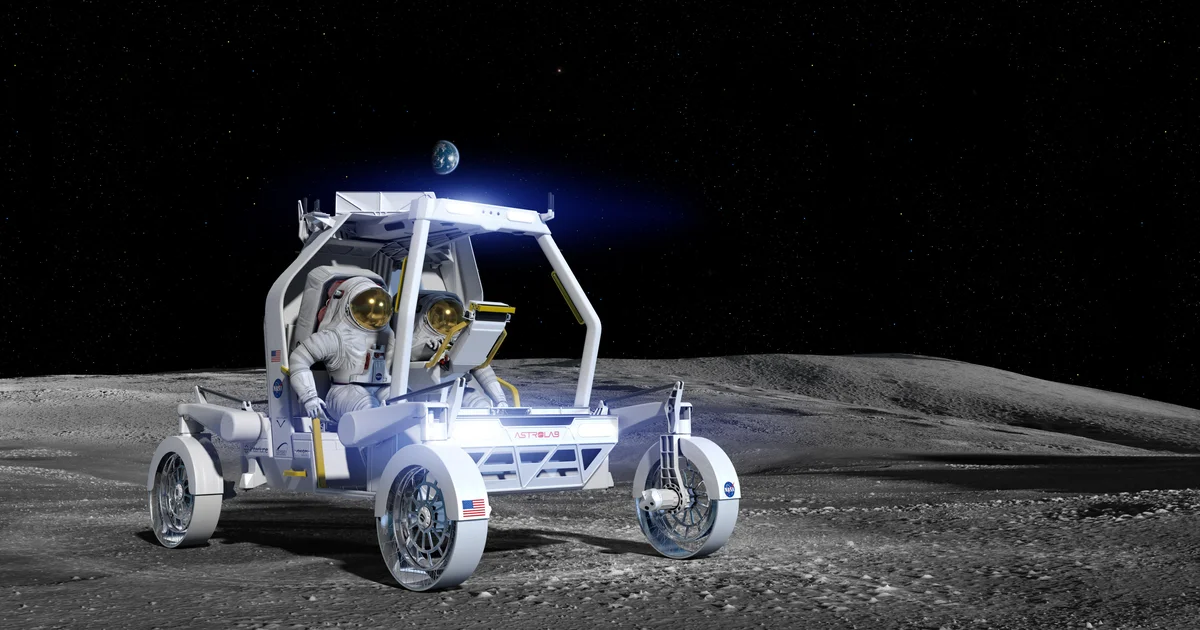
Blue Origin, founded by Jeff Bezos, has been tasked with providing two landers. These landers will be responsible for transporting lunar terrain vehicles to the Moon’s surface, specifically to a location near the lunar south pole. The rovers themselves will be manufactured by Astrolab and Lunar Outpost.
Firefly Aerospace, which achieved a successful lunar landing last year, will supply the first set of drones for the mission. This diverse range of hardware is slated to arrive on the Moon before the first Artemis astronauts are scheduled to land.
The initial deployment of this hardware is planned to precede the first human lunar landing, which is tentatively scheduled for 2028. This strategic timing ensures that the necessary infrastructure is in place to support the astronauts upon their arrival.
Read more : Diego Luna, who was in Nike's World Cup promotional ads, shockingly left off USMNT roster
In April, the Artemis II mission saw four astronauts complete a historic journey around the Moon, venturing further into space than any previous Apollo mission. For the upcoming Artemis III mission, another crew will practice crucial maneuvers, including docking NASA’s Orion capsule with lunar landers developed by Blue Origin and SpaceX.
This practice mission, involving one or two lander dockings in Earth orbit, mirrors the approach taken during the Apollo program. Apollo 9, for instance, conducted flight tests of its command module and lander in Earth orbit in 1969, a critical step that paved the way for the Apollo 11 lunar landing just four months later.
NASA is targeting mid-2027 for the Artemis III mission, with a subsequent landing by two astronauts planned for 2028. The second phase of the moon base development, extending from 2029 into the early 2030s, will focus on constructing permanent infrastructure, including a power grid.
The establishment of specialized permanent habitats capable of supporting astronauts for extended durations is anticipated during the third phase, which is expected to occur in the 2030s. This phased approach ensures a systematic and sustainable build-up of the lunar outpost.
“Then we’ll be able to say, ‘Hey, we’re permanently here and we’re not giving it up,'” stated Carlos Garcia-Galan, NASA’s moon base program executive, highlighting the long-term vision for lunar habitation.
Garcia-Galan envisions a vast moon base, potentially spanning hundreds of square miles. This expansive base would be monitored by a network of drones, codenamed MoonFall, strategically positioned at its perimeter.
These territory markers are designed with international cooperation in mind, ensuring respect for any other nations’ spacecraft or equipment that may be present in the vicinity. Reciprocity in such matters is expected, fostering a collaborative environment on the Moon.
The overarching objectives of the moon base extend beyond scientific research and exploration. It aims to stimulate a burgeoning lunar economy and serve as a critical stepping stone for future Mars expeditions, as emphasized by NASA Administrator Jared Isaacman.
The Planetary Society, an organization co-founded by the late astronomer Carl Sagan, estimates that NASA’s return-to-the-moon initiatives will have incurred approximately $107 billion by 2026, when adjusted for inflation. This figure underscores the significant investment in lunar exploration.
Earlier this year, Administrator Isaacman indicated that NASA plans to invest around $20 billion over the next seven years specifically for the moon base mission. This substantial financial commitment reflects the agency’s dedication to achieving its lunar objectives.
“For those waiting patiently, the grand return is close at hand and we will not slow down,” Isaacman declared on Tuesday. “We are really just getting started,” he added, signaling a period of accelerated progress in NASA’s lunar endeavors.