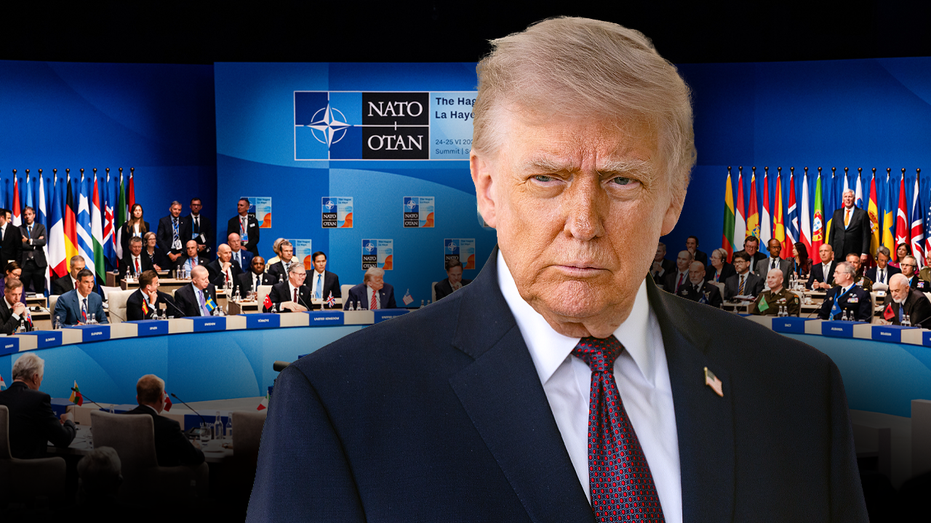
SouthernWorldwide.com – As former President Donald Trump intensifies pressure on NATO allies to increase their defense spending, a significant concern is surfacing within the alliance: a persistent and growing military capability gap with the United States, despite years of increased European defense budgets.
This dependency on American military power spans critical areas such as missile defense, intelligence gathering, logistics, and nuclear deterrence. The widening chasm between political commitments and actual military readiness is now prompting calls for fundamental structural changes within NATO, especially as the alliance confronts escalating threats from Russia and ongoing instability in the Middle East.
Retired Lt. Gen. Keith Kellogg, a former senior national security advisor, described NATO as an “overly bloated architecture” that has become excessively reliant on the U.S. military. He recounted conversations with President Trump during his first term, suggesting a potential re-evaluation of the alliance’s structure.
“I told the president… maybe you ought to talk about a tiered relationship with NATO,” Kellogg stated, emphasizing the need for a new defensive alignment with Europe. He argued that NATO’s expansion from 12 to 32 member states has diluted its impact without a corresponding military build-up.
“They haven’t put the money into defense. Their defense industry and defense forces have atrophied,” Kellogg observed. He pointed to the United Kingdom’s current military readiness as an example, noting that with both aircraft carriers undergoing maintenance and a low operational rate for its brigades, its deployable forces are significantly diminished.
Kellogg believes that the current state of European defense capabilities is insufficient, leading him to conclude that a different approach is necessary. He is a co-chair of the Center for American Security at the America First Foreign Policy Institute.
However, not all experts share this pessimistic view of NATO’s relevance. John R. Deni, a research professor at the U.S. Army War College, asserts that the alliance remains more critical than ever to U.S. national security.
Deni attributes this enduring relevance to two primary factors. Firstly, NATO represents a unique comparative advantage for the U.S. against geopolitical rivals like China and Russia, neither of whom possess a comparable alliance structure.
Secondly, Deni highlights that NATO underpins the security and stability of the vital trade and investment relationship between North America and Europe, underscoring its economic significance.
Analysis from Barak Seener of the Henry Jackson Society, a London-based think tank, indicates that by around 2010, the United States accounted for a substantial 65% to 70% of NATO’s total defense spending. This historical reliance has been a consistent feature of the alliance.
“They’ve always been dependent on the U.S.,” Kellogg remarked regarding the European allies’ reliance on American capabilities.
Read more : Canvas School App Breach During Finals
Deni explained that alliances, by their very nature, are designed for allies to “pool their resources” and “aggregate their individual strengths” for collective deterrence and defense. He offered ground forces as a prime example, noting that allied nations collectively possess far more mechanized infantry forces than the U.S. does.
Despite these points, Deni acknowledged that the reliance on the U.S. has, at times, become excessive. He noted that during the 2000s, European allies were “overly reliant” on the Americans for conventional defense.
This imbalance, Deni suggested, was partly influenced by U.S. strategic priorities at the time, which encouraged European allies to focus their efforts on conflicts in Afghanistan and Iraq rather than on territorial defense.
Seener characterized NATO as being “formally collective, but functionally asymmetric,” with the U.S. contributing a disproportionately large share of “high-end capabilities.” This asymmetry is particularly evident in the realm of nuclear deterrence.
According to Seener, the U.S. provides the vast majority of NATO’s nuclear arsenal, including intercontinental ballistic missiles, submarine-launched systems, and strategic bombers. Consequently, the alliance’s nuclear deterrence strategy fundamentally relies on the assumption of U.S. retaliation.
A NATO official acknowledged this reality, stating, “The U.S. nuclear deterrent cannot be replaced, but it is clear that Europe needs to step up. There’s no question. There needs to be a better balance when it comes to our defense and security.” The official emphasized that this is both due to the vital role the U.S. plays globally and the resources it demands, and because it is a matter of fairness.
The official expressed optimism, adding, “The good news… is that the Allies are doing exactly that. They are stepping up, working together — and with the U.S. — to ensure we collectively have what we need to deter and defend one billion people living across the Euro-Atlantic area.”
Beyond nuclear capabilities, the dependence on the U.S. extends to the operational core of the alliance. Seener highlighted the critical role of U.S.-provided intelligence, surveillance, and reconnaissance (ISR) assets, as well as logistics and command systems, in supporting NATO operations.
“Without U.S. intelligence and surveillance, NATO loses situational awareness and early warning capabilities,” Seener explained. He elaborated that this could leave Europe vulnerable, potentially allowing adversaries like Russia to launch attacks with delayed or insufficient awareness and defense capabilities from European forces alone.
Kellogg also expressed concern about the general quality of European military equipment, suggesting that while it may be functional, it often falls short of the highest tier of systems. He described much of it as “B players or C players,” not “the first line of work.”
He identified air and missile defense as a significant gap, noting that European nations depend on U.S.-developed systems like Patriot and THAAD, lacking comparable indigenous solutions. Kellogg attributed this deficiency to years of underinvestment, which has led to an “atrophied” European defense industry, a situation he believes the United States is also beginning to re-evaluate.
Deni, however, presented a more nuanced view of the current situation. He pointed out that “Alliance defense spending has been up… and has spiked far more after 2022,” citing Russia’s annexation of Crimea in 2014 as a pivotal moment that spurred increased defense investment.
Nevertheless, Deni cautioned that translating increased spending into tangible capability gains is a lengthy process. He noted that many of the planned improvements are still years away from full operational deployment.
As evidence of growing capability, Deni cited recent European acquisitions of U.S.-made military hardware, such as the F-35 fighter jet, being purchased by countries like Poland, Romania, Norway, and Denmark. He emphasized that developing such advanced systems takes considerable time.
A NATO official indicated that the alliance “needs to move further and faster” to address evolving threats. The official highlighted new capability targets agreed upon by defense ministers in June 2025, which prioritize air and missile defense, long-range weapons, logistics, and substantial land forces.
While specific details remain classified, these plans reportedly include a fivefold increase in air and missile defense capabilities, the deployment of “thousands more” armored vehicles and tanks, and the stockpiling of “millions more” artillery shells. NATO also aims to double key enabling capabilities such as logistics, transportation, and medical support.
The official added that allies are increasing investments in naval assets, aircraft, drones, long-range missiles, and space and cyber capabilities, while simultaneously enhancing readiness and modernizing command and control structures.
These ambitious targets are now integrated into national defense plans, and allies are expected to demonstrate their commitment through sustained defense spending and ongoing capability development, according to the NATO official.
The official also pointed out that European allies are currently leading multinational forces in Central and Eastern Europe. The U.S. and Canada serve as framework nations in Poland and Latvia, respectively, in addition to ongoing air policing missions and NATO’s KFOR operation in Kosovo.
Kellogg issued a stark warning: NATO’s deterrence is fundamentally contingent on the presence and commitment of the U.S. military. He identified Russia as the primary concern, especially if U.S. forces become engaged in other global theaters, which could place significant strain on NATO’s capabilities, particularly in intelligence and logistics.
For Kellogg, the primary danger lies in potential delays in response. “We won’t know until it happens,” he stated. “And then you won’t be able to respond to it.”
Conversely, Deni maintains that the alliance continues to be a strategic asset rather than a liability. He posits that the critical question is not whether NATO remains functional, but rather whether its member states can adapt quickly enough to ensure its continued effectiveness in the face of evolving challenges.