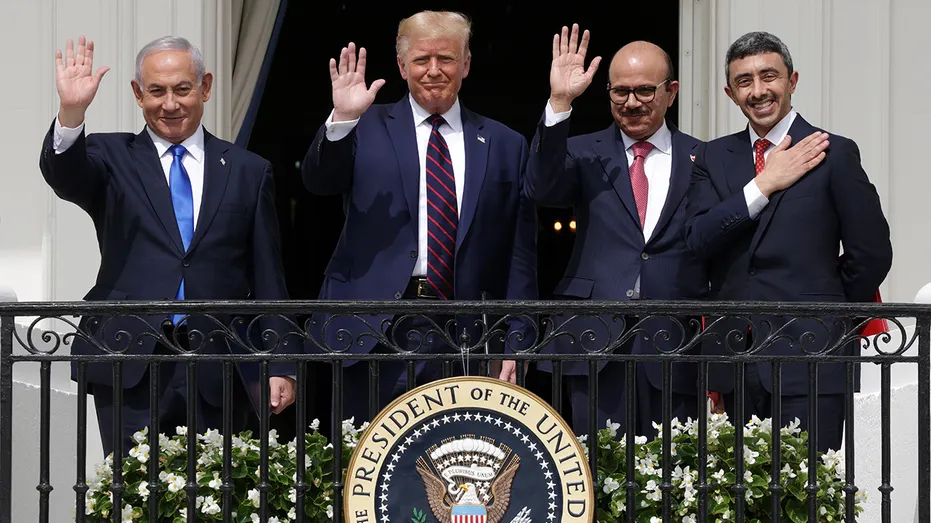
SouthernWorldwide.com – A critical US-backed alliance in the Middle East, forged to counter Iran, is showing signs of strain due to recent tensions between Israel and the United Arab Emirates, according to an analyst. This development comes at a particularly sensitive moment, as the possibility of a wider conflict with Tehran intensifies.
The initial friction emerged on May 13. This followed an announcement from Israeli Prime Minister Benjamin Netanyahu’s office, which claimed he had a meeting described as a “historic breakthrough” with UAE President Sheikh Mohammed bin Zayed Al Nahyan. This meeting was reportedly held during a “secret visit” to Al Ain, a city near the Omani border.
However, the UAE’s Ministry of Foreign Affairs quickly issued a denial to this announcement. The ministry clarified that its relationship with Israel is public and was established under the publicly known and declared Abraham Accords.
They emphasized that these relations are not built on secrecy or clandestine arrangements. Therefore, any claims of undisclosed visits or arrangements are considered baseless, unless officially issued by the relevant UAE authorities.
An analyst suggested that Israeli officials are likely working diligently to mend relations with the UAE, but it remains too early to determine the outcome of these efforts.
Amid escalating tensions over Iran, President Donald Trump spoke with Netanyahu on Sunday. The Israeli leader stated that he was “prepared for every scenario.”
According to The Times of Israel, the leaders discussed the potential for renewed conflict with Iran, as well as Trump’s recent visit to China.
Natan Sachs, a senior fellow at a research institute, characterized Netanyahu’s claim about the UAE meeting as a “diplomatic blunder” because it appeared to embarrass the UAE.
Sachs noted that this was an unusual move, especially considering the UAE has been a close partner of Israel, even during the current conflict. He speculated that Netanyahu might not have fully considered the implications or was perhaps preoccupied with domestic politics, suggesting this wouldn’t be the first time such a factor influenced his actions.
Sachs further elaborated that to the extent the Emirati anger is genuine, it would stem from a desire to preserve trust with their Gulf Arab ally. He also suggested that the Emirati leadership might be angered by the leak itself, viewing it as a breach of trust, which is a highly valued aspect of their governance.
The Abraham Accords, brokered by the United States in 2020, significantly altered the regional landscape. These accords normalized relations between Israel and several Arab nations, including the UAE, Bahrain, Morocco, and Sudan.
Security cooperation between these nations has seen substantial growth, driven by shared concerns about Iran’s military ambitions.
This alliance faced a significant test when Iran launched strikes against UAE military and energy infrastructure during Operation Epic Fury.
Reports indicate that Israel deployed its Iron Dome air-defense systems and personnel to the UAE. The UAE confirmed on Sunday that it had intercepted three drones originating from the west.
Sachs explained that the UAE bore a significant portion of the Iranian attacks. He highlighted that the UAE is particularly vulnerable to Iran’s short-range missiles, which are more numerous and less expensive than medium-range missiles targeting Israel.
While short-range missiles can be intercepted, Iran possesses a large quantity of them. Sachs pointed out that despite receiving the most hits, the UAE distinguished itself by adhering to its strategy of an open partnership with Israel.
Read more : ISIS Terror Leader Escapes After US Strike Kills Commander Amid Growing Africa Threat
However, Sachs concluded that the public disclosure of Netanyahu’s visit might have been perceived as a step too far, potentially exacerbating the strained relations.