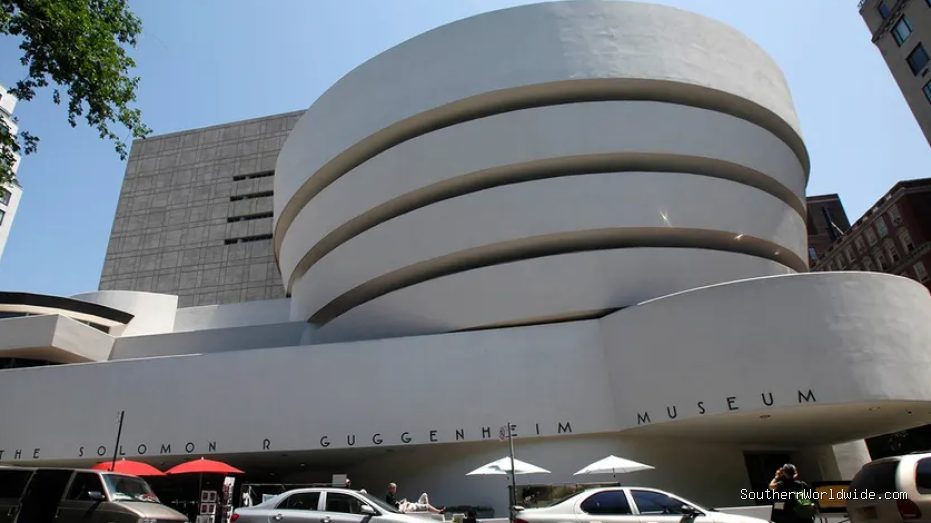
SouthernWorldwide.com – The Guggenheim Museum in New York City has tested positive for the bacteria responsible for Legionnaires’ disease, becoming one of several buildings in Manhattan’s Upper East Side to be identified in a recent outbreak.
The iconic museum, designed by Frank Lloyd Wright and located on Fifth Avenue, was among 31 buildings that the city mandated to clean and disinfect their cooling towers to eliminate the bacteria. This action was announced by the city on Friday.
The Guggenheim Museum has already completed its disinfection process. It is one of 19 buildings that have finished this essential step, with the remaining facilities expected to conclude their disinfection by Saturday.
Legionnaires’ disease is recognized as a severe form of pneumonia. It is caused by the bacterium *Legionella pneumophila*, which is naturally found in water sources. The disease can lead to serious health complications if not addressed promptly.
The symptoms of Legionnaires’ disease are similar to those of the flu. These include fever, chills, and difficulty breathing, medically known as shortness of breath. Early detection and treatment with antibiotics are crucial for a successful recovery.
The city issued a news release urging individuals to take immediate action if they experience symptoms. “Anyone who lives, works or has visited the affected area since late June and develops flu-like symptoms should contact a health care provider immediately,” the statement advised.
The current Upper East Side outbreak has resulted in over 50 confirmed diagnoses of Legionnaires’ disease. Fortunately, fewer than 20 individuals remain hospitalized in connection with this outbreak, indicating a degree of successful treatment and management.
In a statement released on Saturday, the Guggenheim Museum addressed the situation. “The city has confirmed that there is no additional action needed at this time, and this poses no risk to anyone inside the building,” the museum assured the public, aiming to alleviate any immediate concerns.
The Solomon R. Guggenheim Museum, a significant cultural landmark, first opened its doors in 1959. Its architectural importance has been recognized globally, as it holds the distinction of being a UNESCO World Heritage Site.
The precise origin of the current outbreak is still a subject of ongoing investigation. Health officials are working diligently to pinpoint the source to prevent further spread and implement targeted preventive measures.
Cooling towers, typically situated on the rooftops of buildings, are identified as potential sources for the mist that can carry *Legionella pneumophila* bacteria. The NYC Health Department has confirmed that all cooling towers within the affected vicinity are undergoing rigorous testing.
These cooling towers are integral to regulating the temperature of various building systems, such as refrigeration units. It is important to note that they do not impact the quality of drinking water or the indoor air or air conditioning systems within a building.
A critical piece of information regarding Legionnaires’ disease is that it does not spread from person to person. This means direct contact with an infected individual does not pose a transmission risk.
This is not the first time Legionnaires’ disease has been a concern in New York City. Last year, a cluster of cases led to seven fatalities. This outbreak was traced back to a cooling tower located on top of Harlem Hospital, as well as a construction site in proximity to the city’s public health laboratory.