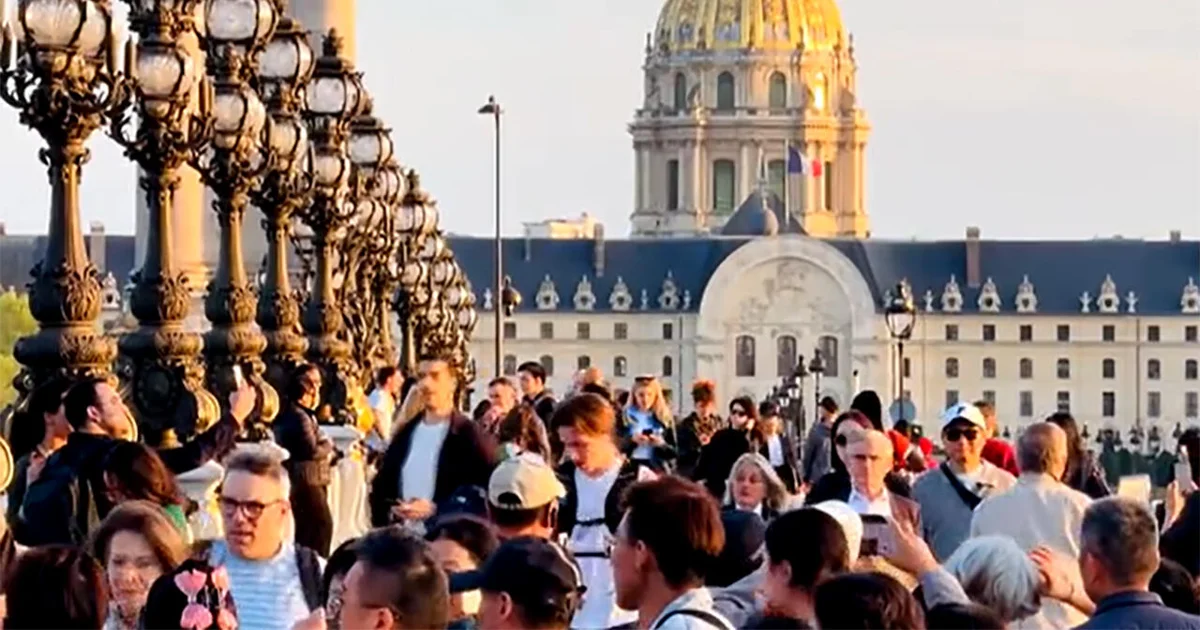
SouthernWorldwide.com – The allure of travel is undeniable, with airlines, hotels, social media, and even friends constantly tempting us to explore new destinations. However, what’s often left out of these curated experiences are the less glamorous aspects: the overwhelming crowds and lengthy queues that have become synonymous with modern vacationing, and for residents, the disruption to their daily lives.
Paige McClanahan, a Paris-based writer, observes that problems arise when neighborhoods begin to prioritize tourists over their residents. This imbalance has led to significant pushback, evidenced by anti-tourism protests in cities like Barcelona.
McClanahan, a seasoned travel and tourism journalist, highlights the immense economic significance of tourism. Globally, it accounts for 10% of the global economy and supports approximately one in every ten jobs worldwide.
In her book, “The New Tourist,” McClanahan examines how guidebooks, affordable air travel, and the pervasive influence of social media have contributed to a dramatic increase in travel. In 1950, the world saw 25 million tourist arrivals; today, that number has surged to over 1.5 billion.
The Louvre Museum in Paris, a top destination for many, exemplifies the pressures of overtourism. This world-renowned museum experienced a strike in June 2025, stemming from its inability to manage the overwhelming number of visitors.
McClanahan suggests that the tourism industry is undergoing a critical transformation. Destinations are beginning to recognize the necessity of regulation, tourism taxes, urban planning, and robust infrastructure. Simultaneously, travelers are becoming more aware of the impact their presence has on the places they visit.
The impact of social media on travel is a double-edged sword, according to McClanahan. It has undoubtedly fueled a surge in travel, but also contributed to some of the challenges faced by popular destinations.
A stark example is a canyon in Iceland that had to be closed after a Justin Bieber music video drew an excessive number of tourists. Similarly, a farmer in Italy’s Dolomites installed a turnstile to charge for access to picturesque spots, a response to the influx of visitors seeking Instagram-worthy photos.
A flood of tourists in Venice
Venice, a city facing immense pressure from tourism, attracts approximately 30 million visitors annually, a figure that dwarfs its local population by about 600 times. In 2024, the city introduced a fee of 5 to 10 Euros for day-trippers during peak periods as a measure to manage the overwhelming tourist numbers.
Venice has also taken steps to ban large cruise ships from entering its lagoon. However, the influx of tourists continues. In response, Portofino, another Italian coastal town, has implemented new rules to manage visitor behavior.
Police commander Chiarello Giuseppina explained that new regulations were introduced in Portofino during the summer, prohibiting alcohol consumption and sitting in main streets and squares. Being barefoot or shirtless in these areas during peak times is also forbidden, with fines up to 500 Euros. Giuseppina noted that visitors generally understand these measures, recognizing the need to respect the town’s character.
Across Europe, governments are actively seeking ways to regulate tourism. Spain has been instrumental in removing tens of thousands of illegal Airbnb rentals and has implemented a tiered tax system designed to encourage longer stays.
When asked about potential solutions for tourist destinations, McClanahan highlighted the effectiveness of tourism taxes. She pointed to Amsterdam, which has raised its tourist tax to 12.5%, currently the highest in Europe.
Amsterdam: Venice of the North
Amsterdam, renowned for its canals, is also grappling with an escalating number of tourists. With a resident population of under one million, the city welcomed a record 23 million tourists in 2024. This surge has prompted residents to voice their concerns.
Anouschka Trauschke, a former tour company manager, described her internal conflict: while feeling like an ambassador for the city, she also recognized her role in contributing to the problem of overtourism.
Trauschke now organizes community sessions to develop solutions for overtourism and founded “Tours That Matter.” This initiative offers tailored tours, often exploring less-visited areas such as North Amsterdam’s former shipyard.
Despite the success of her venture, Trauschke acknowledges that it represents a small fraction of the city’s overall tourism. She believes her work is part of a pioneering movement advocating for a necessary transition in the tourism sector.
Edwin Scholvinck, a resident of Amsterdam’s famous red-light district, shares concerns about the impact of excessive tourism. He notes that friends are hesitant to visit due to the crowds, and the neighborhood’s character has been altered by the constant influx of visitors.
Recent measures have brought some respite to Scholvinck’s neighborhood, including restrictions on guided tours and earlier bar closing times. He is also involved with the “We Live Here” campaign, aiming to educate visitors about the area being a residential community, not just a party destination.
Economist Jasper van Dijk believes these community efforts are valuable but insufficient. His group is pursuing legal action against the city of Amsterdam for exceeding its agreed-upon tourist cap of 20 million.
“Sunday Morning” reached out to the City of Amsterdam for an interview regarding overtourism, but officials, including the Mayor, Deputy Mayor for tourism, and the city’s marketing agency, declined to comment.
McClanahan points out the irony that Amsterdam’s successful marketing campaign, “I amsterdam,” ten years prior, eventually led to a campaign discouraging unruly visitors. She suggests that cities often need to reach a crisis point before implementing significant changes.
Read more : Trump names Dr. Erica Schwartz to lead CDC
McClanahan emphasizes that while solutions must be tailored to each community, travelers also bear a responsibility. She believes that by approaching tourism with respect, scrutiny, and a sense of responsibility, individuals can collectively ensure that tourism becomes a positive force for humanity.