SouthernWorldwide.com – For a significant portion of my career, I’ve operated within two spheres that frequently experience mutual misunderstanding: Hollywood and the Church.
At Carmel Communications, my primary focus has been on bridging these two worlds. This involves assisting faith leaders in taking culture seriously while simultaneously helping artists, filmmakers, and studios acknowledge the underlying spiritual needs that persist within contemporary audiences.
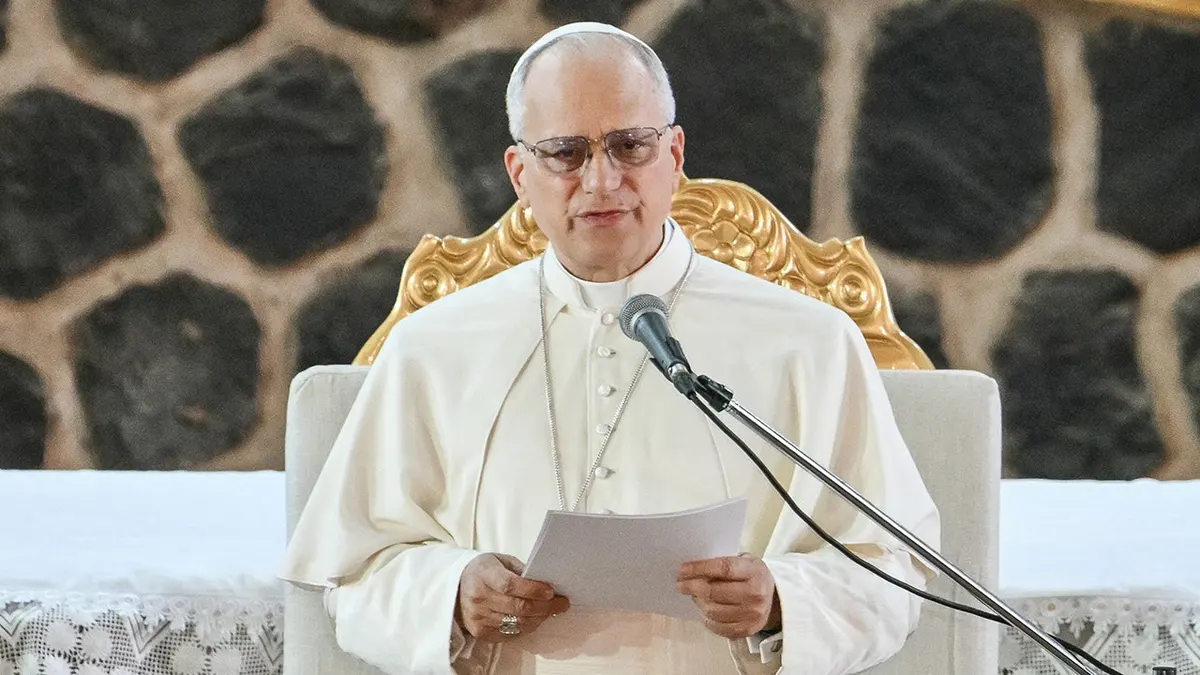
It is precisely for this reason that Pope Leo XIV’s recent encyclical, “Magnifica Humanitas,” resonated with me on such a personal level.
POPE LEO WARNS AI RISKS BECOMING TOOL OF ‘DOMINATION, EXCLUSION AND DEATH’ IN NEW ENCYCLICAL
Like many within the media landscape, I’ve observed AI’s transition over the past few years from an abstract and experimental concept to something tangible and unavoidable. AI is already fundamentally altering how narratives are conceived, promoted, disseminated, and consumed.
However, as I delved into “Magnifica Humanitas,” I recognized that the document’s core message isn’t centered on technology itself. Instead, it addresses the essence of the human person and whether our current culture still comprehends the meaning of human dignity.
This question feels particularly pressing within the realms of entertainment and media, given that storytelling has historically been a powerful force in shaping culture. Throughout my professional journey – whether collaborating on projects like “The Passion of the Christ,” “The Chosen,” “Sound of Freedom,” “Hallow,” or other endeavors deeply rooted in meaning and transcendence – I’ve witnessed firsthand that audiences are not merely seeking superficial entertainment. They are actively searching for narratives that grapple with profound questions about the significance of suffering, the sources of life’s meaning, the dynamics of human transformation, and the enduring presence of hope.
Long before I embarked on my career in media, I intuitively understood the profound importance of stories. My upbringing in South Florida was often intertwined with film sets, as my father was a truck driver for the Teamsters Union, frequently working on such productions. Some of my earliest recollections involve quietly observing crews meticulously construct entire worlds using lights, scripts, and cameras. What left a lasting impression on me was not just the technical process of filmmaking, but the individuals involved, the inherent vulnerability of artists, and the remarkable capacity of a story to forge connections among people who might otherwise have nothing in common.
HOLLYWOOD TURNS TO AI TOOLS TO REWIRE MOVIE MAGIC
Years later, after extensive collaboration with filmmakers, studios, religious organizations, and faith leaders, my conviction has only deepened that culture serves as a primary arena where societies reveal their most cherished values.
This is why Pope Leo’s recurring theme throughout “Magnifica Humanitas” – “the civilization of love” – feels exceptionally pertinent at this juncture.
This concept was most famously articulated by Pope Saint John Paul II, who posited that societies cannot subsist solely on economic, political, or technological foundations. They require a guiding moral vision that is grounded in the inherent dignity of the human person. A civilization of love is not built upon dominance or the pursuit of efficiency, but rather on principles of solidarity, truth, mercy, sacrifice, and the fundamental recognition that every human being possesses intrinsic worth.
Baca juga di sini: Warning Issued for Unsafe Water at Popular US Beach Destination
Pope Leo now carries this vision directly into the contemporary digital age.
What struck me most profoundly about the encyclical was its remarkable fluency in engaging with modern culture. It refrains from outright rejection of technology or condemnation of innovation. Instead, it thoughtfully acknowledges both the burgeoning possibilities and the concurrent dangers. The fundamental issue is not AI in isolation; it is the ease with which we begin to prioritize efficiency over the paramount importance of human beings.
Hollywood has a long history of adapting to technological advancements. The advent of sound revolutionized cinema, and television fundamentally reshaped storytelling and the dissemination of news. The rise of social media and streaming services further altered how audiences discover and engage with culture. Therefore, technology itself is not the inherent problem.
HOLLYWOOD KEEPS MAKING MOVIES FAMILIES WON’T WATCH WHILE ‘LORD OF THE RINGS’ RERELEASE RAKES IN MILLIONS
What feels distinct about AI is its profound infiltration into critical areas such as authorship, creativity, credibility, and even the very concept of human presence. As AI begins to influence entertainment, journalism, and public discourse, the pertinent question shifts from merely what it can produce to what it might subtly condition us to accept.
Concurrently, audiences appear increasingly weary of experiences that feel overly manufactured or emotionally sterile. Ironically, the more algorithmic culture becomes, the more audiences seem to gravitate towards authenticity, vulnerability, and transcendence.
This trend is evident in the types of projects currently achieving global resonance. Viewers respond positively to narratives that feel emotionally grounded and spiritually genuine. They seek stories that acknowledge hardship without succumbing to cynicism and offer hope without resorting to manipulation.
This inherent tension is something we constantly navigate at Carmel. We operate within an industry driven by quantifiable metrics, visibility, audience segmentation, and increasingly sophisticated digital tools. Yet, the campaigns that achieve the deepest impact are rarely those built solely on optimization. The projects that endure are the ones that touch something fundamentally human.
This is why I deeply appreciate Pope Leo XIV’s willingness to engage directly with culture. “Magnifica Humanitas” demonstrates a remarkable awareness of the pressures shaping contemporary life – not only within technology but also across media, politics, economics, education, and entertainment.
Far too often, dialogues between Hollywood and religious communities are characterized by suspicion or simplistic portrayals. However, I have spent years observing artists posing profoundly spiritual questions beneath the surface of their work, even when they would not identify themselves in explicitly religious terms. I have also witnessed faith communities underestimate the immense influence that storytelling wields in shaping individuals’ understanding of morality, suffering, forgiveness, and human worth.
Culture is not a secondary element to society; it is instrumental in its formation.
One particular statement from “Magnifica Humanitas” continues to resonate with me: civilizations are judged not by the power of their tools, but by their capacity for mutual care.
This sentiment stands in stark contrast to an era where modern life increasingly elevates speed, productivity, optimization, and visibility above nearly all else.
WHY A CLASSICAL EDUCATION MAY BE THE KEY TO HUMANITY’S FUTURE IN THE AI ERA
Yet, the most meaningful aspects of human existence have never adhered to such metrics.
Love does not. Parenthood does not. Friendship does not. Faith does not. Profound storytelling does not.
No algorithm can fully replicate moral imagination, empathy, spiritual yearning, or the subtle transformation that can occur when an individual encounters truth through the medium of art.
Artificial intelligence will continue its evolutionary trajectory. It will undoubtedly influence every facet of our culture and economy. However, “Magnifica Humanitas” serves as a crucial reminder that the central question is not the increasing power of machines. The true question is whether humanity will remain sufficiently grounded in truth, dignity, and moral responsibility to wield these tools wisely.
For me, this is the essence of what the “civilization of love” demands in this current era.
It calls upon us to resist constructing a society where human beings are primarily valued for their output, efficiency, influence, or utility. It urges us to safeguard spaces dedicated to beauty, contemplation, meaningful relationships, creativity, sacrifice, and transcendence.
Because if technological advancement continues unabated while our understanding of human dignity erodes, no amount of innovation will ultimately satisfy the deeper yearnings that lie at the heart of our culture.
The genuine challenge confronting us is not solely technological; it is fundamentally moral and spiritual.
The future may well hinge on our ability to remember how to remain fully human as we forge ahead.