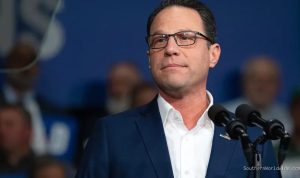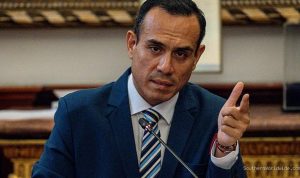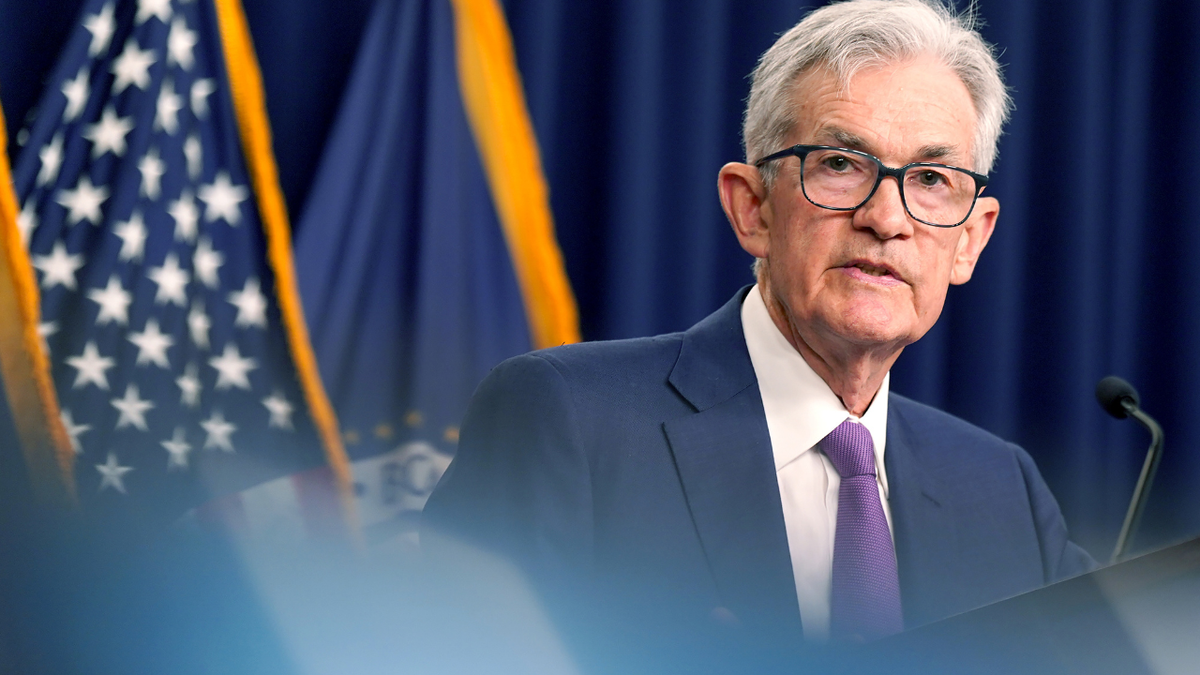
SouthernWorldwide.com – Kevin Warsh has officially been sworn in as the new Federal Reserve Chair. However, outgoing Chair Jerome Powell has broken with recent tradition by choosing not to leave the Fed Board of Governors, opting instead to remain as a potential rival power center.
The primary concern is that Powell may wield enough influence on the Board to effectively act as a “Shadow Fed Chair.” This could lead to a series of interest rate hikes being imposed, potentially against the judgment of the new Chair, Warsh.
Such a move would be particularly ill-advised in the current economic climate, especially in response to an oil-price shock. It’s important to note that two of Powell’s predecessors understood the distinction between demand-driven inflation and the impact of an oil shock.
For instance, when Iraq invaded Kuwait in 1990, then-Chair Alan Greenspan recognized that an oil shock could simultaneously increase headline inflation and hinder economic growth. Consequently, his Federal Open Market Committee (FOMC) repeatedly lowered the federal-funds rate as the economy weakened.
Similarly, in 2008, when oil, food, fertilizers, and industrial metals experienced sharp price increases due to robust emerging-market demand, constrained supply, limited spare capacity, and speculative investment, Ben Bernanke’s Fed also cut the federal-funds rate in April. The Fed then maintained that rate in June and refrained from initiating a recessionary rate-hike campaign when faced with prices that the Fed itself could not directly influence through production or transportation.
This represents a looming central error in policy. The Federal Reserve cannot directly increase oil production, reopen shipping lanes, refine gasoline, or lower diesel costs by suppressing mortgage demand or forcing small manufacturers to accept unfavorable credit terms.
Implementing a Fed rate hike at this juncture would aim to curb demand in response to a supply shock, precisely at a time when the economy is already fragile. This could further weaken the housing sector, harm interest-sensitive manufacturing industries, and tighten credit for small businesses. Financial conditions would tighten just as rising energy prices are diminishing household purchasing power. A stronger dollar could also put pressure on American exporters.
It is crucial for the Fed to understand that an oil shock inherently functions like a tax increase. It reduces disposable income for households, elevates transportation costs, squeezes profit margins, and slows real economic activity. If the Fed then adds another rate hike on top of this, it does not resolve the underlying oil problem; it merely compounds an energy shock with a credit shock.
There is little justification for such a move, especially considering that bond market participants are already enacting contractionary policies. A 30-year Treasury yield exceeding 5% and a 10-year yield above 4.5% do not indicate loose monetary policy. Mortgage rates, corporate borrowing costs, and duration-sensitive assets are already experiencing the effects of higher yields.
Baca juga di sini: Platner Remains Unapologetic to Purple Heart Recipient and Voters on Soldier Mocking Post
In such an environment, the central bank does not need to assert its toughness or independence by further destabilizing the economy. Furthermore, the inflation reports from April do not warrant a panicked response. While core PPI showed a slight increase at 4.4%, core CPI was at 2.8%. Neither figure justifies treating an energy-led commodity shock as a demand-side emergency.
The critical question is whether the oil price surge will permeate into core inflation components and trigger second-round wage-price dynamics. It will take considerable time to ascertain this, and the Fed should not be engaging in worst-case scenario planning.
Instead, the Fed’s fundamental responsibility, as it has always been, is to maintain anchored inflation expectations while simultaneously preserving maximum employment. As bond yields continue to rise, the risk of a recession increasingly becomes a concern, a point long understood by former Chairs Greenspan and Bernanke.
This is where the prospect of Powell acting as a “Shadow Chair” becomes a significant concern. Three governors appointed by the Biden administration – Philip Jefferson, Michael Barr, and Lisa Cook – remain on the Board. Combined with Powell, this group already constitutes a four-vote majority on the seven-member Board.
If Christopher Waller, a Trump appointee, were to become a pivotal defector, as his signals suggest, this would solidify Powell’s “Shadow Chair” majority, effectively marginalizing the new Chair. Warsh would hold the official title, but Powell could dictate the Fed’s policy response.
Moreover, the Federal Reserve presidents from the Cleveland, Minneapolis, and Dallas districts – Beth Hammack, Neel Kashkari, and Lorie Logan – are already aligning with a potentially hawkish policy stance.
It is through this calculation of a “Shadow Chair” majority that Kevin Warsh, and by extension the American economy, could find themselves in a precarious position. If Powell, his allies from the Biden era, and the regional hawks push for a rate-hike campaign amidst an oil shock, they will not be safeguarding the Fed’s credibility or demonstrating its independence.
Instead, they would be adding a credit shock to an energy shock, revealing only recklessness. The consequences of such a policy will be felt not within the confines of the Eccles Building, but across factories, homes, small businesses, and export markets throughout America.