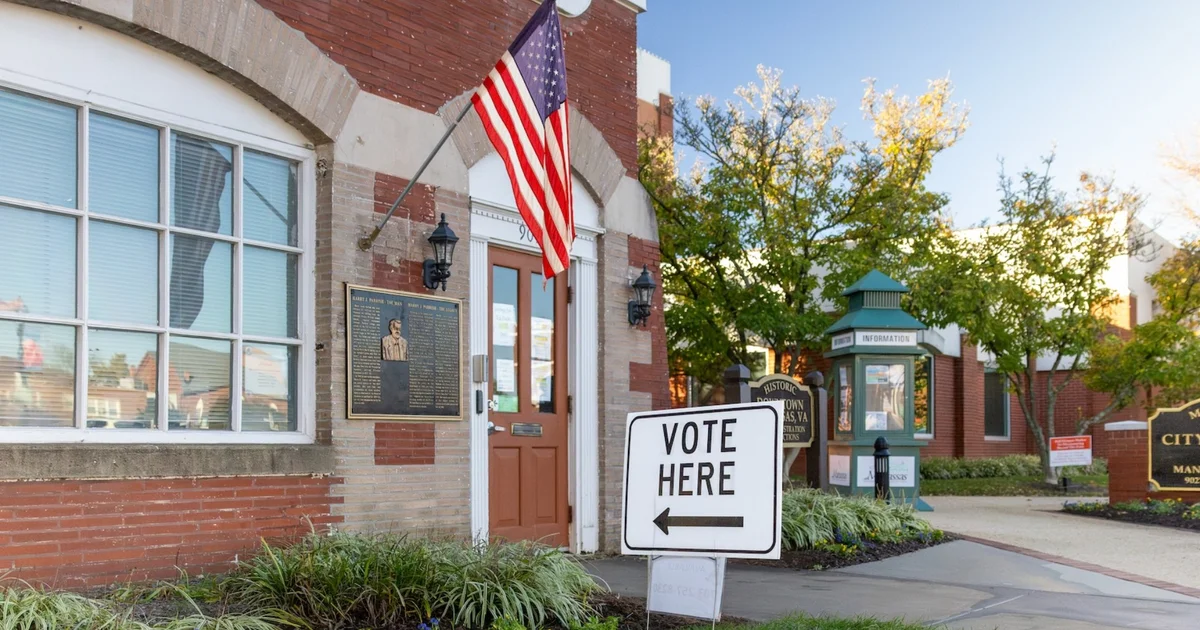
SouthernWorldwide.com – In a significant development just weeks before the midterm elections, the Virginia Supreme Court has delivered a victory to Republicans by striking down a newly drawn congressional map. This map was originally approved by the state’s General Assembly and was widely seen as an effort to benefit Democrats, potentially giving them up to four additional seats in Congress.
The state’s highest court, in a narrow 4-3 decision, ruled against the map that had been drawn by a redistricting committee. This ruling came after the map was approved by the Democratic-controlled House of Delegates and the Republican-controlled Senate.
The decision means that the congressional map approved by the state legislature will not be used in the upcoming midterm elections. Instead, the court will likely implement a map drawn by a panel of judges, which is expected to be more favorable to Republicans.
This development is seen as a major setback for Democrats, who had hoped the new map would help them secure a stronger position in the House of Representatives. The ruling is also likely to have a significant impact on the balance of power in Congress.
The Virginia Supreme Court’s decision is a complex one, with the majority opinion citing concerns about the potential for partisan gerrymandering. Justice Cleo Powell, writing for the majority, stated that the map drawn by the redistricting committee “fails to cure the constitutional infirmities identified by this court in prior decisions.”
However, dissenting justices argued that the court should not have intervened in a matter that was properly handled by the legislature. Justice Elizabeth McClanahan, in her dissent, wrote that the majority’s decision “represents an unwarranted intrusion into the legislative process and will undoubtedly have significant consequences for the upcoming elections.”
The redraw of Virginia’s congressional map was a contentious process, with both parties accusing the other of engaging in partisan gerrymandering. Democrats, who control both chambers of the General Assembly, were able to pass a map that they believed was fair and reflected the state’s political leanings.
However, Republicans, who control the governorship, were able to influence the process by appointing members to the redistricting committee. The final map approved by the legislature was a compromise, but it was still seen as favoring Democrats.
The Virginia Supreme Court’s decision is a reminder of the ongoing battles over redistricting that are taking place across the country. These battles are often fought in the courts, as parties seek to gain an advantage in the upcoming elections.
The ruling is particularly significant for Virginia, which has a history of competitive congressional races. The state’s congressional map has been a subject of controversy for years, and this latest decision is likely to add to the ongoing debate.
With the midterm elections just weeks away, this ruling could have a substantial impact on the outcome of races across the state. Democrats will now have to contend with a congressional map that is less favorable to them, and Republicans will be looking to capitalize on this advantage.
The Virginia Supreme Court’s decision highlights the critical role that the judiciary plays in shaping the political landscape. As the midterms approach, all eyes will be on Virginia to see how this ruling affects the race for Congress.
The legal challenges surrounding redistricting are complex and often partisan. In Virginia, the process involved a committee tasked with drawing new maps after the decennial census. The committee’s proposed map was intended to reflect the state’s population shifts and voting patterns.
However, the map became a point of contention, with accusations of partisan bias leveled by both Democrats and Republicans. Democrats, controlling the legislature, had the opportunity to shape the map to their advantage, while Republicans, through the governorship, also had influence in the process.
The court’s intervention in this matter underscores the judiciary’s role in ensuring fair representation and preventing partisan gerrymandering, a practice where electoral district boundaries are manipulated to favor one party over another.
The majority’s reasoning, as articulated by Justice Powell, focused on the constitutional requirements for redistricting, implying that the legislature’s map failed to meet these standards. This suggests a concern for the fairness and equity of the electoral process, independent of partisan considerations.
Conversely, the dissenting opinion, penned by Justice McClanahan, emphasized the separation of powers, arguing that the court should defer to the legislative branch on matters of redistricting unless there is a clear constitutional violation.
This division within the court reflects the broader national debate about the appropriate role of the judiciary in electoral processes and the ongoing struggle to balance partisan interests with the principle of fair representation.
The timing of the ruling, so close to the midterm elections, adds another layer of significance. It directly impacts the electoral playing field for candidates and voters alike, potentially altering the strategic calculations of both major parties.
Democrats, who had invested hope in the previously approved map to bolster their chances, now face a more challenging electoral environment. Republicans, on the other hand, may see this as a crucial advantage that could help them achieve their electoral goals.
The Virginia Supreme Court’s decision serves as a stark reminder of how legal interpretations and judicial rulings can significantly influence election outcomes, often becoming a decisive factor in the battle for political power.
The ramifications of this decision will likely be felt not only in Virginia but also as a precedent in other states grappling with similar redistricting disputes, especially in the lead-up to the critical midterm elections.
The approval of the map by both legislative chambers indicated a degree of bipartisan consensus, even if it was a compromise. However, the court’s ultimate decision suggests that this compromise did not fully satisfy the constitutional requirements for fair representation.
The court’s focus on constitutional infirmities implies a scrutiny of the map’s compliance with legal standards, which may include principles of proportionality, compactness, and the prevention of undue partisan advantage.
The dissent’s argument, however, raises important questions about the judiciary’s scope of review and its relationship with the legislative branch, particularly in politically sensitive areas like electoral map drawing.
Ultimately, the Virginia Supreme Court’s ruling injects a new dynamic into the state’s political landscape, potentially reshaping electoral strategies and influencing voter turnout in the crucial weeks leading up to the midterms.
The decision will be closely watched by political analysts and strategists nationwide as they assess the potential impact on the national balance of power in Congress.
The close vote within the court highlights the contentious nature of redistricting and the differing legal philosophies that can guide judicial decision-making in such cases.
The approved map had been the subject of extensive public debate and scrutiny, reflecting the deep partisan divisions that often characterize redistricting processes.
Democrats had argued that their map was a fair reflection of the state’s electorate, while Republicans contended it was a blatant attempt at partisan gerrymandering.
The court’s decision to overturn the legislature’s map suggests that it found merit in the arguments against its fairness or constitutionality.
This ruling will undoubtedly become a focal point in the upcoming election campaigns, with both parties likely to use it to mobilize their bases and persuade undecided voters.
The Virginia Supreme Court’s intervention is a significant event that could influence the composition of Virginia’s congressional delegation for the next decade.
The battle over redistricting is a recurring theme in American politics, and this latest chapter in Virginia adds to the ongoing narrative of how electoral maps are drawn and contested.
The midterm elections are a crucial test for both parties, and developments like this can significantly shift the dynamics of key races.
The Virginia Supreme Court’s decision is a clear indication that the legal battles over representation are far from over, and the judiciary will continue to play a pivotal role in shaping the electoral landscape.
The timing of the ruling, so close to the elections, amplifies its impact, making it a significant factor in the final weeks of campaigning.
Republicans will likely view this as a positive development that strengthens their prospects in Virginia and potentially nationwide.
Democrats, conversely, will need to recalibrate their strategies in response to this setback, focusing on maximizing turnout and highlighting other key issues.
The Virginia Supreme Court’s ruling underscores the importance of judicial independence and the rule of law in a democracy, even amidst intense political competition.
The long-term implications of this decision on Virginia’s political future and the broader national redistricting landscape will become clearer in the coming months and years.
The court’s decision is a testament to the power of legal challenges in influencing political outcomes, especially when partisan interests are at stake.
This event is likely to fuel further discussion about the need for independent redistricting commissions or other reforms aimed at reducing partisan gerrymandering.
Read more: Police Responded to a "Senior Assassin" Player with a Water Gun
The Virginia Supreme Court’s ruling is a pivotal moment that will be remembered for its impact on the state’s congressional representation and the national political balance.