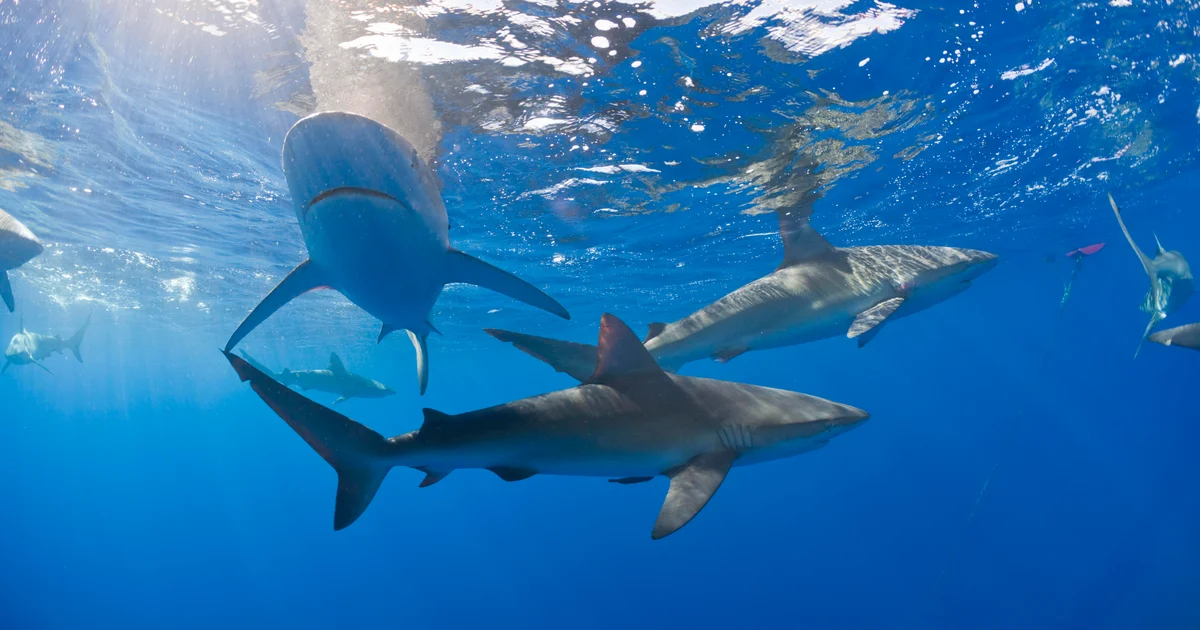
SouthernWorldwide.com – A recent study has revealed that sharks in the Bahamas are testing positive for a range of substances, including caffeine, painkillers, and even cocaine.
Marine scientists involved in the research have expressed concerns that these findings could potentially impact the health and behavior of these marine animals.
The study was conducted by a team of marine biologists and scientists from various international programs. They collected and analyzed blood samples from a total of 85 sharks, representing five different species.
These sharks were captured approximately four miles off the coast of a remote island in the Bahamas. Their blood was then tested for the presence of 24 different legal and illegal drugs.
The results indicated that 28 of the sharks had detectable levels of caffeine in their bloodstream. Additionally, two common over-the-counter anti-inflammatory painkillers were found, and in one specific instance, cocaine was detected.
Some sharks even tested positive for more than one of these substances, highlighting a complex exposure scenario.
Researchers pointed out that medications, illicit drugs, and other chemical compounds are increasingly being recognized as contaminants of emerging concern within ocean ecosystems and other water bodies.
They specifically noted that areas experiencing rapid urbanization and development driven by tourism are particularly at risk of such contamination.
This particular study marks the first investigation into the effects of these contaminants on sharks within the Bahamas, according to the researchers.
“While the detection of cocaine — an illicit substance — tends to draw immediate attention, the widespread presence of caffeine and pharmaceuticals in the blood of many analyzed sharks is equally alarming,” stated lead author Natascha Wosnick.
Wosnick, a zoologist and associate professor at Brazil’s Federal University of Parana, emphasized this point in an email to CBS News.
“These are legal substances, routinely consumed and often overlooked, yet their environmental footprint is clearly detectable,” she added.
“This underscores the need to critically reassess even our most normalized habits,” Wosnick concluded.
The collected data revealed that the sharks whose blood showed contamination also exhibited changes in their metabolic markers.
These changes were linked to both stress and metabolism, suggesting a physiological response to the ingested substances.
While the researchers acknowledged that it is not yet clear if these specific changes are harmful, they stated that it is possible they could lead to alterations in the sharks’ behavior.
Read more : James Van Der Beek Reveals Cancer Diagnosis
“Our primary concern is not an increase in aggression toward humans, but rather the potential implications for the health and stability of shark populations,” Wosnick clarified.
She further explained that chronic exposure to these anthropogenic compounds, many of which have no natural counterparts in marine systems, could result in negative effects that are currently not well understood.
The researchers stressed that their findings highlight the urgent necessity to address marine pollution in ecosystems that are often mistakenly perceived as pristine.
Tracy Fanara, a marine biologist who previously participated in a Discovery TV show titled “Cocaine Sharks,” shared insights with CBS News in 2023.
The show explored how sharks might be affected by cocaine exposure through simulated experiments.
Fanara mentioned that these experiments led to the observation of “strange behavior” in the sharks, necessitating further research into the matter.
During the program, she was observed noting a hammerhead shark appearing to pursue a bale of fake cocaine.
“My goal of this experiment was to shed light on the real problem of chemicals in our waterways and impacting our aquatic life and then eventually impacting us,” Fanara said in 2023.
“But the goal of the study was basically to see if this is a research question worth exploring more. And I would say, yes, it is,” she affirmed.
In a separate study conducted in 2024, scientists reported findings from sharks in waters off Brazil.
These sharks also tested positive for cocaine and benzoylecgonine, which is identified as the primary molecule present in cocaine.
In that research, scientists examined the levels of these substances within the sharks’ liver and muscle tissues.
Each of the 13 sharks included in that particular study tested positive for high levels of cocaine, as reported by CBS News at the time.
The research team involved in the 2024 study indicated that more data would be required to comprehensively understand how cocaine and other substances affect sharks and other forms of wildlife.