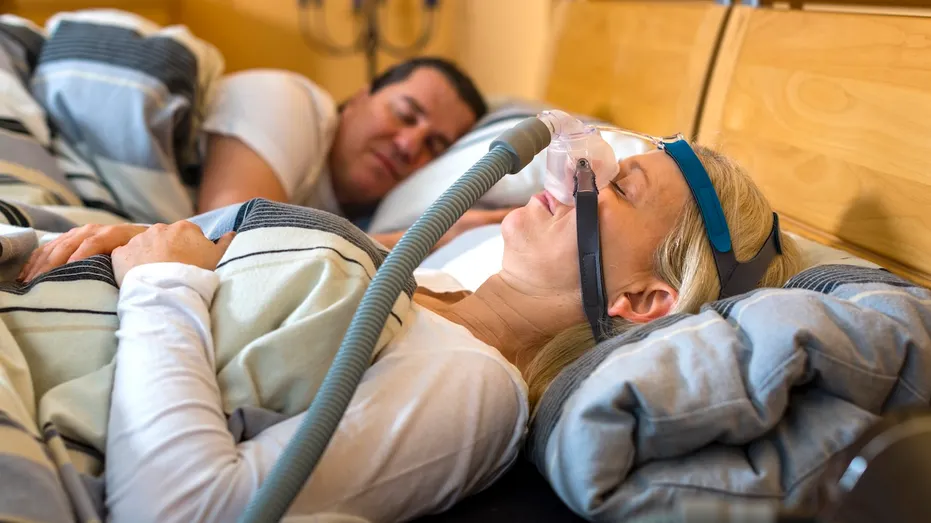
SouthernWorldwide.com – A recent study from Israel has revealed a surprising alteration in muscle structure among individuals diagnosed with obstructive sleep apnea (OSA).
Published in the journal *Sleep and Breathing*, the research indicates that people with OSA tend to exhibit a higher muscle mass index, signifying a larger muscle area in proportion to their height. Concurrently, their muscle density is found to be lower.
This suggests that while individuals with OSA might appear to possess more muscle, this muscle is characterized by reduced density and potentially diminished functionality.
The study involved data collection from 209 adults who participated in an overnight sleep study and underwent chest or abdominal CT scans. This data was then compared to a control group.
Researchers observed that participants with OSA were generally older, more frequently male, and heavier on average. They also had a higher prevalence of hypertension, cardiovascular disease, and experienced lower oxygen levels during sleep.
A significant correlation was identified between OSA and a higher muscle mass index. However, the study noted that lower muscle density was more strongly associated with age and body weight than with OSA itself.
Worsening severity of sleep apnea was linked to a decrease in skeletal muscle density (SMD) and an increase in skeletal muscle index (SMI), pointing towards larger yet less dense muscles.
Higher Body Mass Index (BMI) showed a strong connection with both lower SMD and higher SMI. Similarly, older age was significantly linked to reduced SMD.
The research indicated that individuals over 60 years old and those with a BMI exceeding 30 had a much more pronounced association with lower muscle density compared to OSA alone.
Dr. Wendy Troxel, a clinical psychologist and senior behavioral scientist at RAND, offered a simplified explanation of the study’s core findings.
She explained that individuals with OSA might have greater muscle mass, but this muscle could be less healthy due to a higher fat content, which can negatively impact strength and metabolic function. Dr. Troxel, who was not involved in the study, noted that this pattern resembles sarcopenia, a clinical condition characterized by muscle weakness and reduced efficiency, even without significant changes in muscle size.
Troxel highlighted the “important” link between OSA severity and muscle quality, describing it as “modest” when compared to established risk factors like age and body mass.
She suggested that OSA might serve as one indicator within a broader spectrum of metabolic risks. This underscores that OSA is more than just a nocturnal breathing disorder; it could signal underlying metabolic dysfunction affecting various bodily systems, including muscle health.
Read more : Ancient 'Zombie Worm' Revived After 24,000 Years in Arctic Ice, Then Reproduced
Ariel Tarasiuk, a co-author of the study and professor at Ben-Gurion University of the Negev, described the findings as “paradoxical.”
He stated that age and obesity appeared to exert a stronger influence on muscle health than sleep apnea itself. This implies that while sleep apnea may contribute, it might not be the primary driver of these observed muscle changes.
Tarasiuk emphasized the importance for patients to understand that sleep apnea’s impact extends beyond snoring or poor sleep, affecting overall health, including muscle function.
He stressed that proper diagnosis and treatment are crucial. While CPAP therapy can significantly improve breathing and sleep quality, it represents only one part of managing the condition.
Maintaining a healthy weight and remaining physically active are equally vital for muscle health and for mitigating the severity of sleep apnea. In essence, treating sleep apnea is about safeguarding long-term health, not solely about improving sleep quality.
Tarasiuk reminded clinicians that larger muscles do not always equate to healthier muscles, as some may be infiltrated with fat, potentially compromising their strength and performance.
This observation highlights the necessity of looking beyond muscle size alone. Routine imaging, such as CT scans performed for other medical reasons, can sometimes offer valuable insights into muscle quality.
Overall, the study’s conclusions advocate for a more comprehensive approach that includes treating the airway, alongside a focus on weight management, physical activity, and metabolic health.
Tarasiuk cautioned that the study’s findings might not be universally applicable, given that it was conducted at a single research center.
Additionally, the researchers lacked data on lifestyle factors such as physical activity levels, dietary habits, smoking, and alcohol consumption, all of which can influence muscle health.
Tarasiuk expressed that larger, multi-center studies are needed to confirm these findings and provide a more extensive understanding.
Future research will also concentrate on real-world outcomes, including patient responses to treatments like CPAP, and on understanding the progression of muscle changes over time in individuals with sleep apnea.