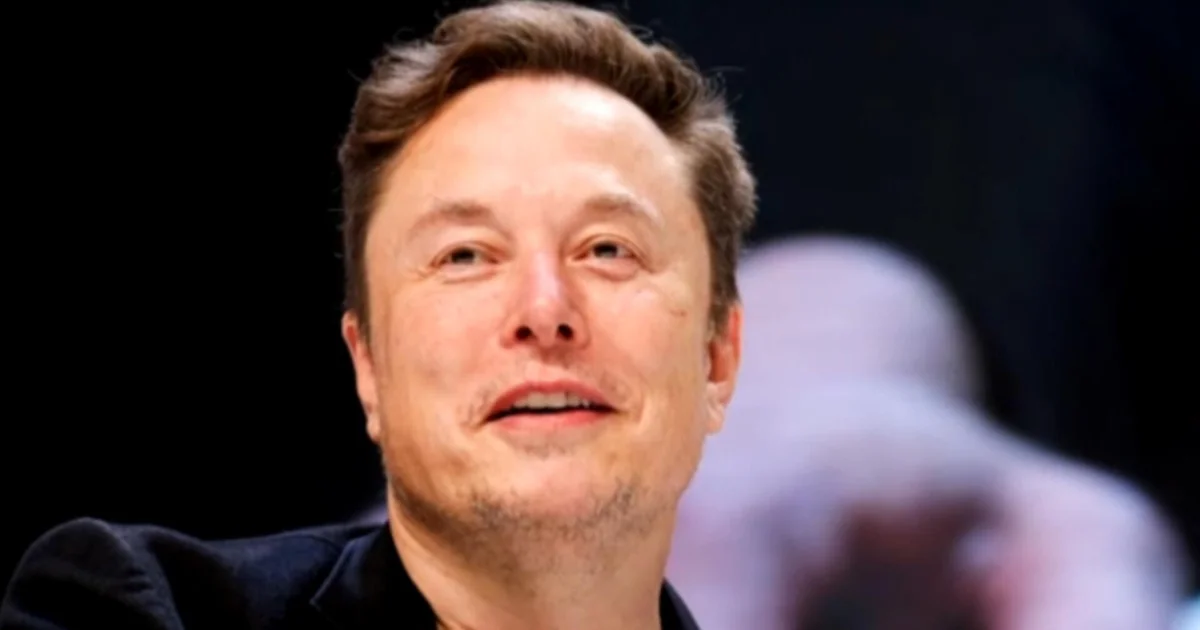
SouthernWorldwide.com – SpaceX is gearing up for a monumental stock market debut this month, with plans to raise up to $75 billion. This move is poised to become the largest initial public offering in history and could potentially make Elon Musk the world’s first trillionaire.
The space exploration company, officially known as Space Exploration Technologies Corp., announced its intention to offer 555,555,555 shares at $135 each. This offering is expected to surpass the $26 billion raised by Saudi Aramco in 2019, a previous record holder. The projected market valuation for SpaceX following the IPO stands at an astonishing $1.77 trillion.
Currently, only six companies in the S&P 500 boast a market capitalization exceeding this figure, with Nvidia leading the pack at $5.2 trillion. The significance of SpaceX’s IPO extends beyond its sheer size; it also sheds light on Elon Musk’s substantial control over the company.
As CEO, chief technical officer, and chairman, Musk’s voting power is predominantly derived from his ownership of 5.22 billion Class B shares. Each Class B share grants the holder ten votes, giving Musk an impressive 82.4% of the total voting power within SpaceX, according to the company’s filing.
Forbes currently estimates Musk’s net worth at $826 billion, with his stake in SpaceX valued at $542 billion. This valuation was based on a previous company assessment of $1.25 trillion. Should SpaceX achieve its projected $1.77 trillion valuation, Musk’s personal net worth would see an increase of $223 billion, pushing him past the trillion-dollar mark.
However, it is important to note that a significant portion of Musk’s wealth is tied up in stock that he has not yet liquidated. Despite the ambitious IPO plans, SpaceX is currently experiencing substantial financial losses. The company reported an operational loss of $2.6 billion last year, despite generating $18.7 billion in revenue. These losses have continued into the early part of this year.
The ultimate success of SpaceX in the public market remains to be seen. Musk’s aspirations for the company are as bold as the financial targets he has set for the IPO. The company’s IPO document, which deviates from the typically dry and technical language of such filings, paints a vivid picture of its ambitious future.
It details plans to utilize the proceeds from the sale to facilitate the return of humans to the moon and potentially establish a presence on Mars. One section of the document highlights the necessity of creating a “permanent human colony” on the red planet, envisioning a population of “at least one million inhabitants.” This vision is framed against the backdrop of existential threats that could lead to humanity’s extinction, drawing a parallel to the fate of the dinosaurs.
Musk’s ambitious vision extends to his other prominent company, Tesla. He aims to transform the electric vehicle manufacturer into a leading producer of robotaxis and humanoid robots. Industry analyst Dan Ives of Wedbush Securities has suggested that a merger between Tesla and SpaceX could occur next year.
The Crucial Role of Artificial Intelligence
Artificial intelligence is identified as a pivotal factor in the success of both SpaceX and Tesla, as well as any potential merged entity. In its IPO filing, SpaceX projects potential revenue from AI to reach as high as $26.5 trillion. However, this projection is contingent on another ambitious goal: the establishment of data centers in space, a feat that is not currently technologically feasible.
The transition of SpaceX into a primarily AI-focused company presents a significant challenge for Musk. He founded xAI in 2023 alongside eleven co-founders, all of whom have since departed the company. Some were reportedly recruited by competing firms.
Arnal Dayaratna, an analyst at IDC, commented on SpaceX’s AI endeavors, stating that its main AI product, the chatbot Grok, is “less impressive than anything that we see from any other major player in the space, whether that’s OpenAI, or Anthropic, or (Google’s) Gemini.”
Despite these observations, Dayaratna acknowledges SpaceX’s potential as a major player in the AI landscape. This potential is bolstered by its existing computing partnership with Anthropic and Musk’s recent acquisition of the rights to purchase the AI coding tool Cursor for $60 billion later this year. The integration of Cursor’s capabilities could grant SpaceX access to coveted business clients currently utilizing offerings like Anthropic’s Claude or OpenAI’s ChatGPT.
The net proceeds from the IPO are earmarked for several key initiatives. SpaceX plans to fund the expansion of infrastructure for its AI and rocket businesses. Additionally, the company aims to enhance its Starlink Mobile satellite constellation, among other strategic investments.
Kathleen Brooks, research director at the brokerage firm XTB in London, noted the favorable market conditions, stating, “The AI trade continues to roar, just in time for SpaceX’s IPO next week.” The company is slated to list on the Nasdaq under the ticker symbol “SPCX,” with trading expected to commence as early as the end of next week.
Anthropic on the IPO Path, OpenAI Expected to Follow
SpaceX is not the only major company preparing for a significant market debut. Earlier this week, Anthropic submitted a confidential filing with the U.S. Securities and Exchange Commission, officially initiating its IPO process. While OpenAI has not yet publicly announced its SEC filing, an IPO from the creator of ChatGPT is widely anticipated.
Ives of Wedbush Securities commented on the upcoming wave of IPOs, noting, “This listing represents the first major test for public markets after years of muted IPO activity with SpaceX paving the way for AI giants Anthropic and OpenAI to follow soon after.”