SouthernWorldwide.com – As summer approaches, many Americans are concerned about their ability to afford a vacation, with airfare costs already experiencing a significant surge.
The price of air travel has increased by a substantial 18% compared to the same period in 2025. This makes trips to popular destinations increasingly out of reach for middle-class families, painting a bleak picture for future travel plans.
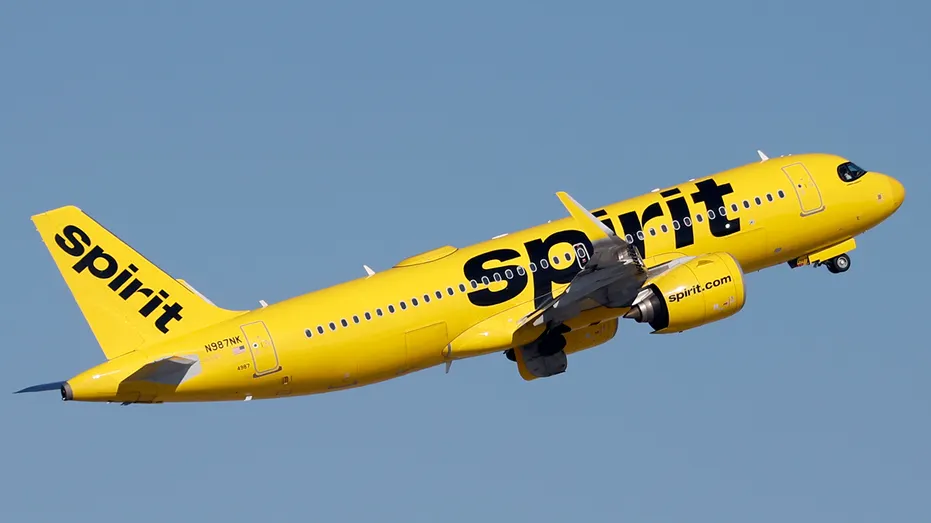
Adding to these concerns, Spirit Airlines, a prominent low-cost carrier, announced on May 2nd that it is ceasing operations and canceling all flights. This decision leaves many travelers stranded and significantly reduces the options for affordable air travel.
The demise of Spirit Airlines is directly attributed to the actions of the Biden administration. The administration effectively blocked a merger deal that could have saved the airline, a move that was lauded by prominent Democrats who now face scrutiny for their economic policies.
In 2022, Spirit and JetBlue initially announced their intention to merge, forming a new airline entity. This proposed merger aimed to combine JetBlue’s extensive global reach with Spirit’s commitment to low fares, creating a more robust and competitive airline.
The merger was also intended to foster greater competition within the airline industry. It would have established a significant budget competitor to the dominant “Big Four” carriers: Delta, Southwest, American, and United. This increased competition was projected to lead to lower airfares for consumers across the board.
The principle that increased competition generally results in lower prices is well-established. However, the Biden administration spent the subsequent two years actively opposing the JetBlue-Spirit merger, arguing that the combined entity would become too large.
It is noteworthy that a federal government with a budget of $7 trillion expressed concerns about a $3.8 billion business agreement. This approach has become increasingly common in Washington, spearheaded by figures like Lina Khan at the Federal Trade Commission, and then-Attorney General Merrick Garland and then-Assistant Attorney General Jonathan Kanter at the Department of Justice.
The enforcement standards for antitrust matters appeared to be shifting. Instead of focusing on whether a proposed merger would harm consumers, the decision-making process seemed to be influenced by the prevailing mood or agenda of the officials involved.
At one point, Lina Khan and the Biden administration had a significant portion of companies on the S&P market cap, around 40%, under investigation. This arbitrary anti-business sentiment ultimately led to the downfall of the JetBlue-Spirit merger.
The Biden administration successfully persuaded a liberal judge to rule against the proposed deal, effectively ending the merger talks. This decision had far-reaching consequences for both airlines and consumers.
Following the ruling, Attorney General Merrick Garland stated that the merger “would have caused tens of millions of travelers to face higher fares and fewer choices.” This statement now carries a different weight, given that Spirit Airlines has ceased to exist.
The opposition to the merger was not limited to Garland. Pete Buttigieg, who served as Biden’s Secretary of Transportation, publicly boasted about participating in the campaign against Spirit and JetBlue. He indicated his support for the DOJ’s lawsuit and the use of his department’s own authorities.
Democratic state attorneys general also vigorously opposed the merger. Colorado Attorney General Phil Weiser even described the successful challenge of the JetBlue/Spirit merger as a significant “guidepost” for future actions by state enforcers.
Furthermore, Senator Elizabeth Warren of Massachusetts took to Twitter to praise the administration’s decision, stating that Biden’s appointees “were right to stand up for consumers and fight against runaway airline consolidation.”
However, the merger itself was arguably anti-consolidation, as it would have created a new challenger to the established “Big Four.” It was also pro-consumer, as it was expected to stimulate competition and lower airfares.
The merger also represented a lifeline for Spirit Airlines, potentially saving the jobs of its 17,000 employees. Its blockage ultimately led to the airline’s financial distress.
Just eight months after the JetBlue-Spirit deal was blocked, Spirit announced its intention to file for bankruptcy. The airline would face bankruptcy proceedings again less than a year later.
The consequences extend beyond Spirit Airlines. JetBlue is now facing significant financial challenges following the failed merger. One estimate suggests that JetBlue has a greater than 75% chance of filing for bankruptcy this year.
For summer vacationers, the impact is already being felt. Data from Cirium Analytics estimates that Spirit’s competitive pricing helped to lower airfares by approximately 14%. With Spirit’s departure, airfares are expected to rise further.
This disruption at airports can be laid at the feet of Democrats, who seem to believe that government bureaucrats are best positioned to manage the affairs of businesses and consumers. They view antitrust as a tool for these officials to exert control.
The Spirit Airlines situation serves as a stark example of the flaws in this approach. The actions of Buttigieg, Garland, and Khan have resulted in reduced competition, fewer consumer choices, increased prices, job losses, and a greater concentration of economic power among established companies.
It is hoped that a future Trump administration will implement a course correction in antitrust policy. The White House should engage in a frank discussion with the legal and bureaucratic teams within the Department of Justice and the Federal Trade Commission.
The instruction should be to intervene in future mergers only when there is clear and demonstrable harm to consumers and the competitive market. Such intervention should not be based on arbitrary judgments or political agendas.
Baca juga di sini: Expert Explains Hidden 'Shipwreck City' in Urban Lake
While it is too late to save Spirit Airlines, the current situation presents an opportunity to re-evaluate and abandon certain Democratic economic policies. Spirit Airlines, and indeed hard-working American families, deserved a better outcome.