SouthernWorldwide.com – The Supreme Court’s recent decision regarding the Voting Rights Act has sparked significant debate, with critics claiming it undermines the rights of Black citizens. However, a closer examination suggests the ruling aims to dismantle a system of politically engineered racial districts, rather than restrict voting access.
For years, congressional maps have been drawn in increasingly convoluted ways. These districts often ignored natural geographic boundaries and community ties, instead twisting and contorting to connect disparate groups of Black voters. The primary objective appeared to be achieving specific racial percentages, rather than representing cohesive neighborhoods or shared interests.
This practice has been a cause for concern. It suggested a belief that Black citizens required artificial political arrangements to have their voices heard. Instead of viewing Black communities as unified entities with shared concerns, some politicians and activists treated them as mere census blocks to be manipulated by race.
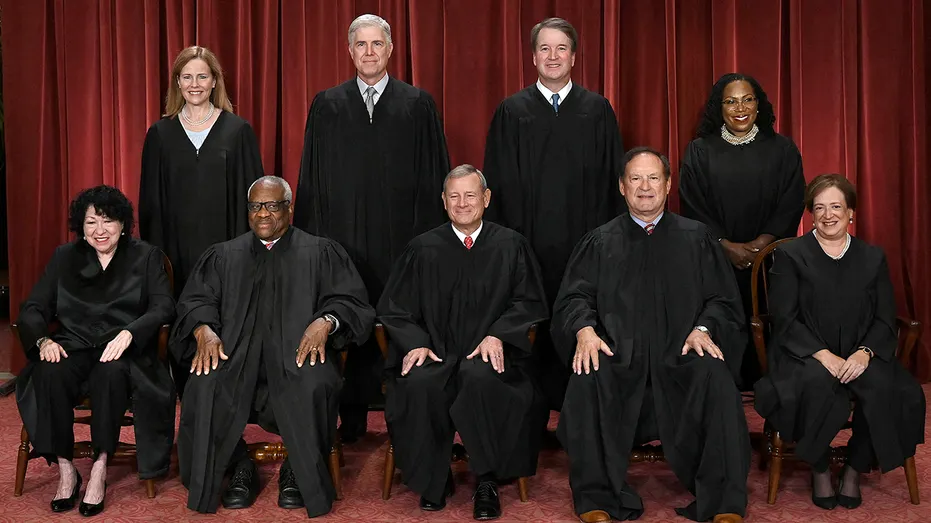
The Supreme Court, in the case of Louisiana v. Callais, has now placed significant limits on how Section 2 of the Voting Rights Act can be applied in redistricting. The court’s decision curtails the race-based logic that has historically shaped many of these district maps. It is important to note that the Voting Rights Act itself has not been repealed, nor have the rights of individuals to vote, run for office, organize, or win elections been diminished.
The ruling essentially states that race cannot be the sole or overriding factor in drawing electoral districts, particularly when presented as the highest form of civil rights advocacy. This decision has been met with strong reactions from the left, with some commentators drawing parallels to the civil rights struggles of the 1950s and 1960s.
These critics have decried the decision as a gutting and demolition of the Voting Rights Act, evoking fears of a return to discriminatory practices like literacy tests and poll taxes. This dramatic portrayal, however, overlooks the nuanced nature of the Supreme Court’s ruling.
Adding to the controversy, some individuals and groups who have built careers on racial advocacy have seized upon this decision. These “racial performance artists,” as they are described, are accused of framing any unfavorable ruling through the lens of white supremacy, segregation, and historical oppression. This tactic, it is argued, dilutes the meaning of terms like “white supremacy” and prevents serious engagement with the issues.
The author contends that these figures are exploiting historical grievances for personal or professional gain, profiting from fear and perpetuating a narrative of victimhood. This approach is deemed morally questionable, as it prioritizes self-interest over genuine progress.
The most significant frustration, the author expresses, is the refusal of these opportunistic figures and certain liberal allies to acknowledge the ruling as a step toward greater equality under the law. For the first time in a long time, the country is moving away from a system that ties Black political power to government-mandated racial classifications.
Baca juga di sini: Manny Fernandez, Key Figure in Dolphins' Undefeated 1972 Season, Dies at 79
Instead of recognizing this shift as progress, these critics are accused of deliberately stirring up fears of systemic racism. They aim to convince the public that America remains so inherently racist that Black citizens cannot succeed under the same legal framework as everyone else.
This narrative, the author argues, is not about protecting Black communities but about preserving the influence and importance of those who benefit from the “grievance industry.” If Black Americans begin to view this decision as a move towards a single standard of citizenship, where their vote holds weight due to their status as citizens rather than their inclusion in specially drawn districts, then the foundation of this industry weakens.
Consequently, a sense of panic sets in. The author asserts that the cries of “white supremacy” and “Jim Crow,” along with declarations of democracy’s demise, are ultimately a defense against declining relevance. These figures are fighting to maintain their platform and their influence.
The author reflects on the historical weight and meaning of the word “Black” in America. It once represented pride, resilience in the face of humiliation, perseverance, self-respect, faith, and the triumph over adversity. It symbolized parents instilling values of hard work, faith, and dignity in their children.
However, the author laments that many of today’s most vocal Black leaders are characterized as mere “hustlers.” They are accused of performing for cameras, painting America as irredeemably racist, and doing so in a country that grants them the freedom to propagate such a message.
The tragedy, in this view, lies in the message conveyed: instead of encouraging Black individuals to engage their neighbors and build consensus, the narrative is one of dependency, suggesting that survival is contingent on being racially packaged by external forces. This perspective, the author argues, consistently casts Black people as perpetual victims rather than as active builders of their communities.
As a pastor, the author rejects this narrative of victimhood. True dignity, it is stated, comes from a higher power, and genuine political influence is cultivated through organizing, persuasion, active participation, and building coalitions with those who share common streets and values, not solely by skin color.
The desire is for Black individuals to believe in this form of empowerment—the power derived from their own agency, the power of persuasion, and the power of building community. This is contrasted with the power of grievance merchants and race hustlers.
Ultimately, the call is for faith in one’s own capabilities, confidence in one’s own voice, and the courage to stand on equal footing under the same laws as all other citizens. The author concludes that embracing this equality is not an act of racism but a sign of progress.