SouthernWorldwide.com – Former President Donald Trump has publicly expressed his strong disappointment with two Supreme Court justices he appointed, Neil Gorsuch and Amy Coney Barrett, following a significant ruling that went against his administration’s use of tariffs.
In a lengthy post on Truth Social, Trump criticized the justices by name, lamenting a $159 billion ruling that disallowed certain tariffs. He also voiced concerns that the same justices might rule against his administration on the issue of birthright citizenship, a decision he believes would show a profound lack of respect for the country and its people.
Trump’s 545-word statement on Sunday night highlighted his expectations, stating, “I don’t want loyalty, but I do want and expect it for our Country.” He expressed his frustration with the court’s decision, noting that while he has alternative methods for implementing tariffs, the court deemed his preferred approach “illegal” or “unconstitutional.” He speculated that perhaps Gorsuch and Barrett were simply having an “off day,” but warned of the potential consequences for the nation if such significant decisions continue to undermine its stability.
He emphasized the importance of “Good, Strong, Common Sense” in judicial decision-making. Trump also linked the tariff ruling to a potential negative outcome on birthright citizenship, arguing that such a decision would be “not Economically sustainable for the United States of America!”
Read more : House Freedom Caucus signals intensified fight as FISA deadline nears
The Supreme Court’s decision on birthright citizenship is still pending, with an expected ruling by the end of June or early July. Trump has been a vocal proponent of ending “birth tourism,” a practice where foreign nationals come to the U.S. to have children who then automatically gain U.S. citizenship.
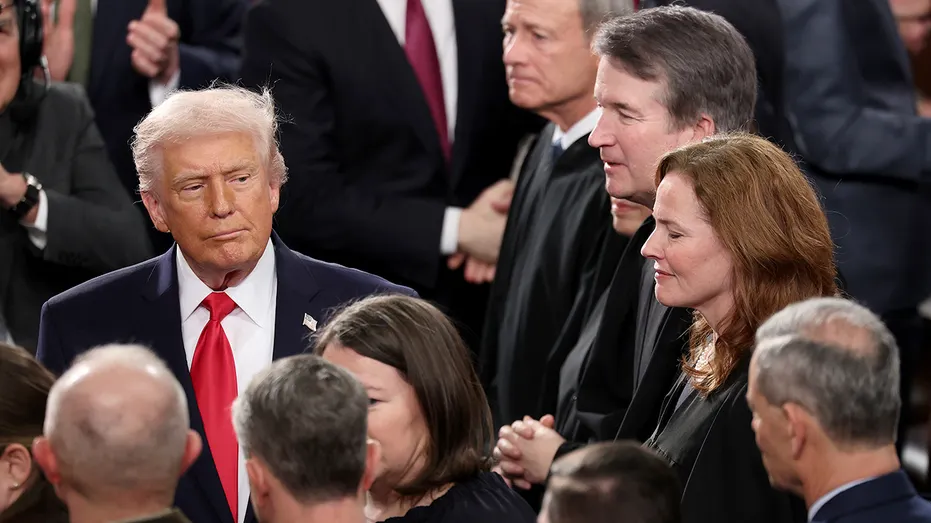
Trump reiterated his commitment to selecting individuals who would serve the country’s best interests, not harm them. He noted his attendance at a Supreme Court session, an event he felt was not adequately acknowledged by the court itself, a detail he believes was observed by the media. He predicted that the court would rule against him on birthright citizenship, which he fears would leave the U.S. as the sole nation practicing such a policy, which he deems an “unsustainable, unsafe, and incredibly costly DISASTER.”
In late February, the Supreme Court delivered a 6-3 ruling against President Trump’s use of the International Emergency Economic Powers Act (IEEPA) to impose tariffs for national security and trade purposes. Justices Gorsuch, Barrett, and Chief Justice John Roberts joined the liberal justices in this decision. Justices Clarence Thomas, Samuel Alito, and Brett Kavanaugh dissented, arguing against the constitutionality of using IEEPA for such tariff impositions on foreign goods and nations during times of conflict.
Trump acknowledged his admiration for Justice Gorsuch, describing him as “really smart and good,” but expressed bewilderment at his vote against him and the country on the tariff issue, calling it a “devastating move.” He stated, “How do I reconcile this? So bad, and hurtful to our Country.” He extended similar sentiments to Justice Barrett, whom he also said he “always liked and respected,” but noted she made the same decision.
He expressed his dismay that individuals he appointed had “hurt our Country so badly,” while also stating he didn’t believe they intended to. He highlighted that the tariff ruling resulted in the U.S. having to repay $159 billion to entities and countries that had previously taken advantage of the nation.
Trump suggested that the situation could have been resolved with a simple sentence in the ruling, such as “Any money paid by others to the United States does not have to be paid back.” He questioned why this wasn’t included, implying a missed opportunity to prevent the financial repercussions.
The former President further commented on the composition of the Supreme Court, suggesting that with certain Republican-nominated justices, Democrats might not need to “PACK THE COURT” as the current justices are not consistently ruling in his favor. He implied that he himself might consider such a move.
Trump proposed that some conservative justices should adopt a more politically aligned approach to interpreting the law, similar to how he perceives liberal justices act on behalf of their constituents and ideologies. He expressed his dedication to “MAKE AMERICA GREAT AGAIN” and felt that those he appointed had shown “so little respect to our Country, and its people.”
He questioned the reasoning behind their decisions, suggesting that while it’s acceptable for them to be loyal to the country, it should also be acceptable for them to be loyal to the person who appointed them to such a high position. He contrasted this with “Democrat Justices,” who he believes “always remain true to the people that honored them,” regardless of the case’s merits. He accused Republican justices of sometimes going out of their way to oppose him, seemingly to demonstrate their “independence” or perceived superiority.