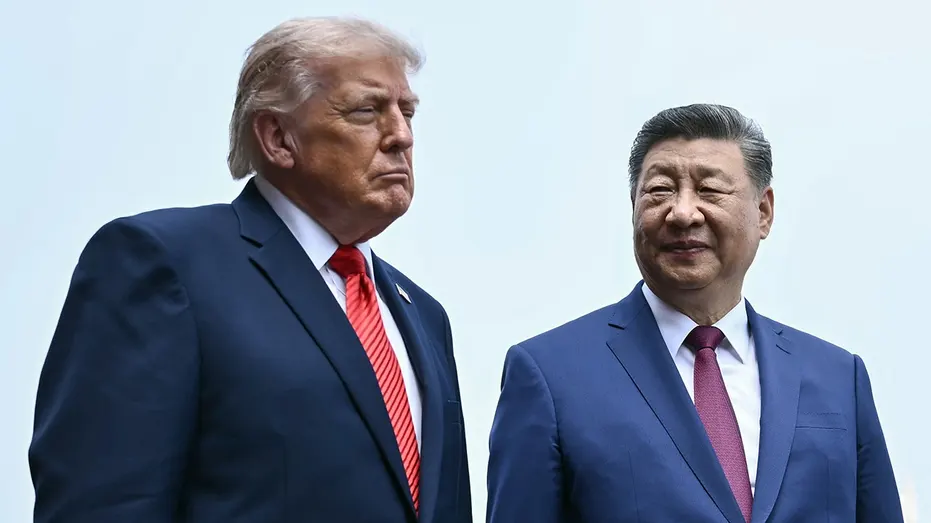
SouthernWorldwide.com – Trade has become a central theme in the high-stakes meetings between President Donald Trump and Chinese President Xi Jinping this week, particularly following a Supreme Court decision earlier this year that limited Trump’s authority to impose tariffs.
A White House official stated that President Trump had a productive meeting with President Xi of China. The discussions covered avenues to strengthen economic cooperation between the two nations, including broadening market access for American businesses in China and encouraging Chinese investment in U.S. industries.
These discussions occur as Trump’s tariff strategy encountered a significant setback. A Supreme Court ruling restricted his ability to use emergency powers for imposing duties, thereby diminishing one of his key tools for exerting pressure on Beijing. This ruling came against the backdrop of a prolonged tariff dispute between the U.S. and China, where Trump advocated for aggressive duties to achieve fairer trade terms, while China consistently opposed these measures.
TRUMP’S TARIFF POWER GRAB BARRELS TOWARD SUPREME COURT
President Trump indicated his intention to press President Xi on trade, stating he would ask the Chinese leader to “open up” China to allow its people to thrive and elevate the nation. He anticipated this would be his initial request during their upcoming meeting, believing it would be immensely beneficial for both countries.
Following Trump’s arrival in China, Chinese Ministry of Foreign Affairs spokesperson Mao Ning conveyed that President Xi emphasized to President Trump that trade wars do not produce winners. She reiterated that China-U.S. economic and trade relations are inherently mutually beneficial and win-win.
Mao Ning added that when disagreements and friction arise, equal consultation is the only appropriate approach. This sentiment underscores China’s preference for dialogue and negotiation over unilateral actions.
TRUMP GETS RED-CARPET WELCOME IN CHINA, BUT PAST BEIJING TRIP SHOWS PAGEANTRY ONLY GOES SO FAR
Tariffs have consistently been a cornerstone of Trump’s China policy since his first term, marked by the imposition of duties on Chinese imports and retaliatory tariffs from Beijing. This trade friction has remained a defining element in the relationship between the world’s two largest economies.
A significant aspect of Trump’s “America First” agenda has been to promote a more equitable global trade environment by holding other nations accountable for trade imbalances. Early in his tenure, he introduced “Liberation Day” tariffs in April 2025, intended to serve as leverage in trade negotiations and generate revenue.
The Supreme Court, in a 6-3 decision, ruled against Trump’s use of an emergency law to impose tariffs in February. The court determined that the International Emergency Economic Powers Act does not grant the president the authority to impose tariffs, even after declaring a national emergency.
Trump had expressed hope that the court would rule in his favor, viewing it as crucial for boosting the economy, creating jobs, and reducing costs for Americans.
KAVANAUGH RIPS SUPREME COURT MAJORITY’S ‘ILLOGICAL’ LINE ON TARIFFS
Justice Brett Kavanaugh, along with Justices Clarence Thomas and Samuel Alito, dissented from the majority opinion. Trump voiced his displeasure with Justices Neil Gorsuch and Amy Coney Barrett, both of whom he appointed, for joining the majority. He recently stated that the ruling has cost the U.S. $159 billion.
Trump posted on Truth Social that he does not demand loyalty but expects it for the country. He acknowledged having alternative methods for imposing tariffs, though these are slower and more laborious than the previously invalidated approach, which he described as “illegal” or “unconstitutional” with powerful dissents. He speculated that perhaps Justices Gorsuch and Barrett were having a bad day, but warned that the country could not withstand many such significant decisions without breaking down.
TRUMP’S SIGNATURE TARIFFS HANG ON KEY QUESTION ABOUT CONGRESS’ POWER BEFORE SUPREME COURT
Trump sought to maintain his tariff pressure campaign by utilizing other trade authorities, such as Section 122 of the Trade Act of 1974. However, this avenue is temporary and has already faced legal challenges.
A spokesperson noted that this tariff tool has already been subject to prior legal challenges. The statement implies ongoing legal scrutiny of these alternative measures.
Trump’s visit to China in 2017 resulted in over $250 billion in announced commercial deals and cooperation pledges. Nevertheless, these agreements did not prevent a deterioration of trade relations in 2018.
The current week’s discussions occur amidst a renewed tariff standoff that intensified after Trump’s return to office in 2025. The pressure began with new tariffs related to fentanyl on Chinese goods in February, expanding into a broader reciprocal tariff exchange that provoked retaliation from Beijing. The focus has since shifted towards negotiations concerning temporary off-ramps.
Read more : TNA's AJ Francis Aims for X Division Title, Slams Critics
An official expressed the desire to ensure a continued supply of rare earth minerals essential for manufacturing. They also aim to secure continued Chinese purchases of American agricultural products, airplanes, and other goods that the U.S. excels at producing. The goal is to establish a stable environment for the next six months to a year, viewing these as key outcomes for the trip.