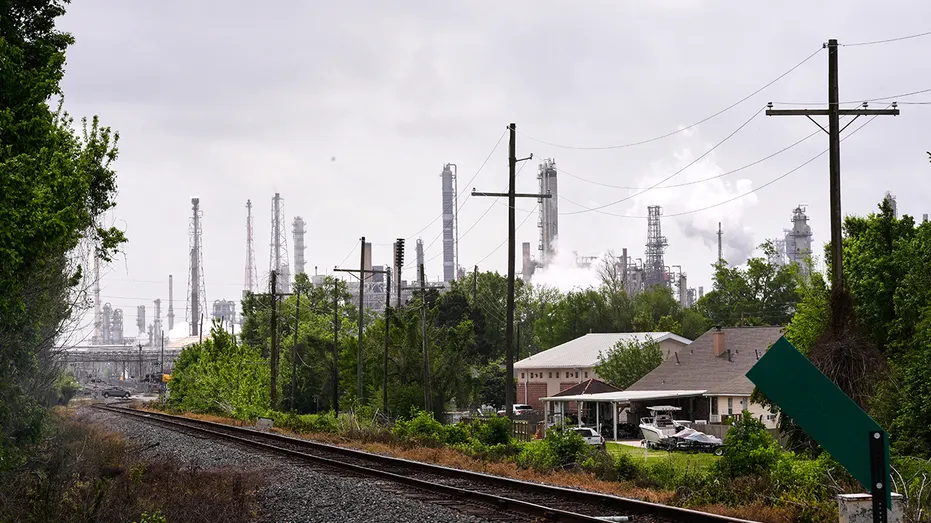
SouthernWorldwide.com – The path to resolving the Middle East’s complex issues may lie in disengaging from them. A discernible pattern is emerging from the current turmoil: increased oil production in the Americas and the United States’ quiet pursuit of energy self-sufficiency.
This initiative began with the familiar campaign slogan “Drill, Baby, Drill,” followed by the January 2025 National Energy Emergency proclamation. Subsequent actions included the “Big Beautiful Bill,” eased regulations for oil and gas industries, and engagement with Venezuela’s vast reserves. The recent lessons learned from navigating the volatile Strait of Hormuz have also contributed to a significant recalibration of U.S. energy access.
“Let them all do it. What the hell are we doing it for?” President Donald Trump recently questioned, suggesting that Europe, China, Korea, and Japan should take the lead in securing and policing the Strait of Hormuz. He added, “We will be helpful, but they should take the lead in protecting the oil they so desperately depend on.” Regardless of one’s opinion of Trump, the argument for the U.S. to step back from this responsibility may be a sound one.
The global oil market is an intricate web of alliances, logistical networks, shipping routes, pipelines, and refining capacities. In simple terms, the U.S. consumes approximately 20 million barrels of crude oil daily while producing 13.6 million barrels. While analysts may refer to energy independence based on British Thermal Units (BTUs), actual barrel counts reveal a continued need for more physical supply to bridge the gap. The U.S. is approaching this goal.
STEVE MOORE: FIVE ENERGY TRUTHS THE MEDIA IGNORE AS AMERICA’S OIL BOOM BLUNTS THE IRAN WAR’S IMPACT
Canada is a significant supplier, exporting 4.0 million barrels per day to the U.S. Mexico contributes an additional 0.3 million barrels, and Venezuela adds 0.44 million. Collectively, these North American sources provide 18 million barrels per day. As Venezuelan exports are expected to rise with the efforts led by Energy Secretary Chris Wright, and Mexican exports return to historical levels, coupled with newly favorable federal leasing opportunities in Alaska, the Lower 48 states, and the offshore Gulf, the U.S. is nearing genuine, not just rhetorical, energy independence. While prime shale acreage may be diminishing, drilling efficiencies continue to improve, and there remains an abundant supply of BTU-rich natural gas liquids from major production basins.
However, two significant challenges persist: California and New York. Both states are rich in oil and natural gas resources, yet they maintain a contradictory policy of not producing these resources while still consuming them. Trapped in their ideological stance, potentially trading policy for economic hardship, there is a hope that pragmatism will eventually supersede ideology.
The first hurdle is that the profitability floor for oil production is not in the $50s or $60s per barrel, as promoted by the Trump administration. Instead, it lies in the mid to upper $70s. Deregulation alone, or the elimination of unnecessary regulations, cannot fundamentally alter this economic reality.
Baca juga di sini: As a Doctor, I Know We Must Help the Overlooked Smoker
TRUMP FLOATS A GAS TAX HOLIDAY
The second challenge is the timeline. Trump and Chris Wright’s term concludes in January 2029. Should a subsequent administration, such as one led by Joe Biden and Jennifer Granholm, adopt policies similar to those that previously halted federal lease sales on the first day of their term, the progress made in energy independence could be reversed, canceled, or challenged through litigation. This potential return to a “war on fossil fuels” is a significant concern.
Given that a substantial portion of energy production in Western states occurs on federal land, a drastic policy shift to the left could undermine the energy independence the U.S. is striving to achieve. A renewed focus on renewables, while important, will not provide the immediate energy supply needed, especially considering the escalating demands from data centers.
The political left often fails to view energy as an “all-of-the-above” necessity. Instead, it actively opposes fossil fuels, which, alongside nuclear power, are essential for universal energy efficiency. If a Biden-like administration were to return to power, a resurgence of state-sponsored climate activism could lead the U.S. back into the same Middle Eastern instability that it now has an opportunity to escape.
Trump and his cabinet are facing a limited window of opportunity. Achieving true U.S. energy independence requires immediate action, including increased leasing on federal lands and waters, a higher rig count, and the completion of proposed pipelines and refinery expansions. Politicizing low oil prices, a tactic Trump is known to employ, will not be sufficient to reach this goal.
Reasonable oil prices are neither inherently inflationary nor recessionary. The detrimental effects arise when prices fall too low, as seen earlier this year, or climb too high, as they are currently. As an owner of both a fracking company and an oil and gas production company, I consistently advocate for a balanced market. While deregulation is beneficial, its impact is negligible compared to the necessity of achieving appropriate price levels.
The opportunity is now. It is unlikely to remain open for long.