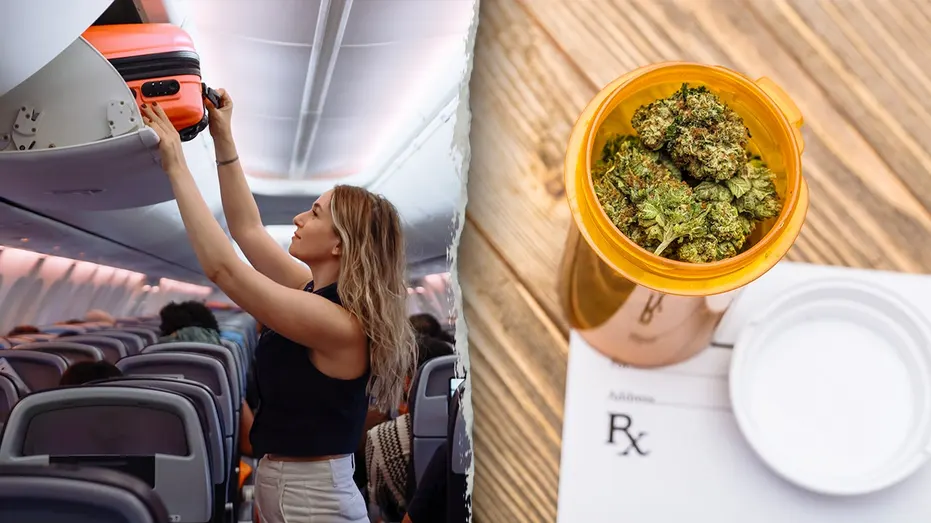
SouthernWorldwide.com – The Transportation Security Administration (TSA) has recently updated its guidelines concerning medical marijuana, providing specific instructions for both carry-on and checked luggage within its “What Can I Bring?” directory.
This update allows patients who use cannabis for managing chronic pain, anxiety, nausea, or other qualifying medical conditions to travel with their medication for use at their destination.
However, experts strongly advise separating the travel process from medication use. It is recommended to wait until arrival at the destination before consuming cannabis.
Using cannabis aboard an aircraft is generally not advised. Airlines strictly prohibit smoking and vaping, and even edible products can have unpredictable effects.
While some experienced users might opt for a low-dose edible before a flight to manage anxiety or promote sleep, familiarity with the product and dosage is crucial. It is not the appropriate environment to experiment with new products or unfamiliar dosages.
What might feel relaxing to an experienced consumer could easily become overwhelming for someone with less experience.
According to clinical data published by the American College of Cardiology, cannabis use can significantly alter heart rhythm regulation and increase the heart muscle’s overall oxygen demand.
This heightened cardiac strain, combined with the body’s natural response to altitude—which already causes the heart to beat faster to distribute lower oxygen levels—can potentially trigger acute cardiovascular distress.
Rather than alleviating travel anxiety, using unpredictable or high-potency doses at high altitudes can exacerbate symptoms such as severe nausea, dizziness, and hyperventilation.
The primary objective should be to maintain continuity of care during travel, not to medicate at high altitudes.
For an increasing number of patients, cannabis has transitioned from an alternative therapy to a primary form of medication. In such cases, thorough preparation is essential before traveling with the substance.
The safest approach to traveling with cannabis involves understanding the relevant laws before packing. Travelers should not misinterpret the updated TSA language.
A TSA checkpoint does not provide legal immunity from state or local enforcement. The TSA’s primary role is to identify security threats, not to screen for cannabis. However, this does not guarantee that possessing cannabis will not lead to issues.
If your cannabis product appears legitimate, is properly labeled, and professionally packaged, it is less likely to raise questions compared to carrying a bag of unidentifiable gummies and loose flower.
Should an item attract scrutiny, TSA agents have the authority to refer the matter to law enforcement.
While domestic travel has entered a somewhat gray area, international travel operates under a completely different set of rules. Crossing international borders with cannabis carries severe risks, irrespective of the laws in the destination country.
For international travel, it is strongly advised to leave cannabis at home. Even in countries where cannabis has been legalized, the regulations for visitors can differ significantly from those for residents.