SouthernWorldwide.com – Finnish Foreign Minister Elina Valtonen has stated that Ukraine now holds a stronger hand in its conflict with Russia. She believes Russia’s recent signals about potential talks are a direct result of Ukraine’s advancements militarily, politically, and diplomatically.
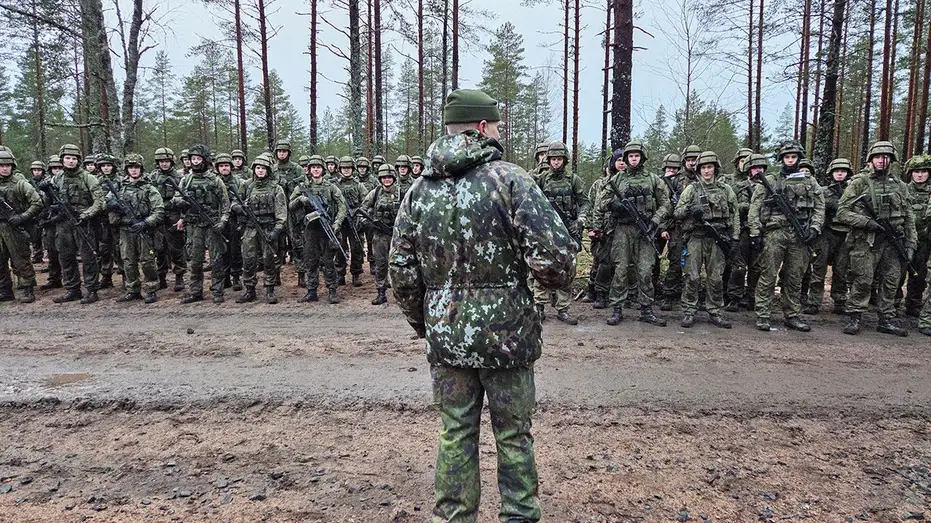
Valtonen’s perspective carries significant weight, given Finland’s recent accession to NATO and its position along the alliance’s longest border with Russia. Finland’s decision to join NATO in April 2023, following Russia’s full-scale invasion of Ukraine, marked the end of its long-standing policy of military non-alignment and transformed it into a key player in European security.
Her assessment aligns with reports indicating that Ukrainian forces have reclaimed over 600 square kilometers of territory in 2026, a notable shift after years of slow Russian advances. This comes amidst renewed diplomatic efforts, including Ukrainian President Zelenskyy’s openness to a ceasefire along current lines as a precursor to talks, and Russian President Putin’s current stance against a direct meeting.
Finland shares an approximately 820-mile border with Russia, making it one of NATO’s most strategically vital members.
Valtonen emphasized that Russia has shown little inclination to make concessions, placing the responsibility for ending the war squarely on the Kremlin.
“So far, Russia hasn’t been willing to make any concessions, and essentially Russia could end the war today if they wanted to, because it was their war in the first place,” she said. “So I’m hopeful that this could be the right time to relaunch those talks.”
Peace efforts remain at an impasse due to the fundamental disagreement that has defined the conflict: Ukraine insists on a ceasefire and negotiations without ceding territory, while Russia continues to demand control over occupied Ukrainian regions. In early June, Putin stated it was “pointless” to meet Zelenskyy at this time and reiterated Moscow’s broader war objectives.
Regarding U.S.-led negotiation efforts, Valtonen commended Washington’s role but underscored that Ukraine alone has the authority to decide on any concessions, including territorial ones.
“I think the U.S. involvement in this entire process has been a very good one, and it’s important that the U.S. stays engaged, because at the end of the day, it’s about freedom, it’s the future of not only Europe, but also of global peace,” she stated.
Valtonen also highlighted Europe’s essential role in the peace process, given the direct impact of Russia’s war on the continent’s security.
She reiterated that any meaningful negotiations would necessitate Russia’s commitment to a comprehensive ceasefire.
“First and foremost, we would need Russia at the table willing to end the war,” Valtonen explained. “And that would need to happen through a full ceasefire, because only that would open the possibility for true negotiations.”
Valtonen also credited former President Donald Trump with spurring European allies to increase their defense spending, noting that this pressure has steered the continent in a more positive direction after years of imbalance within NATO.
Finland has been proactive in boosting its defense expenditures. The country plans to raise its defense spending to 3.2% of its GDP by 2030, an increase from the 2.5% allocated in 2025, according to an April report by Reuters.
During a Senate Foreign Relations Committee hearing on Tuesday, Secretary of State Marco Rubio also lauded Finland and Sweden. He remarked that these two newest NATO members have bolstered the alliance by contributing “their own defense industry” and “advanced technologies.”
He described them as “a great partner” and “an extraordinary partner.”
Valtonen explained that Finland’s approach to security is deeply influenced by its historical relationship with Moscow.
“Finland obviously has taken the Russian threat extremely seriously because we have the longest border with them,” she said. “We certainly worship our status as the happiest country in the world, i.e. democracy, the rule of law and human rights, which we hold dear as values over anything that Russia could offer.”
She also referenced Finland’s experience during World War II, when the Soviet Union invaded the country, as a stark reminder of the importance of deterrence.
“The last time the Soviet Union, i.e. Russia, tried to invade us was during the Second World War,” Valtonen recalled. “Happily, we were able to fend them off, but of course at the massive cost to the society.”
“For us, it has been clear that if we invest in our deterrence, then that’s a signal to Russia — do not come here,” she added.
Regarding the situation in Iran, Valtonen clarified that Finnish President Alexander Stubb’s March remarks, as reported by The Guardian, stating the conflict was not a NATO matter, should not be interpreted as Europe disengaging from the crisis.
“I don’t think our president meant that this has nothing to do with European countries or NATO allies,” Valtonen stated. “I think what he probably meant more is that NATO obviously is not directly involved as an organization, which is true.”
Her comments followed a weekend of heightened tensions in the Iran conflict, with Tehran launching missiles at Israel and Israel retaliating with strikes on military targets in western and central Iran. This escalation occurred as the U.S. and its allies continue their efforts to prevent Iran from acquiring nuclear weapons and to counter Tehran’s threats against Israel and regional shipping.
The Strait of Hormuz, a crucial global energy transit point, has become a focal point for Western nations due to Iranian threats and disruptions to maritime traffic. Reuters reported on Monday that the European Union had imposed sanctions on individuals linked to Iran and an Islamic Revolutionary Guard Corps navy unit for their actions threatening shipping in the strait.
“We as individual member states in Europe have definitely been helping the U.S. effort,” Valtonen confirmed. “We don’t want to see Iran as a nuclear state. We know what kind of a threat Iran has projected towards the region, especially toward Israel.”
Valtonen added that Finland has joined initiatives led by France and the United Kingdom aimed at ensuring the Strait of Hormuz remains open once conditions permit safe maritime operations.
“It’s so important that such straits are not weaponized by any country around the world,” Valtonen asserted.
When asked if European countries had declined U.S. requests to utilize bases during the Iran crisis, Valtonen stated that Finland does not host U.S. bases that could be closed. However, she argued that most European allies have supported Washington’s requests.
“Finland has been helping the U.S. through so many ways,” she said. “We don’t have any U.S. bases in Finland, so there’s nothing we can shut down.”
“But having said this, the vast majority of European countries have said yes to everything that the U.S. has asked during the past couple of months when this war effort has been ongoing, independent of the fact that, of course, we are not directly involved as countries in the war,” she elaborated.
Valtonen concluded that this level of support demonstrates the willingness of NATO allies to assist Washington, even when the alliance itself is not formally engaged in the conflict.
“I think that really shows the engagement by NATO allies in this and our willingness to help when the U.S. really needs some assistance,” she affirmed.