SouthernWorldwide.com – The ongoing conflict in Ukraine is profoundly reshaping the future of NATO, with officials on the alliance’s eastern flank increasingly believing that crucial lessons are being learned and strategies redefined on the Ukrainian battlefield.
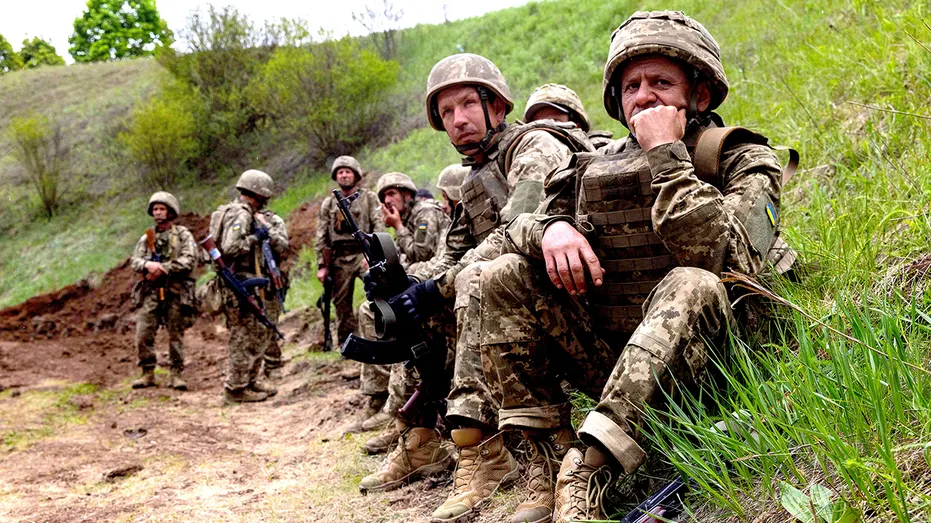
From the innovative use of drones and advanced cyber defense to the critical aspects of civilian resilience and large-scale military mobilization, Ukraine is proving to be one of the most battle-tested militaries globally. This practical, on-the-ground experience is forcing NATO to re-evaluate and adapt its approach to future warfare.
The significance of Ukraine’s role in NATO’s evolving landscape was underscored by the confirmation that Ukrainian President Volodymyr Zelenskyy has been invited to attend the alliance’s annual summit in Ankara this July. This invitation highlights how central Ukraine has become to NATO’s future considerations, even as it remains a non-member state.
NATO Secretary General Mark Rutte explicitly stated the alliance’s need for the Ukrainian army, emphasizing the mutual reliance and shared experience developing from the conflict.
Discussions surrounding NATO’s future trajectory have intensified recently, particularly as foreign ministers gathered in Sweden ahead of the major July summit. Secretary of State Marco Rubio described the upcoming meeting as potentially one of the most significant leaders’ summits in NATO’s history.
Rubio also voiced concerns about NATO’s current munitions production capacity, a sentiment echoed by Ret. Lt. Gen. Richard Newton. Newton indicated that the Pentagon is closely studying Ukraine’s rapid adaptation of its defense industrial base during wartime.
“A number of nations are taking a page out of Ukraine’s transformation of its defense industrial base, in terms of quality as well as the tremendous increase in quantity of arms to the frontlines as well,” Newton remarked. He added that the Pentagon is observing these developments and actively working to encourage similar transformations within its own industrial base to significantly improve and accelerate the delivery of capabilities to its forces, aiming for months or even weeks rather than years.
Rubio also referenced President Donald Trump’s announcement regarding the maintenance of U.S. troop deployments in Poland. This statement came amidst earlier concerns about potential reductions of NATO forces on the alliance’s eastern flank.
Polish Foreign Minister Radosław Sikorski welcomed Trump’s announcement, expressing gratitude for the commitment to maintaining U.S. troop presence in Poland at or near previous levels. He suggested that this decision would likely be disconcerting for Russian President Vladimir Putin.
The current debate over NATO’s future holds a degree of irony for Moscow. One of President Putin’s primary justifications for the invasion was NATO’s eastward expansion and Ukraine’s increasing desire to align with the alliance. Russia had consistently demanded a rollback of NATO’s military presence to pre-1997 levels and opposed any future Ukrainian membership.
Instead of achieving these objectives, the invasion has inadvertently accelerated NATO’s expansion. Finland officially joined NATO in 2023, ending its long-standing policy of military non-alignment. Sweden followed suit in 2024, with Russia’s invasion dramatically altering security perceptions across Northern Europe. The inclusion of Finland alone significantly extended NATO’s direct border with Russia by over 800 miles.
Officials in both Poland and Ukraine contend that the war is not only expanding NATO geographically but is fundamentally transforming the alliance’s character and operational focus.
“For decades, NATO focused largely on expeditionary wars and counterterrorism,” stated Polish Deputy Defense Minister Paweł Zalewski in an interview in Warsaw. He emphasized that “Modern warfare is mostly done by drones.”
Zalewski further asserted that “There is not a military in the world which is better than Ukraine” in its understanding of contemporary battlefield realities.
Ret. Gen. Philip Breedlove, former NATO Supreme Allied Commander Europe, believes the war has fundamentally altered how militaries worldwide perceive modern warfare. He noted that Ukraine’s military has evolved into “one of Europe’s most capable and formidable” forces after years of fighting Russia, despite having relinquished its Soviet-era nuclear arsenal under the 1994 Budapest Memorandum.
“Today, most agree that Ukraine is not only fighting, but winning back land against one of the world’s most formidable forces,” he commented.
This transformation is evident across Ukraine. Prior to the Russian invasion, Ukraine possessed one of Eastern Europe’s most substantial IT sectors. Mayor of Lviv, Andriy Sadovyi, explained that the war compelled a significant portion of this technological ecosystem to pivot towards defense production.
“Before the invasion, we had in Kyiv a huge IT cluster, 40,000 workers,” Sadovyi said. “During the war, we rebuilt the IT cluster to defend cluster.”
Ukraine is now home to a rapidly expanding wartime innovation ecosystem focused on drones, anti-drone systems, battlefield communications, and decentralized weapons production. NATO officials and European militaries are closely studying these advancements and lessons learned.
Breedlove highlighted that the conflict has exposed the limitations of traditional air power and has significantly accelerated the prominence of drone warfare. He pointed out the critical fact that “the war in Ukraine is being fundamentally fought without the support of modern air warfare because of the failures of the Russian Air Force.”
“It’s why drone warfare has grown so exponentially, because neither side was able to marshal true modern air capabilities,” he added.
These changes are also leading to a significant reshaping of NATO’s strategic thinking.
“The main assumption of this concept is that conventionally it would be Europe defending itself,” Breedlove stated, referring to a potential shift in strategic focus.
This strategic shift coincides with Poland’s substantial increase in military spending, positioning it as a leading military power within NATO’s eastern flank. Warsaw has allocated nearly 5% of its GDP to defense this year, the highest percentage among all NATO members.
Polish officials argue that the war has vindicated their long-held conviction that Russia posed a serious threat, a concern they held long before many Western European nations fully acknowledged it.
“We were right about the nature of Putin’s regime and Russia’s aggressive strategy.”
Read more : 1994 USA Reunion: Former Players Reflect on the World Cup and the Future
While Ukraine is not currently a member of NATO, and the alliance has avoided offering a specific timeline for accession during the ongoing war to prevent a direct confrontation with Russia, officials across Eastern Europe increasingly believe that NATO’s future may be inextricably linked to Ukraine’s role, regardless of formal membership status.