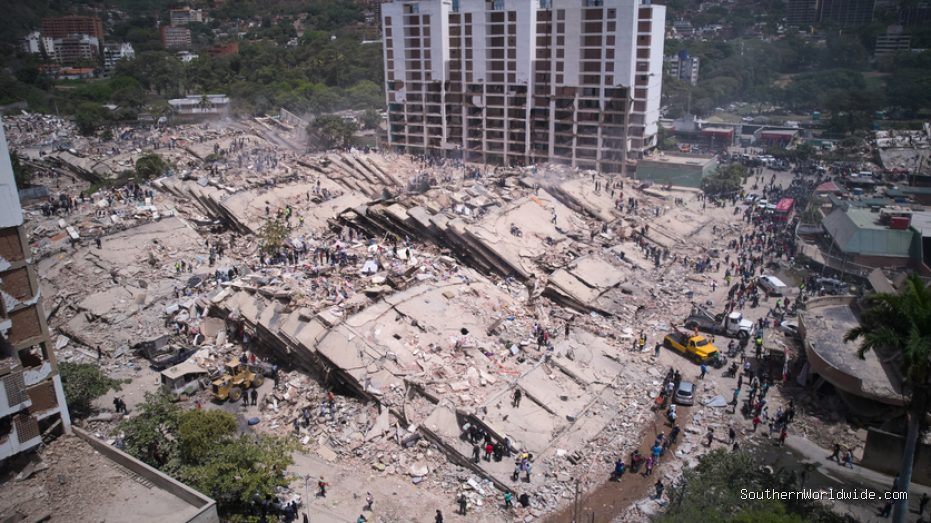
SouthernWorldwide.com – Three days after devastating earthquakes struck Venezuela, the death toll has tragically surpassed 920, with over 3,300 individuals reported injured. Tens of thousands remain unaccounted for in the aftermath of the seismic events.
Search and rescue operations have been ongoing since the twin earthquakes, measuring 7.2 and 7.5 magnitude, hit the country’s northern coast on Wednesday. Authorities have confirmed that 243 people have been successfully rescued so far.
American search and rescue teams, comprising specialists from Virginia, California, and Florida, were deployed to Venezuela on Friday. They have joined the concerted effort to extricate individuals trapped within collapsed structures.
TRUMP ADMINISTRATION PLEDGES $150M IN AID, DEPLOYS NAVY WARSHIPS AFTER DEADLY VENEZUELA EARTHQUAKES
According to reports, the fire units from Los Angeles County and Fairfax County, Virginia, are uniquely trained for international deployment. This expertise makes them crucial assets in the current rescue mission.
The Los Angeles County team, a robust contingent of 73 members, has brought with them specialized equipment. This includes machinery designed to break through concrete, listening devices to detect survivors beneath rubble, and a variety of other tools essential for the ongoing humanitarian effort.
The State Department is spearheading the federal response to the earthquakes, as confirmed by U.S. Southern Command. This indicates a coordinated national effort to address the crisis.
TRUMP ADMINISTRATION PLEDGES $150M IN AID, DEPLOYS NAVY WARSHIPS AFTER DEADLY VENEZUELA EARTHQUAKES
“Day or night, the [Department of War] is moving critical life-saving equipment to Venezuela,” stated a post from U.S. Southern Command on Friday evening. The accompanying images depicted heavy construction vehicles transporting substantial quantities of vital supplies.
Despite the significant assistance flowing from the United States, which has pledged $150 million in emergency aid, and support from international organizations, many Venezuelans have expressed dissatisfaction with their government’s response. Reports suggest a lack of substantial government intervention in the hardest-hit areas.
Aid agencies emphasize that the initial 48 to 72 hours following a disaster represent the most critical window for rescuing survivors. The limited presence of state rescue teams in affected regions raises concerns about the timeliness of aid.
DEATH TOLL FROM VENEZUELA EARTHQUAKES RISES TO AT LEAST 589, WITH THOUSANDS REPORTED MISSING
On Friday night, Venezuelan authorities announced plans to restrict access to La Guaira, the area that experienced the most severe destruction. The stated objective is to enable search teams to operate without interference from concerned citizens.
Officials indicated that permits will be required for entry into La Guaira, though details regarding eligibility criteria have not yet been provided. This measure follows instances where locals have taken matters into their own hands to search for missing loved ones.
One resident, Nazareth Jimenez, recounted witnessing neighbors using hammers and power tools to try and penetrate the concrete of a damaged apartment building. She anxiously awaited news of her family and friends who were potentially trapped inside.
“We’re making a call for help to the government and countries across the world,” Jimenez appealed to the Associated Press. “There are still people alive in there,” she added, highlighting the ongoing urgency of the rescue efforts.
The Venezuelan government, under the leadership of acting President Delcy Rodriguez, has been distributing food and water to survivors in La Guaira. However, residents maintain that these provisions are insufficient to meet the widespread needs.
The current earthquake crisis presents a significant challenge for Rodriguez, the former vice president. Her administration’s legitimacy has been a subject of discussion, particularly given her ascension to power following a period of political upheaval and U.S. involvement in the removal of the previous president, Nicolás Maduro.
Rodriguez’s handling of this disaster will undoubtedly be a critical test of her leadership and the credibility of her government. The absence of a clear timeline for future elections further complicates the political landscape during this time of profound national tragedy.