SouthernWorldwide.com – Yosemite National Park, renowned as one of America’s most stunning natural treasures, is currently grappling with visitor numbers that rival those of a major theme park like Disneyland.
This surge in popularity comes after the National Park Service (NPS) recently removed the requirement for advance reservations, even during the typically busy summer months.
In March alone, Yosemite welcomed 225,817 recreational visitors. This figure represents a significant increase compared to the 155,758 visitors recorded in March of the previous year, according to SFGate.
This marks the busiest March for the park since 2016. The decision to roll back reservation requirements was intended to encourage more people to visit.
However, reports from California media suggest that this strategy has been a little too successful, leading to considerable overcrowding.
A spokesperson for the NPS acknowledged that Yosemite, like many other iconic national parks, experiences high visitation during certain periods. These often coincide with weather-dependent events and holiday weekends.
The National Park Service had announced in February that Yosemite would no longer necessitate advance reservations for entry, even during the peak summer season.
Instead, the park plans to implement real-time traffic management strategies. This includes temporary traffic diversions when parking areas become full and the deployment of additional seasonal staff to manage high-use areas.
Read more : Hasan Piker Identifies Pro-CCP Tycoon Singham as Funder of 'Political Movements' Under Nonprofit Guise
The NPS stated that these changes were made to “support strong visitation in 2026.” Unfortunately, this has led to a situation where the park is experiencing more crowds than anticipated.
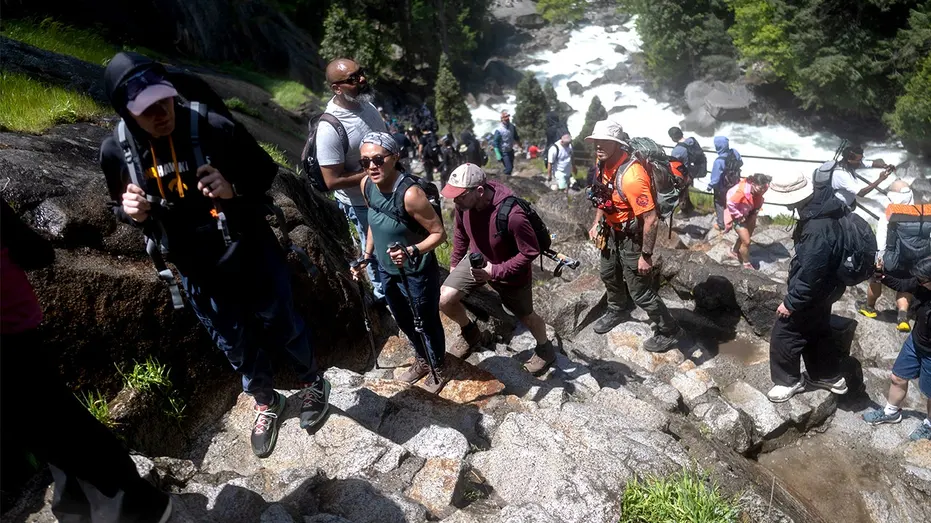
Visitors have reportedly been struggling with overcrowding even before the official start of the busy summer season. Parking lots are filling up early in the day, shuttle buses are often at full capacity, and visitors are circling the Yosemite Valley in search of parking spaces, as reported by The Los Angeles Times.
One visitor, San Jose resident Kunal Khandwala, described the shuttle service waits as “insane” after facing difficulties finding parking. This sentiment is echoed by others experiencing the overwhelming crowds.
John Buckley, executive director of the Central Sierra Environmental Resource Center (CSERC), shared his observations on the park’s crowded conditions with SFGate.
He noted that on Saturdays, and frequently on Fridays and Sundays, the number of visitors within the park surpasses the capacity of the parking lots. This leads to vehicles being parked inappropriately wherever space can be found along the roads, resulting in a cramped experience for visitors.
Buckley recounted a recent conversation with a Yosemite visitor who described the crowds as “wall to wall,” stating that the experience felt akin to a day at Disneyland.
Complaints about the crowds have also been surfacing in online forums and social media groups dedicated to Yosemite visitors.
One user in a Facebook group for Yosemite visitors recently posted about their experience: “We were there this past Saturday through Monday … Saturday it was awful, there was absolutely no parking anywhere.”
Another user commented that “Every day has been busier.”
A third individual advised, “Plan on every single day between Memorial Day and Labor Day to be exceedingly crowded.”
Some have suggested a simple solution: “Only way to avoid summer crowds — to not go in summer!”
However, not all visitors have reported experiencing severe overcrowding.
The conditions appear to vary across different areas of the expansive 1,169-square-mile park and at different times of the year.
One Facebook user mentioned a few months ago that it was “Very uncrowded as compared to summer months. … Weather may have contributed to this a bit, though.”
Another visitor, writing in mid-March, shared, “Just got back, crowds are very minimal, especially early in the day! I can’t image going there [during] peak season.”
The NPS spokesperson reiterated that “America’s national parks are open and accessible, and we are pleased to see strong public interest in experiencing these treasured places.”