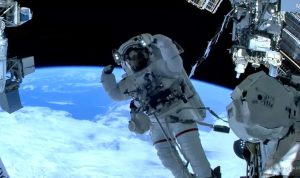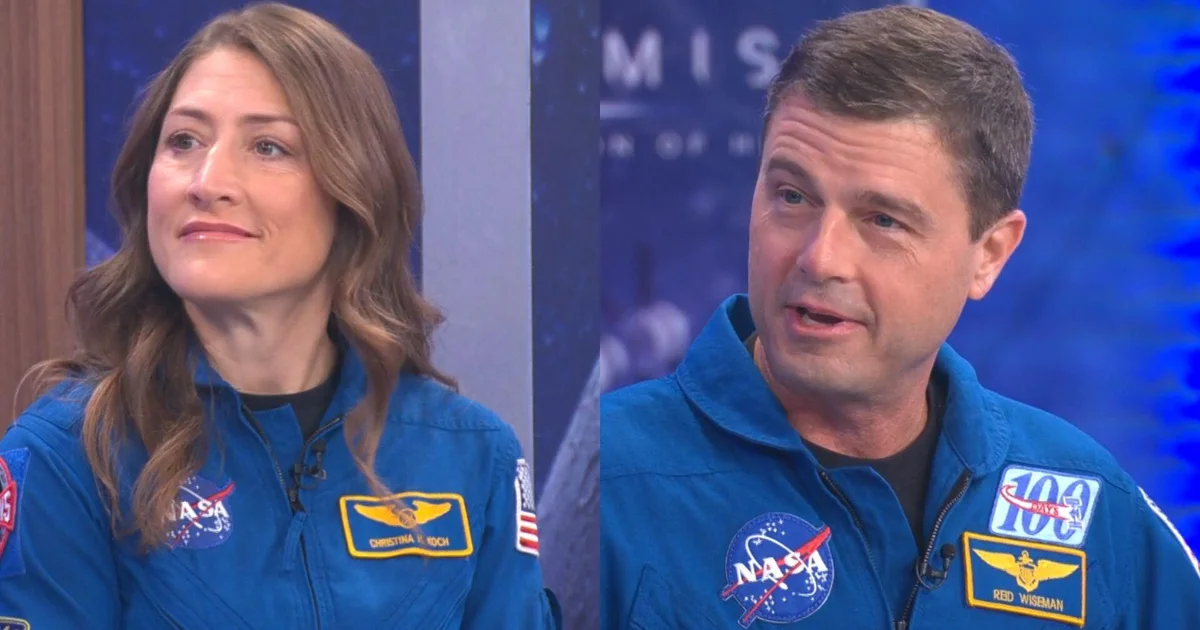
SouthernWorldwide.com – NASA astronauts from the Artemis program are sharing their experiences of readjusting to Earth’s gravity and the breathtaking views from space. Christina Koch, an Artemis astronaut, recently spoke about the physical challenges of returning to gravity after extended periods in space.
She described the sensation as her body having to re-learn how to function on Earth. The constant pull of gravity, which is absent in microgravity, becomes a significant factor once astronauts are back on the ground.
Koch’s sentiments were echoed by fellow astronaut Reid Wiseman, who also participated in the Artemis program. Wiseman recounted the awe-inspiring moment of capturing photographs from their journey to the Moon.
Wiseman shared his impressions with “CBS Mornings,” stating, “It’s spectacular.” This simple yet powerful description highlights the profound impact of seeing Earth from such a unique vantage point.
The Artemis program aims to return humans to the Moon and establish a sustainable presence there, paving the way for future missions to Mars. Astronauts like Koch and Wiseman are crucial to this endeavor, bringing invaluable experience and insights from their time in space.
Their accounts offer a glimpse into the realities of space travel, from the physical adjustments required upon return to the sheer beauty and wonder of observing our planet from orbit.
The public’s fascination with space exploration continues to grow, fueled by these personal narratives and the ongoing advancements in NASA’s Artemis missions.
The readjustment to Earth’s gravity can be a disorienting experience for astronauts. After months in a microgravity environment, where the body doesn’t have to contend with constant downward force, the return of gravity can lead to feelings of heaviness and difficulty with balance.
Muscles that have atrophied due to lack of use need to be retrained. Bones also lose density in space, and the process of rebuilding that strength takes time and dedicated rehabilitation.
Christina Koch, who spent a record-breaking amount of time in space for a woman on a single mission, has spoken extensively about this process.
She has noted that everyday tasks, like simply walking or standing upright, require conscious effort and can be surprisingly challenging initially.
Reid Wiseman’s comment about the spectacular views underscores the visual aspect of space travel. Astronauts often describe the Earth as a vibrant, jewel-like orb suspended in the blackness of space.
The perspective gained from space can be life-changing, offering a sense of the planet’s fragility and interconnectedness.
Capturing these views through photography is a vital part of documenting space missions and sharing the experience with the world.
These images not only serve scientific and historical purposes but also inspire public interest and support for space exploration.
The Artemis astronauts are not just scientists and engineers; they are also storytellers, bringing the wonders of space exploration down to Earth through their words and images.
Their contributions are essential in bridging the gap between the complex technicalities of space travel and the public’s understanding and appreciation of these incredible achievements.
The Artemis program, named after the Greek goddess of the Moon and twin sister of Apollo, represents a new era of space exploration.
It aims to achieve a variety of goals, including landing the first woman and first person of color on the Moon.
Furthermore, Artemis is designed to test the technologies and procedures necessary for human exploration of Mars.
The experiences shared by astronauts like Christina Koch and Reid Wiseman are critical for refining mission protocols and ensuring the safety and success of future space endeavors.
Their candid reflections on both the challenges and the profound rewards of spaceflight are invaluable to the public’s understanding of what it takes to explore beyond our planet.
The dedication and resilience of these astronauts are a testament to the human spirit’s drive for discovery and exploration.
As the Artemis missions continue, the world eagerly awaits more breathtaking images and inspiring stories from the final frontier.
The Artemis astronauts’ accounts highlight the multifaceted nature of space travel, encompassing not only scientific discovery but also the deeply personal and transformative human experience.
The ongoing dialogue between astronauts and the public, facilitated through platforms like “CBS Mornings,” plays a vital role in maintaining enthusiasm and support for these ambitious space programs.
Christina Koch’s insights into gravity readjustment and Reid Wiseman’s description of the “spectacular” views from space offer a compelling narrative of human achievement and the pursuit of knowledge beyond Earth.