SouthernWorldwide.com – Artemis astronaut Jeremy Hansen described the crew’s recent return to Earth as “the best roller coaster ride you’ve ever been on.”
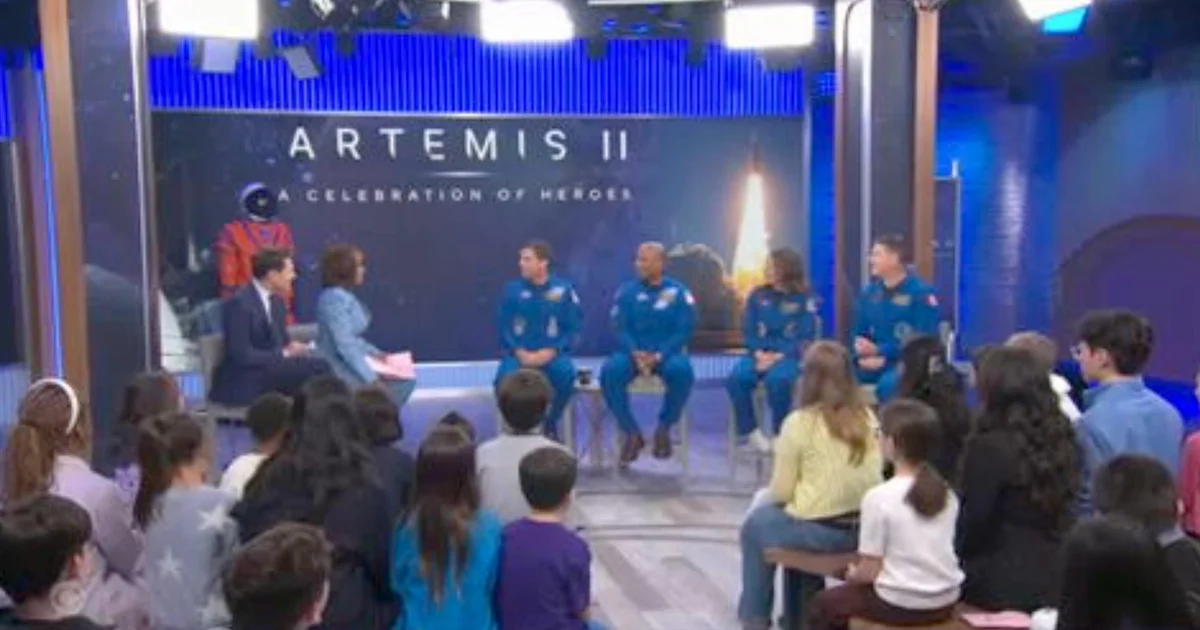
“For the landing, it’s like all the sights, all the feels,” Hansen said Friday at a “CBS Mornings” town hall, titled “Artemis II: A Celebration of Heroes.”
“The first thing you see is like plasma, the colors starting to show up. This fireball building outside the windows,” he said. “It was red, and it was coming down. And then it was like blue and green. It was like somebody was welding, like flashing.”
Speaking to an audience of students, Hansen described getting “thrashed around” and being pushed to the seat with G-forces.
“It’s just all really exhilarating,” he said, adding that he and mission specialist Christina Koch fist-bumped each other during the end of their journey.
“It was phenomenal. I was completely overcome with just elation. I was overjoyed,” Koch said, describing her feelings at splashdown.
Hansen and Koch, along with commander Reid Wiseman and pilot Victor Glover, returned from their trip around the moon on April 10. Their Orion capsule splashed down in the Pacific Ocean, marking an epic ending to their historic mission.
The crew joined “CBS Mornings” for a special live town hall to take questions from students. They also met Jack, a 5-year-old aspiring astronaut from Atlanta who went viral for his enthusiasm watching the launch, and presented him with a special gift.
Director Ron Howard of “Apollo 13” joined the town hall and heard a story from one of the astronauts about how that movie helped him prepare. Bill Nye, “The Science Guy,” demonstrated some science experiments to bring the mission to life.
Crew Shares Post-Landing Snack
Wiseman recounted a story about the crew bonding after splashdown while waiting for recovery forces.
“When we landed, we splashed down into the Pacific Ocean, waiting for the rescue forces to come open the hatch, and Christina, out of her spacesuit pocket, goes, ‘I got some peanut M&Ms, anybody want some?'” Wiseman said. “And so we’re leaning against the side of the spacecraft, just come back from the moon, eating peanut M&Ms; we were happy.”
Favorite Aspect of Gravity
An 18-year-old student named Levi asked the astronauts, “What is your favorite thing about gravity that you missed while you were up there?”
Mission specialist Hansen couldn’t think of anything. “Really, nothing. I just had the most amazing time in microgravity,” he said.
“If you get the chance to experience microgravity, you have to do it. It’s so much fun,” though he added that it makes some tasks, like chores or using the restroom, a bit more challenging.
Read more : Artemis Astronauts Discuss "Bird Bath" Showers and Space Exploration Dreams
“All that stuff’s a little harder in microgravity, but it is just so worth it,” he said.
Koch described what it was like readjusting to gravity after more than a week in space.
“Your body isn’t quite used to orienting the way it usually does, because it got used to orienting without gravity,” she said. “It takes us a little while to get used to walking again, and get our balance, but it wasn’t too bad this time. We were only away for nine days.”
During their voyage spanning nearly 700,000 miles, the astronauts traveled farther from Earth than any humans in history. They were the first humans to see some parts of the moon’s far side with the naked eye. They witnessed a solar eclipse in deep space when the moon moved between the Orion and the sun.
Their experiences were captured in stunning images.
Toughest Decisions Made
A 13-year-old named Piya asked: “What’s the toughest decision you had to make in space, on the mission?”
The crew indicated it was a decision to *not* do something.
Wiseman detailed a tense moment when the crew was awakened by an alarm, a “run box warning,” indicating fuel was leaking from the spacecraft.
“This is the first time humans have flown this spaceship. We were testing out everything. And one of the things that we didn’t know we were testing out was our caution and warning system,” Wiseman recalled. “In the middle of the night, we had a warning come on that was a very — it was a very dramatic and important warning, which kind of gave us indications that fuel was leaking out of our spacecraft.”
“We have procedures that we must execute and we must execute them right now. So imagine all four of us are asleep. We’re floating in our sleeping bags. And we get this alarm. I wake up, and I’m looking at the display, and I’m like, ‘I think that’s a run box warning.’ And all of a sudden that got everyone’s attention immediately.”
Wiseman stated the crew immediately followed their training.
“Jeremy was asleep in front of the control system. And he woke up, came underneath the controls to my left, and he’s like, ‘We need to be executing emergency response right now.’ He started to configure the propellant system for shutting down the fuel system so we could preserve the fuel that we had in the spacecraft.”
He continued, “As we were watching this alarm was coming and going, coming and going, which is unusual. Normally it would stay lit the whole time. We talked through this very rapidly and decided we would hold and not execute these procedures, because if we did it would shut down our entire fuel system.”
“We didn’t do it!” he exclaimed.
The Importance of Teamwork
17-year-old Lizzy asked, “How does teamwork play a role in the success of a mission like Artemis II?”
Koch emphasized that the true heroes of the mission are not just the astronauts, but their teammates in mission control and the ground support teams who worked for years to make it happen.
“Well, I would say that teamwork is the epitome of what we do. Not only in human spaceflight but probably every endeavor you take on,” Koch said. “Teamwork is 100% everything. We learned when we saw the most amazing things in the universe, they humbled us. They made us realize that we are nothing without each other.”
Young Aspiring Astronaut Receives Spacesuit
Jack, the 5-year-old aspiring astronaut from Atlanta who went viral for his enthusiasm during the mission, joined the town hall. He mentioned that it “was fun” watching the Artemis launch in person in Florida.
He was presented with a spacesuit, and Koch thanked him for being at the launch. She noted that the spacesuit matched the ones the astronauts wore on Orion.
“It says ‘NASA!'” Jack exclaimed.
“Apollo 13” Director’s Question
“Apollo 13” director Ron Howard expressed curiosity about how the astronauts’ moon mission experience compared to their longer stays aboard the International Space Station.
Koch, who spent 11 months in orbit in 2019-20, a record for a female astronaut, said that while the space station missions have been ongoing for over two decades, the Artemis team “had to figure it out as we went.”
“We got to work hand-in-hand with the engineers. We weren’t just getting trained, we were actually a part of the team. And that continued right through the whole thing,” she said.
Wiseman stated the experience was more intense than being on the International Space Station.
Hansen also shared how the film “Apollo 13” has been significant to him, saying it has “guided” him “so many times.” He mentioned watching it again before his astronaut selection interviews to immerse himself back into the culture of “we won’t fail.”
“It’s not that we never fail, it’s that we don’t stop there,” he said. “We fail over and over again, but we don’t stop when we fail. And as a team, that’s what brings us together is like, ‘hey, we will get through this together. We will lean in and get this done.'”
The town hall airs at 7:30a ET/PT Friday on “CBS Mornings” on CBS and Paramount+. It can also be watched on demand later Friday on CBSNews.com, the CBS News YouTube channel, and Paramount+.