SouthernWorldwide.com – Space presents unique challenges that alter the fundamental principles of robotics. On Earth, legs are essential for stability and locomotion. However, in microgravity, their utility diminishes significantly.
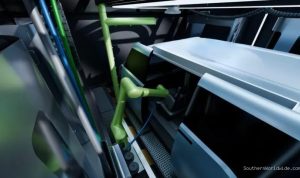
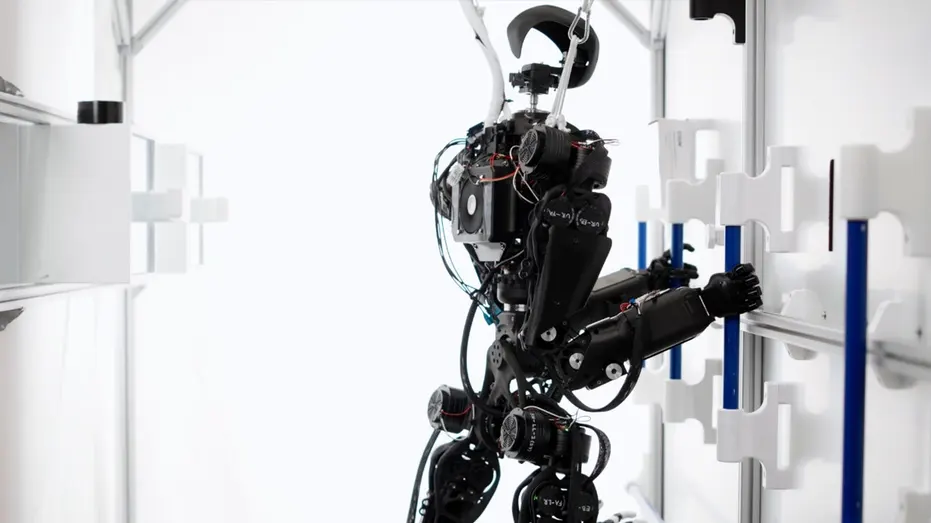
Recognizing this, Orbit Robotics, a spinout from ETH Zurich, developed Helios. This robot is equipped with four arms, enabling it to grip, brace, and operate effectively within a spacecraft. Two arms can secure the robot, while the other two manage tools, cargo, and equipment.
This design is particularly advantageous in an environment where floating is effortless but maintaining stability is paramount. Helios’s functionality and its potential to enhance astronaut assistance in orbit are noteworthy.
IS THIS SPACE CAPSULE HOW WE WILL LIVE AND WORK IN ORBIT IN THE FUTURE?
Helios features two pairs of arms, each with distinct functions. One pair is designed to anchor the robot to interior surfaces, providing stability. The second pair is tasked with handling tools, unloading cargo, relocating equipment, and performing other operational duties inside the spacecraft.
This configuration is crucial because stability and operational capability must be simultaneous in orbit. A floating robot cannot simply plant its feet, bend over, and retrieve an object. It requires a secure grip while it performs its tasks.
This is precisely where Helios excels. By utilizing two arms for stabilization, the other two can efficiently execute their assigned jobs. In microgravity, legs become superfluous unless they can grip, brace, or manipulate objects. Helios bypasses this limitation by transforming its entire structure into a tool for movement and work.
Orbit Robotics highlights that Helios employs a tendon-driven system. Instead of situating motors at each joint, many of these motors are consolidated near the robot’s “shoulders.” Force is then transmitted through the arms via cables and pulleys.
This engineering approach can reduce the weight at the extremities of the limbs. In space, heavy limbs can lead to unwieldy movements. Furthermore, precise control is vital, especially when handling cargo or tools in close proximity to sensitive equipment.
Helios also incorporates a rolling-contact elbow joint. While seemingly a minor detail, this feature can have a significant impact in orbit. A sudden jolt could destabilize the robot or cause carried items to drift unpredictably within the spacecraft. Smooth motion, therefore, becomes an integral safety feature.
Prior to Helios, the team developed an earlier robotic platform named IKARUS. This project served as a testing ground for concepts such as teleoperation, imitation learning, and dual-arm manipulation. Essentially, IKARUS provided the team with insights into how a robot could move, copy tasks, and handle objects in a simulated space environment.
The lessons learned from IKARUS were instrumental in the development of Helios. This is a critical consideration, as hardware deployed in space rarely has the opportunity for revisions. A robot designed for orbital operations must be reliable, compact, and effective in confined spaces. It must also interact predictably with human crew members. Helios builds upon this foundational work with a design better suited to its operational environment.
QUADRUPED ROBOT PLAYS BADMINTON WITH YOU USING AI
Orbit Robotics emphasizes that its objective is to augment astronaut capabilities, not to replace them. This statement is both reassuring and practical. Astronauts are highly skilled professionals performing some of the most expensive labor imaginable. Yet, a substantial portion of crew time aboard the International Space Station is dedicated to maintenance tasks.
Estimates suggest that maintenance accounts for approximately 35% of crew time. Considering the estimated cost of $140,000 per astronaut-hour, even basic logistical operations can become prohibitively expensive. This means that sorting supplies, moving equipment, or handling routine tasks can incur significant costs. Helios does not need to possess advanced artificial intelligence to be beneficial; it simply needs to navigate narrow corridors, maintain stability without gravity, and handle objects with precision. This is the core principle behind its design.
The initial application for Helios is anticipated to focus on internal spacecraft operations. This could encompass tasks such as unloading cargo, assisting with inventory management, relocating equipment, and supporting routine maintenance activities. While these duties might seem mundane, they still require considerable time, training, and focused attention in orbit.
Over time, Orbit Robotics envisions a more expansive role for robots like Helios. This could include servicing satellites and contributing to in-space construction as commercial space stations and orbital habitats become more prevalent.
As launch costs continue to decline, the volume of equipment destined for orbit is expected to increase. More hardware necessitates more maintenance, and a greater number of stations translates to increased logistical demands. This scenario creates a clear opportunity for robots like Helios, which are specifically engineered for the space environment.
Human spaceflight continues to capture the public’s imagination. However, the human body faces considerable limitations in space. Astronauts are susceptible to risks such as radiation exposure, bone density loss, vision impairment, and cognitive changes associated with fluid shifts in the brain.
These risks are amplified during extended missions. Robots, on the other hand, do not require air, food, sleep, or the same level of radiation shielding as humans. They can also undertake tasks that would be considered too hazardous for astronauts.
This does not imply that astronauts will become obsolete. Rather, it signifies a shift in operational paradigms. If machines can assume a greater share of orbital tasks, humans may dedicate less time to routine activities and more time to scientific endeavors. This could lead to increased focus on research related to aging, cancer treatments, organ bioprinting, and other experiments that benefit from the unique conditions of microgravity.
CHINA’S COMPACT HUMANOID ROBOT SHOWS OFF BALANCE AND FLIPS
The expansion of commercial space stations will necessitate continuous upkeep. Cargo will require sorting, equipment will need to be relocated, and structures may demand inspection or repair. Satellites could require servicing, and future habitats might depend on robots capable of assembly, maintenance, and adaptation.
This is where a machine like Helios transcends being a mere prototype; it has the potential to become an integral part of the workforce responsible for maintaining space infrastructure.
The fundamental question remains whether humans will continue to be the primary agents of this work or transition to a more specialized role. While astronauts may still travel to orbit, their responsibilities could undergo a significant transformation.
Instead of performing every task manually, they might transition to supervising robots designed for environments where the human body experiences limitations. This represents a departure from traditional approaches to robot design, where machines are often molded into human-like forms.
This paradigm shift could extend beyond space exploration. On Earth, robots are already employed in warehouses, factories, hospitals, and disaster zones. In each of these contexts, the most effective design may not be anthropomorphic. Instead, it might appear unconventional, highly specialized, and perhaps even slightly unsettling.
Helios exemplifies why such specialized designs can be advantageous. A robot engineered for its specific environment can operate with greater efficiency. It can also undertake high-risk tasks, allowing humans to concentrate on work that requires judgment, creativity, or specialized scientific knowledge.
For space missions, this could translate to enhanced safety and a reduction in the amount of time astronauts spend on routine maintenance. Helios distinguishes itself by being purpose-built for its intended operational environment. In orbit, the ability to walk provides minimal benefit. Gripping, bracing, and manipulating equipment become far more critical. This underscores the practicality of its four-armed configuration, which allows the robot to maintain a secure hold while performing tasks—precisely what astronauts need in microgravity. Orbit Robotics reiterates that Helios is intended to assist astronauts, not supplant them. Nevertheless, this robot raises a broader question: as robotic capabilities advance, they are poised to assume an increasing share of the risky and repetitive tasks beyond Earth. This could free up astronauts to focus more on scientific discovery and decision-making that requires human insight. It may also fundamentally alter our perception of human space exploration.
Would you prefer to see astronauts performing tasks in orbit, or robots taking on the more hazardous responsibilities? Share your thoughts by writing to us at Cyberguy.com