SouthernWorldwide.com – President Donald Trump’s recent executive order aimed at securing ongoing domestic production of a vital crop protection tool for farmers was a direct response to an impending U.S. food security threat.
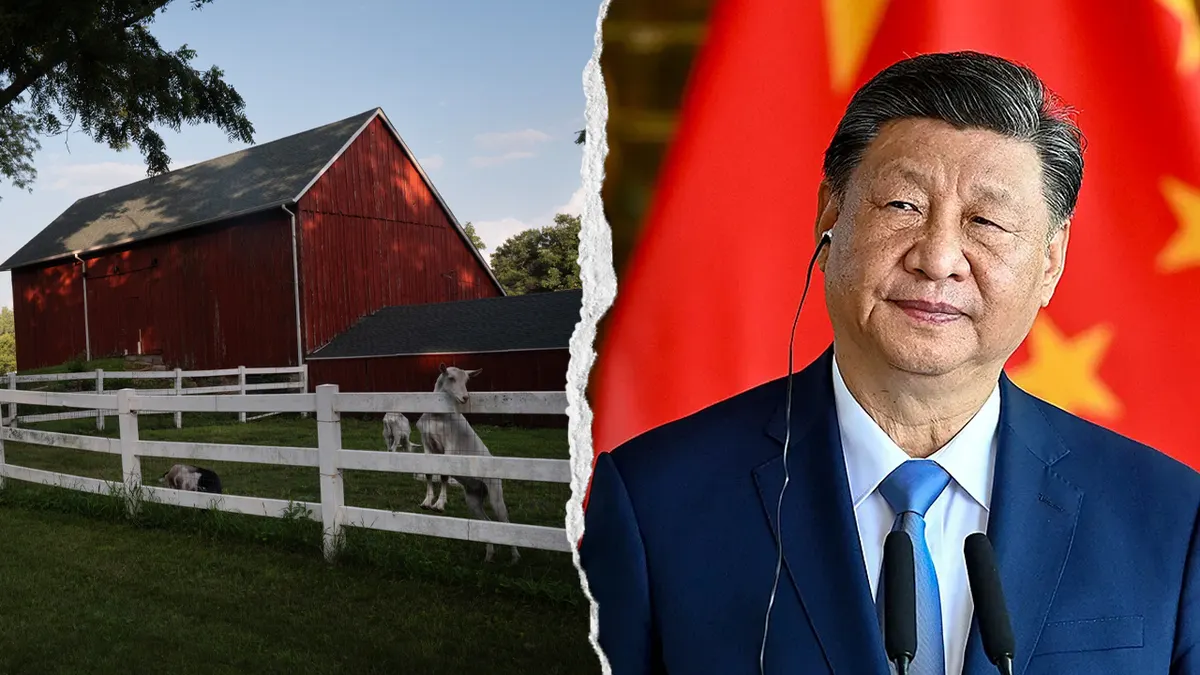
Late in the Biden administration, a Supply Chain Report from the U.S. Department of Agriculture revealed that China is responsible for producing 50% of all crop protection products. This level of reliance on China for tools essential to our food production is a risk that should be avoided whenever possible.
President Trump moved to mitigate this risk by invoking the Defense Production Act. This act compels domestic production of glyphosate-based herbicides and elemental phosphorus, designating them as critical to national security and the resilience of the food supply chain. The executive order highlighted that any shortages of glyphosate, the primary component in Bayer’s herbicide Roundup, would significantly endanger agricultural productivity and food safety.
As a farmer from Indiana, with my family having farmed there for seven generations, I can personally attest to the critical importance of glyphosate in our operations. Our farm began utilizing this crop protection tool shortly after its introduction over 50 years ago. Today, three generations later, our corn yields have tripled, a direct benefit of its effectiveness.
Baca juga di sini: US Issues Travel Advisory for Popular Tourist Spot Amid Rising Crime and Unrest
THE $1,600 LETTUCE: CALIFORNIA GROWERS WARN OF ‘MASTER PLAN’ STRANGLING FAMILY FARMS
Ensuring domestic production of glyphosate allows the U.S. to guarantee a stable and predictable supply, free from external pressures. This is in stark contrast to the current situation with fertilizer shipments, which must navigate through the Strait of Hormuz. Domestic production also keeps the necessary industrial base, expertise, and regulatory oversight within the country, while simultaneously supporting American jobs. Strategically, this move is comparable to the arguments for domestic production of semiconductors or essential medicines.
Should glyphosate become unavailable, China would effectively control our crop protection market. Consider the potential impact on our access to crop protection products if a conflict were to erupt in the South China Sea between Taiwan and China. Such a scenario would inevitably lead to food insecurity right here in the United States. China possesses the ability to restrict supply at any time, withholding sufficient product and thereby severely jeopardizing our food supply, leading to significant economic and environmental damage. My experience serving as the U.N. ambassador to the Food Agencies taught me a critical lesson: all societies are merely three meals away from chaos. It is unacceptable to allow such a situation to reoccur in America.
Glyphosate remains the most widely utilized herbicide in American row-crop agriculture, particularly for corn, soybeans, cotton, and canola. This tool is instrumental in effectively controlling weeds across hundreds of millions of acres, thereby supporting high and consistent yields. It contributes to keeping production costs affordable and more predictable, which in turn helps maintain stable and resilient food prices for consumers.
Furthermore, glyphosate offers positive environmental benefits by enabling no-till farming practices. This method has led to an increase in wildlife habitats and a significant reduction in soil erosion and crop nutrient loss, ultimately improving our ecosystems. I have personally managed and applied glyphosate on our farm for the past 50 years, and I am confident that my children and now my grandchildren are responsible in its use and in ensuring their own safety.
These are all advantages we have experienced on our farm in Indiana, and they have empowered U.S. farmers to provide an ample food supply for our own citizens and for the global population.
The unavailability of glyphosate to farmers would also lead to an increase in health risks. Glyphosate is one of the primary tools for managing invasive, noxious, and poisonous weeds that pose direct threats to human and animal health. Certain weeds are not merely nuisances; they are serious health hazards, and exposure to them can be fatal.
I vividly recall a tragedy in Uganda during my tenure as ambassador, where nearly 30 mothers and infants lost their lives after receiving food aid that was intended to help them. The grain originated from Turkey and contained noxious weeds from the fields. Without glyphosate treatment, these toxins infiltrated the cereal we distributed. This memory serves as a constant reminder of how devastating even a minor failure in the supply chain can be, and how indispensable glyphosate is to ensuring food safety.
Given China’s substantial influence over global crop protection tools, the exceptional measure taken by President Trump through his executive order was a necessary step to safeguard America’s food system.