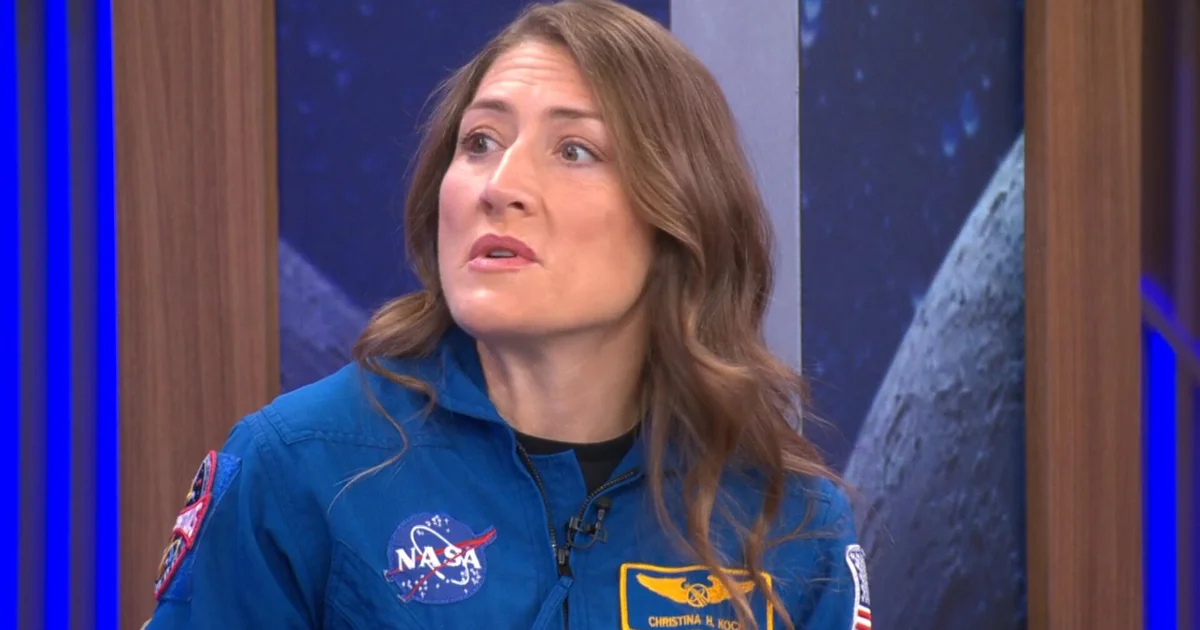
SouthernWorldwide.com – NASA astronaut Christina Koch, who recently returned from the Artemis II mission, shared insights into how the groundbreaking journey differed from her previous long-duration stays aboard the International Space Station (ISS).
Koch, a veteran of six months in space during her ISS missions, highlighted the unique aspects of the Artemis II flight, emphasizing its distinct purpose and operational environment.
The Artemis II mission, a crucial step in NASA’s plan to return humans to the Moon, saw Koch and her crewmates—Reid Wiseman, Victor Glover, and Jeremy Hansen—circumnavigate the Moon. This lunar orbit was the first time humans had traveled that far from Earth since the Apollo program ended in 1972.
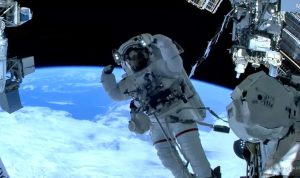
Speaking about the differences, Koch noted that while both the ISS and the Artemis mission involve living and working in space, the objectives and challenges are vastly different. The ISS is a permanently inhabited orbiting laboratory focused on scientific research across various disciplines.
In contrast, Artemis II was a mission with a specific, forward-looking goal: to test the capabilities of the Orion spacecraft and its systems, including life support, communication, and navigation, on a trajectory that included a lunar flyby.
Koch explained that the duration of the Artemis II mission, while significant, was shorter than some of her previous expeditions to the ISS, which can last up to a year. This difference in mission length impacts everything from food preparation and exercise routines to psychological preparation and the overall pace of work.
Furthermore, the communication delay between Earth and the spacecraft increases significantly the farther away it gets from Earth. During the Artemis II mission, this delay, which can range from seconds to minutes depending on the distance, is a factor the crew must manage, unlike the near-instantaneous communication possible with the ISS.
The environment itself is another major difference. While the ISS orbits relatively close to Earth, the Artemis II mission ventured into deep space, experiencing a vastly different radiation environment and a much greater sense of isolation.
Koch remarked on the psychological aspect of being so far from home. The view of Earth from the Moon’s vicinity is profoundly different, offering a unique perspective on our planet’s place in the cosmos. This perspective can be both awe-inspiring and humbling, a stark contrast to the familiar view of Earth from the ISS.
The operational tempo of Artemis II was also different. While the ISS crew maintains a constant schedule of scientific experiments, maintenance, and public outreach, the Artemis II mission was more focused on the critical testing of new hardware and procedures necessary for future lunar and Martian exploration.
Koch’s extensive experience on the ISS, including a record-breaking 328 days in space for an American astronaut during her 2019-2020 mission, provided her with invaluable skills and knowledge that were directly applicable to the Artemis II journey.
Her ability to adapt to different environments, manage complex systems, and work effectively as part of a team are all critical for deep space missions.
The Artemis program aims to establish a sustainable human presence on the Moon and eventually pave the way for missions to Mars. Artemis II served as a vital test flight, ensuring that NASA’s technology and the astronauts’ capabilities are ready for these ambitious future endeavors.
Koch’s role as a mission specialist on Artemis II was pivotal, contributing to the overall success of the mission and gathering crucial data for future missions.
Her descriptions offer a glimpse into the evolving landscape of human spaceflight, moving beyond low-Earth orbit towards the more challenging and expansive frontiers of the solar system.
The successful completion of Artemis II marks a significant milestone, demonstrating the resilience and advancement of space exploration capabilities.
Koch’s perspective underscores the dedication and meticulous preparation required for each unique space mission, from the familiar confines of the ISS to the vast expanse of deep space.
Her insights are invaluable for understanding the progression of space exploration and the human element involved in pushing the boundaries of our reach.
The Artemis program continues to build upon the legacy of missions like Apollo and the ISS, aiming for new discoveries and a deeper understanding of our universe.
Koch’s participation in both types of missions provides a unique comparative analysis of the challenges and rewards of space exploration.
The astronaut’s comments reflect a broader understanding of NASA’s long-term vision for space exploration.
Her contribution to the Artemis II mission further solidifies her place in the history of spaceflight.
The mission’s success is a testament to the collaborative efforts of thousands of individuals involved in the Artemis program.
Koch’s ability to articulate the nuances between these missions provides clarity for the public on the progression of space exploration.
The Artemis II mission, in particular, has reignited public interest in lunar exploration.
The data collected from this mission will be vital for planning subsequent Artemis missions, including those that will land astronauts on the lunar south pole.
Koch’s background as a scientist and engineer informs her detailed observations about the mission’s technical aspects.
The Artemis II crew’s performance was critical in validating the Orion spacecraft’s systems under real-world deep space conditions.
Her insights are a valuable addition to the ongoing narrative of humanity’s journey into space.
The mission’s success is a step forward in NASA’s ambitious goals for the future of space exploration.
Koch’s personal reflections add a human dimension to the technological marvels of space travel.
The Artemis II mission represents a new era of exploration, building on decades of experience in space.
Her ability to compare and contrast the ISS and Artemis missions offers a clear perspective on the evolution of spaceflight.
The information she shared provides context for the public’s understanding of these complex missions.
Koch’s participation in Artemis II highlights the importance of experienced astronauts in pioneering new frontiers.
The mission’s success is a key indicator of readiness for future lunar landings.
Her insights are crucial for appreciating the distinct challenges of deep space versus low-Earth orbit operations.
The Artemis program continues to inspire and push the boundaries of human achievement.
Koch’s role was essential in gathering data that will shape the future of space exploration.
The Artemis II mission is a critical step in NASA’s long-term strategy for lunar and Martian exploration.
Her perspective offers a valuable comparison of different space environments and mission objectives.
The astronaut’s detailed explanation provides a comprehensive view of the Artemis II mission’s significance.
Her experiences contribute to the growing body of knowledge about long-duration spaceflight beyond Earth’s orbit.
The Artemis II mission is a testament to human ingenuity and the pursuit of scientific discovery.
Koch’s insights help demystify the complex realities of space exploration for a wider audience.
The mission serves as a crucial stepping stone for future human endeavors in space.
Her comparison of the ISS and Artemis missions highlights the evolving nature of space exploration.
The Artemis II mission’s success is a critical validation of technologies for future lunar missions.
Read more : Experts Visit Gyms Across Nation, Highlight 4 Clubs for Excellence
Koch’s unique perspective as a veteran of both ISS and Artemis missions is highly valued.