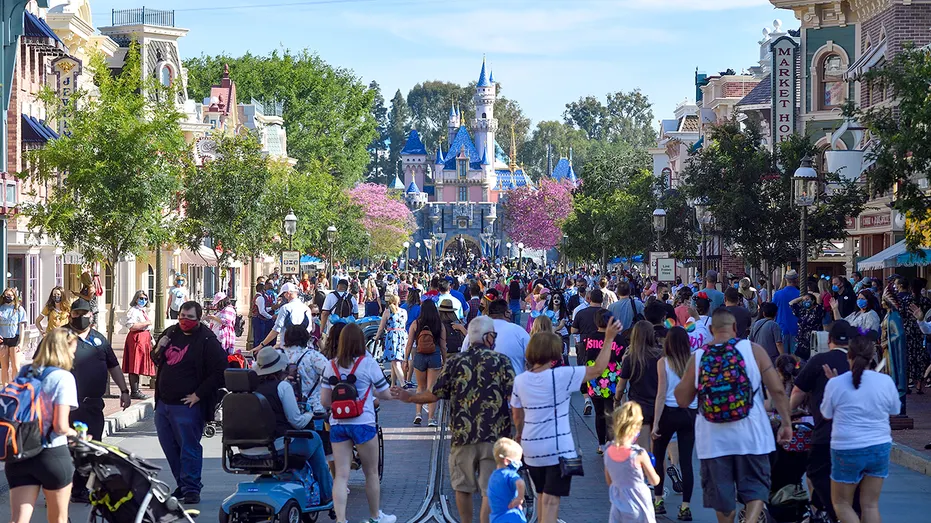
SouthernWorldwide.com – As you approach the entrance of Disneyland or Disney California Adventure, tickets in hand and children eager to enter, a quick scan by a camera at the gate might go almost unnoticed. This seemingly small step is actually a significant part of the modern theme park experience.
For most visitors, this rapid scan feels no different than tapping a phone or scanning a traditional ticket. It’s just another seamless part of gaining entry. However, this fleeting moment involves technology that does more than simply grant access.
Facial recognition is now integrated into the Disney park experience. While many guests simply proceed without much thought, understanding the implications of this technology is crucial. The convenience of a quick entry comes with certain trade-offs that are worth being aware of.
The process involves capturing a photo of your face at the gate. This image is then converted into a unique set of numerical values. These values are subsequently compared against the data captured when your ticket or pass was initially used. When you leave and wish to re-enter, the system verifies your face against this stored information to confirm your identity.
This system eliminates the need for repeated ID checks or barcode scans. Instead, it ensures that the person seeking re-entry is the same individual who originally used the ticket. This technology is part of Disney’s ongoing efforts to enhance the guest experience.
A Disney official confirmed to CyberGuy that facial recognition technology is available at select entry gates. This initiative is part of the company’s commitment to investing in and improving the overall guest experience. The stated objectives include streamlining the arrival process, facilitating easier re-entry, and combating fraudulent activities.
These practices align with the information Disney provides in its published privacy policy. It’s important for guests to be aware of these details as they navigate the park.
According to Disney’s privacy policy, individuals under the age of 18 can utilize this service, provided they have the consent of a parent or guardian. For those who prefer not to use facial recognition, alternative entrance lanes are available. In these lanes, your image may still be captured, but it will not be processed using biometric technology.
Instead, a Cast Member will manually validate your ticket. This ensures that all guests have options that suit their comfort levels with the technology. The park aims to accommodate diverse preferences.
Read more : Pre-Columbian Leprosy in the Americas
At Disney parks, many guests opt for the path of least resistance, often choosing the shortest line and moving forward without much deliberation. Convenience frequently takes precedence, especially when faced with the choice between a longer wait and quick access.
There’s also a growing perception that this type of technology is becoming ubiquitous. For some, the idea of opting out may feel like it won’t make a significant difference in the broader landscape of data collection.
Disney’s implementation of facial recognition is part of a larger trend towards biometric entry systems across various venues. At Dodger Stadium, for instance, fans can enroll in the Go-Ahead Entry system through the MLB Ballpark app. This involves uploading a selfie to enable facial authentication for ticketless entry through designated lanes.
Enrollment in this system is optional and generally restricted to individuals aged 18 and older. The system converts facial images into a unique numerical representation linked to the user’s account, rather than storing raw photos long-term.
Similarly, the Intuit Dome, home of the LA Clippers, features a comparable facial recognition entry system, as detailed in the venue’s privacy policy. This indicates a growing adoption of such technologies in sports and entertainment venues.
The upcoming 2028 Summer Olympics in Los Angeles have also explored the possibility of optional facial recognition-based ticketing as part of their entry procedures. While specific details are still under finalization, this highlights the increasing interest in biometric solutions for large-scale events.
The primary appeal of these systems across all these examples is consistent: the promise of faster queues and a reduction in logistical complications. However, a more significant question remains unanswered: what happens to the data collected behind the scenes?
Your face is an immutable identifier, unlike a password which can be reset. This unique characteristic is precisely why organizations like the American Civil Liberties Union and the Electronic Frontier Foundation have voiced serious concerns.
One of the primary concerns is that if biometric data is compromised, it cannot be changed. This makes it an extremely valuable target for malicious actors, as a stolen facial identity could have permanent consequences.
Furthermore, research indicates that facial recognition systems can exhibit varying levels of accuracy. These systems have been shown to be less accurate for certain demographic groups, including women and individuals with darker skin tones. This raises concerns about potential biases and inequities.
The information collected for entry purposes today could potentially be repurposed for other uses in the future. This includes the possibility of access by law enforcement agencies, which could have implications for privacy and civil liberties.
Disney asserts that it employs a range of technical, administrative, and physical safeguards to protect guest data. However, the company also acknowledges that no security system can be considered completely impenetrable. Even with robust policies in place, the long-term impact and security of this data remain subjects of ongoing scrutiny.
If you plan to visit a theme park, stadium, or any large venue, facial recognition technology may already be a part of your experience. It’s becoming increasingly common, and awareness is key.
Here’s a recommended approach to navigating these situations:
The most striking aspect of this technology is how easily it can go unnoticed. The facial recognition scan occurs so swiftly that, before you fully process it, you’ve already passed through the gate. This seamless integration is part of its design.
Consider taking a quiz to assess the security of your online habits. Understanding how to protect your digital footprint is more important than ever in an era of increasing data collection.
Facial recognition at theme parks is no longer a hypothetical concept; it is an integrated part of the guest experience. Disney presents it as a method to expedite entry and deter fraudulent activities. Conversely, privacy advocates view it as a significant step towards a future where individuals are identified every time they enter a public space. Both perspectives can hold validity.
The critical factor is whether individuals are fully aware that this is happening and whether they feel they have a genuine choice in the matter at the moment of entry. The question of control over personal biometric data is paramount.
If your face effectively becomes your ticket, how much control should you have over the subsequent use and destination of that information? Share your thoughts and concerns by writing to us. Your input is valuable in this evolving discussion.