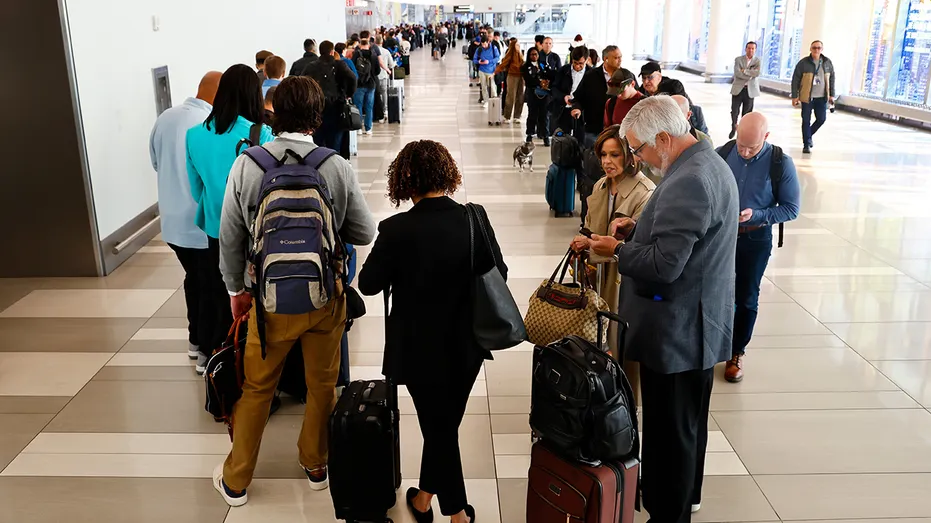
SouthernWorldwide.com – If you’ve found air travel increasingly unpredictable lately, your feelings are valid. Flight delays are becoming more common, schedules feel incredibly tight, and a single weather event can disrupt travel nationwide.
To address these growing issues, the federal government is turning to artificial intelligence.
The Federal Aviation Administration (FAA) is currently testing a new system designed to forecast potential congestion up to weeks in advance. The core idea is straightforward: proactively adjust flight schedules early on to prevent minor issues from escalating into major delays later.
However, the specifics of how this system operates and the entities involved in its development raise significant questions.
The initiative is known as Strategic Management of Airspace Routing Trajectories, or SMART. According to U.S. Secretary of Transportation Sean Duffy, this software is capable of analyzing flight patterns well in advance. It can then suggest minor schedule adjustments, such as moving a flight five or ten minutes earlier. While these shifts may seem insignificant individually, across thousands of flights, they have the potential to alleviate bottlenecks in busy airspace.
Duffy has indicated that the SMART system could empower planners to identify potential problems weeks ahead, allowing for smoother schedule adjustments before delays begin to accumulate.
This ambitious project comes with a substantial financial commitment. Officials estimate the AI system could cost approximately $12 billion, as part of a larger effort to modernize the nation’s air traffic control infrastructure, which has already received tens of billions in federal funding.
The government is collaborating with private sector companies that possess expertise in data analysis and aviation. Three prominent companies are involved in this endeavor.
Each of these companies is competing to influence the functionality of SMART. Palantir Technologies has publicly confirmed its partnership with the FAA, providing analytics tools aimed at enhancing aviation safety and efficiency.
Read more : Researchers identify origin of black hole's 3,000-light-year jet with advanced telescope array
Air travel operates on extremely precise timing. When a single flight experiences a delay, it can impact dozens of subsequent flights. Proponents of the SMART system believe that AI can identify patterns that might elude human observation.
For instance, the system could pinpoint specific routes that tend to become congested during particular times of the year. Subsequently, it could adjust schedules even before tickets are sold. Such foresight could lead to fewer last-minute delays and a more seamless travel experience for passengers. At least, that is the stated objective.
However, there is a notable caveat. AI systems do not always behave as anticipated. These systems are susceptible to errors, and in some instances, they can produce confidently incorrect outputs—a phenomenon researchers refer to as “hallucinations.” This becomes particularly perilous when the stakes involve actual aircraft and operational flight schedules.
Furthermore, the FAA’s past performance in modernizing its systems gives some experts reason for concern. Its most recent major overhaul, known as NextGen, incurred costs of around $36 billion over approximately two decades and, according to federal watchdog reports, only delivered about 16 percent of its projected benefits. The SMART initiative now enters this same high-stakes environment, armed with billions in funding and considerable pressure to demonstrate tangible results.
Duffy has emphasized that the SMART system is intended to support, rather than replace, human air traffic controllers. Nevertheless, AI-driven scheduling could still influence decisions impacting thousands of flights simultaneously. Should the system make an error, the repercussions could extend far beyond a single aircraft or gate.
If this system is successfully implemented, travelers might notice subtle changes without fully understanding their origin. Flights could be adjusted slightly before booking. Departure times might appear more evenly distributed. Certain routes could become more predictable. Ultimately, this could translate to fewer delays at the departure gate.
Concurrently, passengers will be entrusting an AI-driven system to assist in shaping these behind-the-scenes decisions. If the system performs effectively, air travel could become significantly smoother. Conversely, if it fails to identify critical factors, the cascading effects could still impact individual journeys.
Air travel inherently involves a complex balancing act. Factors such as weather conditions, staffing levels, and passenger demand all converge in real-time. Integrating AI into this dynamic could introduce a novel layer of predictive capability. However, it could also introduce a new dimension of risk. The pace of technological advancement is rapid, and the implications in this domain are profound. Therefore, the true measure of success will be its ability to perform consistently within a system where minor errors can quickly escalate.