SouthernWorldwide.com – Genesis AI, a global full-stack robotics company, has introduced GENE-26.5, a revolutionary robotic brain engineered to empower general-purpose robots with human-level manipulation skills for complex physical tasks.
This advanced system integrates a robotics foundation model with a human-scale dexterous robotic hand, further enhanced by a novel data engine. These components collectively enable robots to learn from human movements and execute tasks demanding precision and coordination.
Theo Gervet, co-founder and president of Genesis AI, likens GENE-26.5 to the central nervous system of a robot, processing information and dictating actions. He describes it as the most sophisticated robotic brain available, with unparalleled capabilities demonstrated through videos showcasing robots performing exceptionally complex tasks.
Gervet highlights that this development is crucial because most robots still struggle with the intricacies of hand movements. While they can master repetitive tasks in controlled environments, real-world scenarios are far more dynamic and unpredictable.
Genesis AI has devised a method to feed GENE-26.5 vast datasets of human hand movements, allowing it to instruct robotic hands to mimic human dexterity. Furthermore, the system can guide robotic hands through multi-step processes, enabling them to perform tasks with numerous stages.
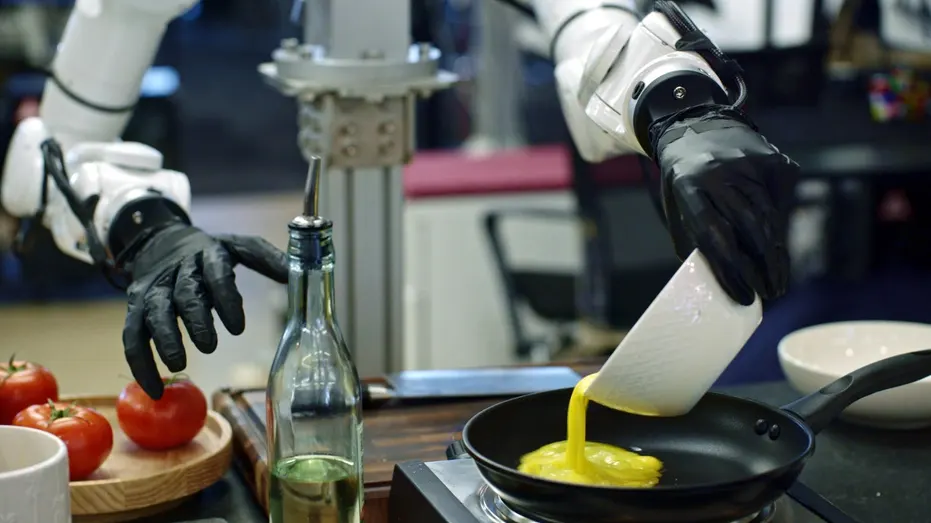
As an illustration, Gervet points to a cooking example. He explains that robots powered by GENE-26.5 can meticulously follow a 20-step procedure to prepare a complete omelet from beginning to end.
This comprehensive approach, Gervet emphasizes, stems from their commitment to full-stack innovation, encompassing both AI and hardware. By controlling every aspect of the system, they can address challenges holistically, gaining a significant competitive advantage through the utilization of unprecedented data volumes, which ultimately determines the potential of foundation models.
Human hands exhibit constant micro-adjustments, even during seemingly simple actions, a level of control that has proven elusive for robots. Gervet uses the analogy of a Rubik’s Cube to explain this. He notes that maintaining a perfect grip without dropping the cube requires precise strength and continuous, almost imperceptible, adjustments.
He elaborates that individuals make these subtle adjustments unconsciously, with their brains constantly registering tactile feedback. Even when holding the cube still, the hands are in perpetual motion, making micro-adjustments to ensure a stable and balanced grip.
These continuous micro-movements are essential. Gervet explains that they involve a complex interplay of over 20 joints in the fingers, knuckles, and wrists, all working in concert to prevent slippage and maintain equilibrium. The robotic hands developed by Genesis AI are designed to replicate this exact functionality.
Genesis AI has engineered a robotic hand that closely mirrors the form and function of a human hand. This hand is paired with a specialized glove that captures motion and pressure data. Gervet states that this glove system facilitates the direct transfer of information regarding human hand movements to their robotic counterparts.
He further details how the system captures intricate details. When a human wears the gloves while interacting with objects or performing tasks, the system records the precise movements of their fingers and wrists. Because the robotic hands are designed to precisely match human hands, this captured data translates exceptionally well.
Genesis AI reports that their glove system is significantly more cost-effective than conventional alternatives, being up to 100 times cheaper. It has also demonstrated up to five times greater data collection efficiency compared to traditional methods.
A significant hurdle in robot development has been the lack of accessible training data for physical tasks. Gervet points out that while AI chatbots have access to the vast resources of the internet, robots have historically faced a data deficit.
The primary challenge, Gervet explains, arises when a robot’s hand does not precisely match a human’s hand. In such cases, data captured from human hand movements does not translate effectively to robotic performance.
He asserts that by creating a robotic hand that is an exact replica of a human hand, they have successfully bridged this data gap. This precise replication ensures that the learned movements are directly applicable.
Genesis AI also leverages additional data sources to train its system. Beyond the data collected from the glove, they utilize videos of humans wearing camera headbands, providing a visual perspective of hand movements. Moreover, they incorporate extensive datasets from internet videos.
The company highlights its simulation system as a key accelerator, allowing AI to train autonomously within a virtual environment before transitioning to the physical world. This approach enables faster testing and refinement of systems compared to traditional, often slow and costly, physical testing methods.
Initially, Genesis AI anticipates the primary applications for its technology will be in industrial settings such as warehouses and manufacturing facilities. Gervet envisions the technology first being deployed in industrial environments, with a subsequent expansion into domestic settings.
He outlines a phased deployment strategy. The initial phase will focus on industrial applications in warehouses and for manufacturing logistics, with active discussions already underway with industrial clients.
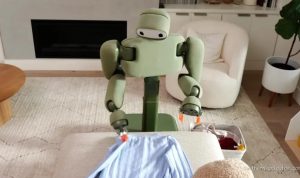
Following the industrial phase, the technology is slated for expansion into the service industry. Subsequently, it will become available to consumers for use in their homes. Gervet further expresses the hope that in a home environment, the technology will assist with daily chores, thereby freeing up individuals’ time for more enjoyable pursuits. He notes that robots have long been a significant aspiration for humanity, and Genesis AI aims to be the company that fulfills this collective dream.
Gervet emphasizes that safety testing is an integral part of the development process. He states that their technology undergoes rigorous testing and validation, commencing with simulations that run millions of scenarios, followed by controlled real-world environments. He likens this to a process where the technology must “earn its way into the room.”
He also confirms that the company adheres to established safety standards and industry regulations governing robot operation in proximity to people.
Gervet further reveals that the company is currently showcasing individual components, including the robotic brain, robotic hands, and data collection system. Their future plan includes unveiling a comprehensive general-purpose robot that integrates all these elements. Initial, small-scale deployments with select partners are anticipated to commence later this year.
This advanced technology is expected to first appear in locations such as warehouses, factories, and service environments where tasks are repetitive or physically demanding. Gervet suggests that in the future, their technology could help address critical labor shortages. Their aspiration is to boost productivity while enabling people to concentrate on meaningful, creative, and high-value work.
Over time, the integration of such robots could lead to significant changes. Robots capable of using the same tools as humans could potentially fit into existing infrastructure more easily, reducing the need for extensive redesigns.
Gervet describes the technology’s inherent advantage as its seamless integration into the human world. He believes that while humans will continue to lead, their capabilities will be expanded beyond the limitations of their own hands.
Genesis AI is currently showcasing individual components, including the robotic brain, robotic hands, and data collection system. The company plans to unveil a complete general-purpose robot that integrates all these elements. Early, small-scale deployments with select partners could begin later this year.
This technology is likely to first appear in settings like warehouses, factories, and service industries where work is often repetitive or physically demanding. Gervet states that in the future, their technology could help fill critical labor gaps, thereby increasing productivity and allowing people to focus on more meaningful and creative tasks.
Over time, this could lead to robots fitting more easily into existing human-centric spaces without requiring extensive redesigns, as they would be able to use the same tools as people.
“The beauty of the technology is that it’s meant to fit seamlessly into the human world,” Gervet said. “Humans will still lead, but our reach won’t be limited by what we can do with our own hands.”
While this might seem like another robot demonstration, the critical difference lies in the way these robot hands move. They are beginning to handle objects in a manner similar to humans, employing comparable motions and tools. This distinction makes the development particularly noteworthy. If robots can operate within spaces designed for humans without requiring complete overhauls, it signifies a substantial shift. This also raises important questions about where this technology will first emerge and how rapidly it will disseminate. While widespread change won’t occur overnight, this represents the kind of progress that often develops gradually before becoming ubiquitous. Therefore, it is advisable to watch for general-purpose robots that can suddenly handle objects with human-like dexterity and begin appearing in unexpected places.
Read more : New Dwarf Planet Candidate Challenges Planet Nine Theory
As robots become more adept at moving and handling objects like humans, the question arises: would you welcome one into your home, or would that feel like an excessive step at this point? We invite you to share your thoughts by writing to us at CyberGuy.com.