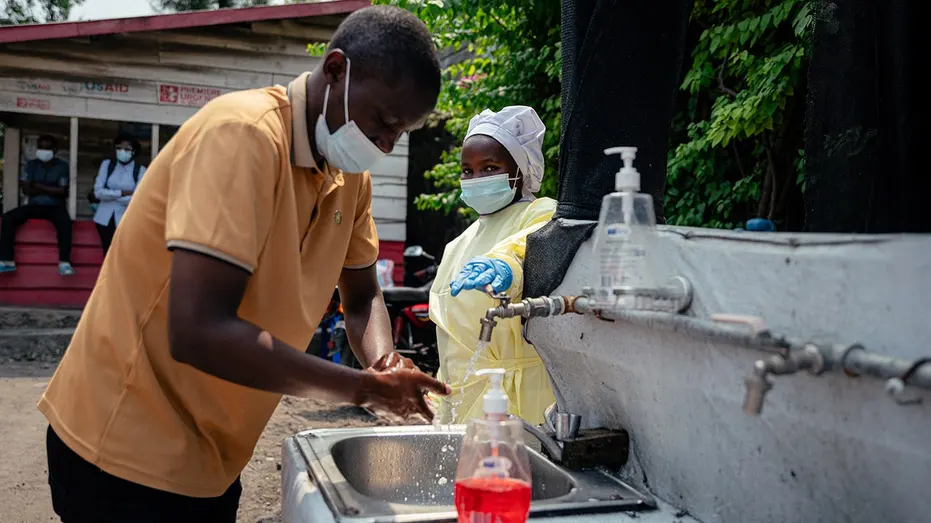
SouthernWorldwide.com – The World Health Organization (WHO) has declared a public health emergency of international concern due to a growing Ebola outbreak in Central Africa. This declaration has raised fears that the deadly virus could spread beyond the affected region, potentially reaching countries like the United States.
The current outbreak has been associated with a significant number of suspected fatalities in the Democratic Republic of Congo (DRC) and its neighboring country, Uganda. This situation underscores the global implications of infectious disease outbreaks.
Ebola is a zoonotic viral disease, meaning it originates in animals and can be transmitted to humans. While rare, it is a life-threatening condition. Outbreaks typically emerge in African regions, often starting with animal species such as antelopes, fruit bats, and non-human primates.
WHO HEAD ‘DEEPLY CONCERNED’ OVER ‘SCALE AND SPEED’ OF EBOLA SPREAD, SAYS EMERGENCY COMMITTEE WILL MEET
There are four distinct strains of the Ebola virus, also classified as orthoebolaviruses. The specific strain identified in the current DRC outbreak is the Bundibugyo virus.
Although the outbreak does not currently meet the criteria for a global pandemic emergency, U.S. officials are taking proactive measures. They have issued a strong travel advisory for Americans, urging them to avoid the affected areas. This advisory has been escalated from Level 3 to Level 4, signaling a significant risk.
One American national tested positive for Ebola on May 17 while working in Congo. This individual is currently being transported to Germany for treatment, along with other Americans identified as high-risk contacts. This situation highlights the potential for international spread and the importance of swift medical intervention.
As of May 18, official figures reported 11 confirmed cases and 336 suspected cases in the DRC, with a tragic 88 deaths attributed to the outbreak.
US ISSUES URGENT TRAVEL WARNING AS DEADLY EBOLA OUTBREAK SPREADS OVERSEAS
Read more : Hall of Fame receiver Terrell Owens accuses longtime manager of 'stealing' from him: 'Liar and a thief'
“This is a rapidly evolving situation, and case counts are subject to change,” the Centers for Disease Control and Prevention (CDC) emphasized in their statement.
While no cases of Ebola have been detected in the United States thus far, there remains a possibility of the virus entering American territory. Such an event would pose a significant threat to public health and necessitate a robust response.
Medical experts point out that the Ebola virus has an incubation period ranging from two to 21 days. During this time, an infected individual may not exhibit any symptoms, making early detection through testing challenging.
CLICK HERE FOR MORE HEALTH STORIES
“It is thus possible for Ebola to move across international borders silently, bypassing screening,” a medical professional explained. This silent spread is a primary concern for global health authorities.
“Some travel restrictions from the affected area have been put in place to limit this risk, although as this outbreak was spreading silently for months, it is possible that an infected traveler had come to the U.S. in the past 21 days from the affected areas prior to the travel restrictions.”
One expert noted that while the outbreak is “growing rapidly,” the number of global cases was less than 500 just a week prior. This rapid escalation is a cause for concern.
“Thus, the chance of an infected traveler having come to the U.S. remains quite low for the time being,” the expert added, offering a degree of reassurance while acknowledging the ongoing risk.
Dr. Robert H. Hopkins Jr., medical director of the National Foundation for Infectious Diseases, concurred that the immediate threat to American communities remains low. This assessment is based on current data and implemented control measures.
Ebola transmission occurs through direct contact with infected blood, bodily fluids, or the remains of infected people or animals. This includes fluids like saliva and sweat, emphasizing the importance of avoiding direct contact with symptomatic individuals or contaminated materials.
Healthcare professionals at the Cleveland Clinic state that it is “very unlikely” for Ebola to spread through airborne transmission. This is a crucial distinction from other respiratory viruses.
The initial symptoms of Ebola are often flu-like, including fever, chills, fatigue, headache, muscle pain, vomiting, diarrhea, and loss of appetite. Other indicators can include a rash, spots of blood under the skin, hiccups, bruising, and red, bloodshot eyes.
As a viral hemorrhagic fever, Ebola causes damage to blood vessels, which can lead to more severe manifestations. These can include significant bleeding or hemorrhaging, neurological disorders, and severe vomiting, underscoring the severity of the disease.
For individuals who have recently traveled to an outbreak area, it is recommended to monitor for symptoms for three weeks after their departure. Prompt medical attention should be sought if any symptoms develop during this period.
Fortunately, treatments for Ebola are available, and a vaccine exists that can provide protection to high-risk individuals and help prevent further transmission. These medical advancements are critical in managing and controlling outbreaks.
TEST YOURSELF WITH OUR LATEST LIFESTYLE QUIZ
“Avoiding contact with blood, body fluids, and sick or deceased people and animals is highly effective in the prevention of Ebola transmission,” Dr. Hopkins advised. This remains the cornerstone of personal protection measures.
“If contact is required, high-quality personal protective equipment is recommended before contact with potentially infectious people and/or materials,” he added. This emphasizes the need for caution and appropriate protective gear when interacting with individuals or environments where Ebola may be present.