SouthernWorldwide.com – Discussions regarding enhanced protections for endangered emperor penguins and the management of escalating tourism are at the forefront of talks concerning Antarctica, which commenced in Japan on Tuesday.
Representatives from nearly 60 nations that are signatories to the Antarctic Treaty are convening in Hiroshima for their annual deliberations on safeguarding and administering this delicate polar region.
The Antarctic continent and its rich biodiversity are shielded under the 1959 treaty. This treaty designates the continent as a domain for scientific research and peaceful endeavors, while also putting territorial claims on hold.
“The discussions happening here in Hiroshima are particularly crucial at a time when Antarctica is facing increasing impacts from global challenges like climate change,” stated Francisco Berguno, executive secretary of the Antarctic Treaty Secretariat, during a press conference on Tuesday.
Berguno emphasized the continent’s vital role in regulating Earth’s climate and oceans. He advocated for a long-term perspective, meticulous management, and unwavering international trust.
“The decisions made here contribute to ensuring that human activities in Antarctica remain closely monitored, environmentally responsible, and guided by scientific principles,” he added.
Read more : Pete Hegseth Faces Congress on Pentagon's $1.5 Trillion Budget Amid Democratic Opposition
Approximately 400 government officials and researchers from around 50 countries, including the United States, China, Russia, and Ukraine, are anticipated to participate in the meeting, according to reports from Jiji Press.
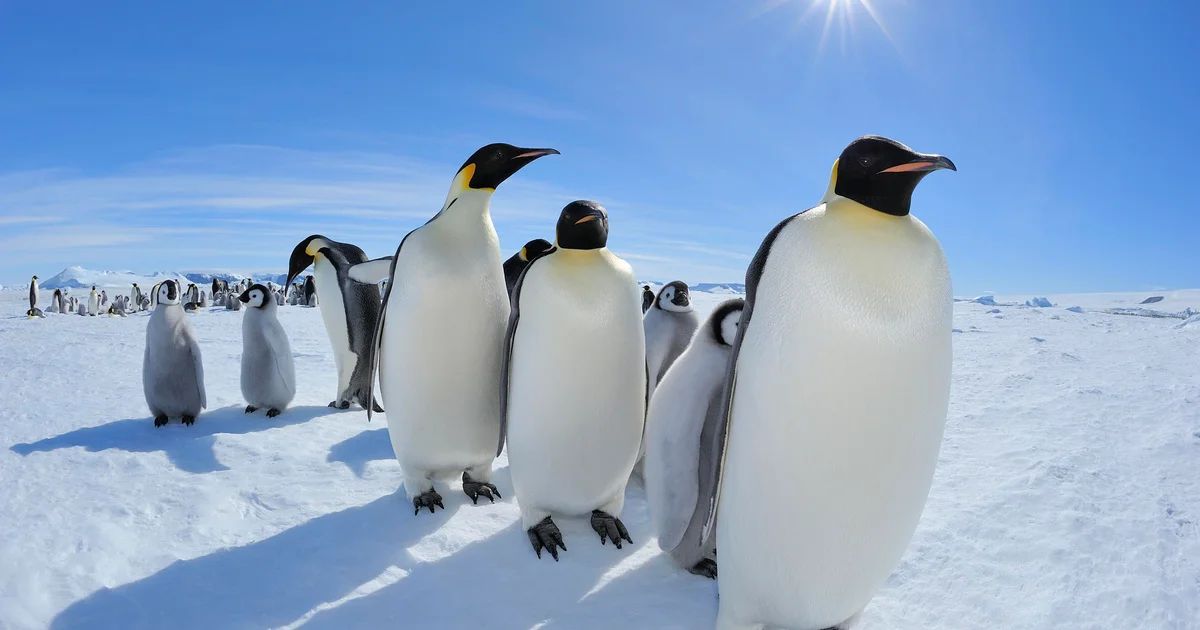
One of the most intensely scrutinized issues this year pertains to the status of emperor penguins. Last month, the International Union for Conservation of Nature (IUCN) officially declared them endangered.
The conservation organization World Wildlife Fund (WWF) is actively campaigning for the designation of the emperor penguin as a specially protected species during the Hiroshima meeting. Such a designation could lead to restrictions on shipping and tourism, which are currently placing additional pressures on the penguin populations.
The decline in their numbers is primarily attributed to climate change, which causes the sea ice – essential for their survival, hunting, and breeding – to break up earlier in the year.
“These iconic inhabitants of the ice may well be on a swift path toward extinction by the end of this century unless immediate action is taken,” expressed Rod Downie, WWF’s chief advisor for polar and oceans, in a statement.
However, it remains uncertain whether the meeting will achieve a consensus on enhancing protections. Some sources suggest that a definitive decision is unlikely to be reached in Hiroshima.
Another significant item on the agenda is the substantial increase in tourism. Nearly 120,000 individuals visited Antarctica during the 2024-25 season. Delegates will deliberate on potential restrictions for specific areas or activities, and the possibility of implementing quotas.
Experts caution that the current frameworks do not adequately account for the growing variety of tourist activities in the region, which now include kayaking, hot air ballooning, and even motorbiking.
“How to effectively regulate and manage tourism in Antarctica has emerged as a critical concern,” commented Hideki Uyama of Japan’s foreign affairs ministry, who is chairing the meeting.
Ringing Alarm Bells About Antarctica
In August, scientists issued a stark warning: abrupt and potentially irreversible changes occurring in Antarctica, driven by climate change, could lead to a significant rise in global sea levels by several meters, resulting in “catastrophic consequences for generations.”
More broadly, a comprehensive review of the current state of knowledge, compiled by about twenty leading experts, revealed accelerating shifts across the Antarctic region. These shifts are often both a cause and a consequence of global warming, according to a study published in Nature, a respected peer-reviewed international scientific journal.
The authors of the study emphasize that limiting carbon dioxide (CO2) emissions and, consequently, preventing global warming from exceeding at least 1.5 degrees Celsius will be absolutely essential. This is crucial for mitigating and preparing for the widespread impacts of abrupt changes occurring in Antarctica and the Southern Ocean.