SouthernWorldwide.com – President Donald Trump’s stark threat to “blow up” Oman if the Gulf kingdom did not “behave” has revealed an unusual rift with a vital Middle Eastern ally. This incident highlights Oman’s delicate position, caught between Washington’s demands and its long-standing role as a discreet intermediary with Iran.
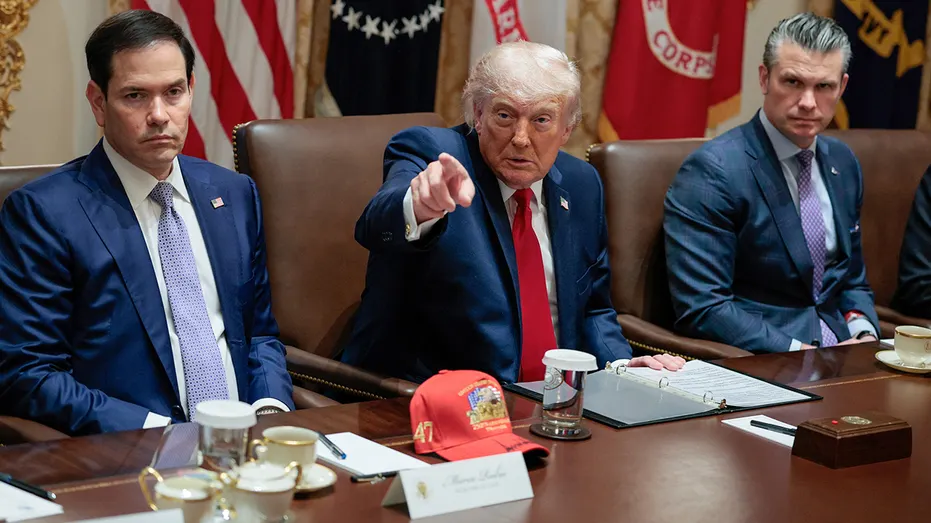
“The strait’s gotta be open to everybody,” President Trump stated during a recent Cabinet meeting. “It’s international waters. Nobody’s going to control it. We’re going to watch over it. We’ll watch over it, but nobody’s going to control it. That’s part of the negotiation that we have. They would like to control it; nobody’s going to control it. It’s international waters. And Oman will behave just like everybody else, or we’ll have to blow ’em up. They understand that. They’ll be fine.”
This statement emerged amidst escalating tensions over the future of the Strait of Hormuz. This crucial, narrow waterway connects the Persian Gulf to the Arabian Sea, through which approximately one-fifth of the world’s oil supply transits. The Trump administration has voiced strong opposition to reported discussions between Iran and Oman concerning a potential tolling system or a joint management arrangement for the strait.
The administration argues that such a move would imperil freedom of navigation and grant Tehran enhanced influence over one of the globe’s most critical shipping arteries. The remarks underscore a broader disagreement on the extent of Oman’s engagement with Iran, particularly as both nations explore proposals for the future governance of the Strait of Hormuz.
STRAIT OF HORMUZ TOLL WOULD SET ‘DANGEROUS PRECEDENT,’ UN SHIPPING AGENCY WARNS
Strategically positioned on the southeastern edge of the Arabian Peninsula, Oman overlooks the southern side of the Strait of Hormuz. This geographical placement has enabled the nation to cultivate a foreign policy distinct from many of its neighboring Gulf states.
While maintaining robust security ties with the United States, Muscat has also carefully preserved its diplomatic and economic relations with Iran. This dual approach has allowed Oman to serve as a key regional intermediary, facilitating discreet U.S.-Iran talks that laid the groundwork for nuclear negotiations.
Oman has repeatedly acted as a diplomatic channel between Washington and Tehran. Furthermore, it has played a significant role in mediating negotiations involving Yemen’s Houthi rebels, who are backed by Iran. This consistent mediation has been invaluable.
“They have facilitated numerous rounds of talks between U.S. and Iranians,” explained an expert. “They were also able to broker a truce between the US and the Houthis in the Red Sea. Their neutrality allows them to be quiet facilitators when adversaries are ready to talk.”
Oman’s historical value to Washington lies in its unique ability to sustain communication channels with entities that many U.S. partners are unwilling or unable to engage with directly. This capability has been crucial in de-escalating regional tensions and fostering dialogue.
The Gulf kingdom has consistently acted as a go-between in complex negotiations involving the United States and Iran. It has also lent its support to diplomatic efforts concerning Yemen and has frequently positioned itself as a neutral arbiter during periods of regional crisis.
This intermediary role has been described as “indispensable” to past diplomatic successes. Experts emphasize Oman’s long-standing commitment to quiet mediation.
“Oman has long played an important role as a quiet mediator, acting as a go-between for the United States and Iran in various negotiations including for the Obama-era JCPOA and more recently with the Trump administration and its efforts to negotiate with Iran prior to the 12-day war in June 2025,” stated a specialist in Middle Eastern affairs.
While President Trump’s remarks garnered significant attention, analysts suggest they reflect a genuine, substantive disagreement over the future of the Strait of Hormuz, rather than a mere rhetorical flourish. The underlying concerns are rooted in policy and strategic interests.
“I think it was both,” commented a policy analyst when asked if the remarks were an unusual threat or indicative of deeper anxieties. “Oman is an important defense partner, and the Trump administration has a record of working with them on mediation initiatives. The President has an unconventional style, but still this comment was shocking.”
The analyst further elaborated, “Beyond the shock value, I think it reflects clear frustration on the part of the administration with the Omani approach to the Strait. The President is signaling that Oman has gone too far in discussions with Iran on options for opening the Strait that could give Iran administrative control and interfere with freedom of navigation.”
Read more : How this high-tech lounge could transform airport waiting
The administration’s primary concerns revolve around reports that Iran and Oman have been discussing arrangements that could involve tolls, fees, or joint administration of this strategically vital waterway. Such proposals are seen as potentially undermining international maritime law.
“The administration is right to be concerned about tolls, fees, or joint management of the Strait,” the analyst asserted. “All of these things are a recipe for Iran interfering with freedom of navigation in the long term and they could set a dangerous precedent for other international waterways.”
There is a significant concern that if Iran were to gain administrative control over the Strait of Hormuz, other Iran-backed groups might pursue similar arrangements in other critical maritime chokepoints. This could lead to a destabilization of global trade routes.
“I could see the Houthis trying for the same in the Bab al-Mandeb,” the analyst warned, referencing another critical strait in the region.
Mona Yacoubian, a senior advisor and director of the Middle East Program at the Center for Strategic and International Studies, echoed these sentiments. She argued that any arrangement that financially benefits Iran through the management of the strait would be a cause for serious concern and could have far-reaching geopolitical implications.
Yacoubian suggested that Oman is likely attempting to act as a bridge between Iran and other Gulf Arab states. This effort is being made amidst growing concerns over potential future shipping disruptions in the Strait of Hormuz, which could severely impact regional economies.
“Oman is likely seeking to serve as a bridge between Iran and the Gulf Cooperation Council states,” she stated. This reflects Oman’s traditional role of fostering dialogue and de-escalation in the region.
However, Yacoubian also cautioned about the broader implications of such strong rhetoric. “It is important to underscore that these types of threats are not well-received globally and contribute to an overall erosion of trust in the United States as a credible negotiator and leading global power,” she added.
WHY GULF STATES AREN’T JOINING THE WAR AGAINST IRAN — DESPITE ATTACKS ON THEIR SOIL
Oman’s unique diplomatic role has not been without its share of controversy. Unlike many of its Gulf neighbors, Muscat has consistently sought to maintain relationships with rival regional powers, even during periods of heightened geopolitical tension. This independent streak has sometimes led to friction with its allies.
Michael Rubin, a senior fellow at the Middle East Forum, has articulated concerns that extend beyond the current dispute over the Strait of Hormuz. He believes there are longstanding issues that warrant attention.
Rubin pointed to what he described as three persistent concerns: alleged Iranian weapons smuggling through Oman to Yemen’s Houthi rebels, Oman’s hosting of Houthi leaders, and what he characterized as financial incentives tied to disruptions in Red Sea shipping. These allegations, if substantiated, could complicate Oman’s regional standing.
Despite these criticisms, the deep-rooted nature of the relationship between Oman and the United States remains a significant factor. This historical bond has been forged over decades of cooperation and mutual trust.
“For a century and a half, Oman has been a close partner to the United States,” emphasized a representative familiar with the bilateral relationship. This long-standing alliance underscores the complexity of the current situation and the importance of finding a diplomatic resolution.