SouthernWorldwide.com – The specter of polio, a disease once responsible for widespread paralysis and fear, lingers even as its presence in the United States has been largely eradicated. The question of how safe America truly is from this devastating illness remains a pertinent one, especially in light of recent global outbreaks and declining vaccination rates.
The impact of polio was profoundly felt in the mid-20th century. Violin virtuoso Itzhak Perlman, a global icon of musical talent, contracted polio at the age of four. He vividly recalled the sudden, stark change: “I was already running and walking, and I remember one morning when I got up and I couldn’t stand… All of a sudden it was like, Stop. Can’t do that anymore.“
Perlman’s experience, while deeply personal, mirrored that of hundreds of thousands of children worldwide who were infected before the advent of the polio vaccine. He missed the crucial window of vaccination by about six years. Reflecting on his situation, Perlman stated, “I’m here to tell you that’s what happens when you’re not vaccinated. My life was changed forever. My parents were upset. Ugh, they were so upset.”
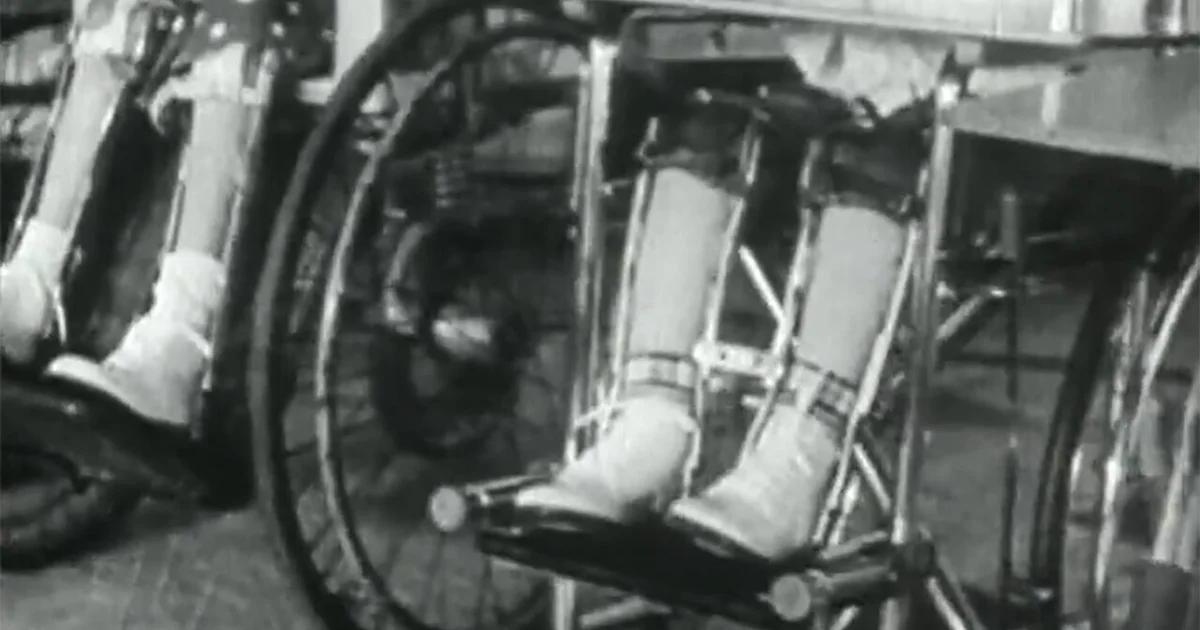
The polio virus was a relentless enemy, capable of causing paralysis so severe that some individuals required mechanical ventilation to survive. During the peak of the pandemic in the late 1940s and early 1950s, thousands of children were kept alive by the use of iron lungs, a testament to the disease’s severity.
“There was no protection, and there was no cure,” explained historian David Oshinsky, a professor at NYU Grossman School of Medicine and author of the Pulitzer Prize-winning book, “Polio: An American Story.” He further elaborated on the helplessness parents felt: “You could be a hands-on parent, a hands-off parent. It didn’t matter. You could not protect your child from polio.”
Polio is transmitted through contaminated water, food, or close contact with an infected individual. Crucially, there is no cure or FDA-approved antiviral treatment for the disease.
Oshinsky vividly remembers the pervasive fear that characterized his childhood in the 1950s. “You had to stay out of crowds. You couldn’t go bowling. You couldn’t go to the movies. You couldn’t go swimming. Beaches would close. Swimming pools were closed,” he recounted. “I remember my parents every week giving me a polio test: Could I touch my chin to my chest? Could I touch my toes? And the slightest stiffness would bring a panic.”
So, what led to the dissipation of this widespread fear? “What happened to that fear was vaccines,” Oshinsky stated definitively.
The groundbreaking development of the first polio vaccine by Dr. Jonas Salk in 1954 marked a turning point. Before its public release, the vaccine underwent rigorous testing on nearly two million children, with a portion receiving the vaccine and others a placebo. Oshinsky highlighted the stark contrast to modern times: “Try to think of an instance today where they would have an experimental vaccine, and you’d have parents rush two million kids into line. It’s unheard of today.”
Read more : Justice Gorsuch: "My Loyalty Is to the Constitution" Amid Trump Attacks
The vaccine proved to be both safe and highly effective, leading to a dramatic decline in paralytic polio cases. Parents eagerly sought to have their children vaccinated.
Oshinsky humorously recalled his mother’s reaction: “Push me into line!” he laughed, illustrating the widespread public trust and urgency surrounding the vaccine.
In 1961, the introduction of an oral polio vaccine, developed by Dr. Albert Sabin, further bolstered vaccination efforts. Administered as drops, often on a sugar cube, this vaccine was widely adopted in the United States and internationally.
Despite these advancements, the polio virus has not been entirely vanquished. It continues to circulate in certain regions of the world.
“If that virus comes to the United States and we have a significant percentage of the population unvaccinated, polio is going to come back. It is only a plane ride away,” Oshinsky warned, emphasizing the global interconnectedness of disease transmission.
The concept of “herd immunity” plays a vital role in protecting populations. When a sufficient percentage of a population is immune to a virus, it becomes difficult for the virus to spread, effectively creating a protective barrier for those who are unvaccinated or have compromised immune systems. This herd immunity is crucial for protecting the estimated 20 million or more Americans with weakened immune systems.
Currently, all 50 U.S. states mandate polio vaccination for school attendance. However, a concerning trend has emerged in recent years: an increasing number of parents are utilizing exemptions to forgo vaccinating their children. This has fueled concerns about the potential resurgence of polio.
In a notable shift, Dr. Kirk Milhoan, who heads the CDC’s advisory committee for immunization practices, suggested in a recent podcast interview that the polio vaccine might warrant consideration for becoming optional. He stated, “If you look at polio, we need to not be afraid to consider that we are in a different time now than we were then. Our sanitation is different. Our risk of disease is different. And so those all play into the evaluation of whether this is worthwhile of taking a risk for a vaccine or not.”
Dr. Milhoan, however, declined a request from “Sunday Morning” for an interview on this topic.
Oshinsky expressed his perspective, stating, “This seems to me to be a situation where children’s lives are at risk, and that changes the dynamic.”
When asked about the public’s perception that the polio vaccine is no longer necessary, Oshinsky explained, “Most people think polio is gone. They really don’t have a sense that it’s still percolating in parts of the world.”
This complacency was starkly highlighted just four years ago when an international traveler introduced the polio virus into an under-vaccinated community in New York State. In the absence of robust herd immunity, a 20-year-old unvaccinated man contracted the virus and subsequently became paralyzed.
For Itzhak Perlman, the decision to advocate for vaccination against the disease that profoundly impacted his life is unequivocal. “For 70 years, we have been doing very, very well and almost eradicating polio. Why take a chance? Don’t take a chance. Believe me, it’s not worth it. It’s really not worth it,” he urged.
WEB EXCLUSIVE: In an extended interview, the renowned violinist Itzhak Perlman shares his personal journey after contracting polio before the vaccine’s availability. He discusses the lifelong adjustments he’s had to make due to his disability and offers advice to those who question the necessity of vaccination. Perlman also touches upon the power of music on the brain and his hopes for his legacy.
For more info:
- Itzhak Perlman (Official site)
- The Juilliard School, New York City
- David Oshinsky, professor, New York University Grossman School of Medicine
- “Polio: An American Story” by David Oshinsky (Oxford University Press)
- Polio Vaccination (Centers for Disease Control and Prevention)
- Poliomyelitis (polio) (World Health Organization)
Story produced by Mary Raffalli. Editor: Carol Ross.
See also:
- From 2020: How the fight against polio was won (“Sunday Morning”)