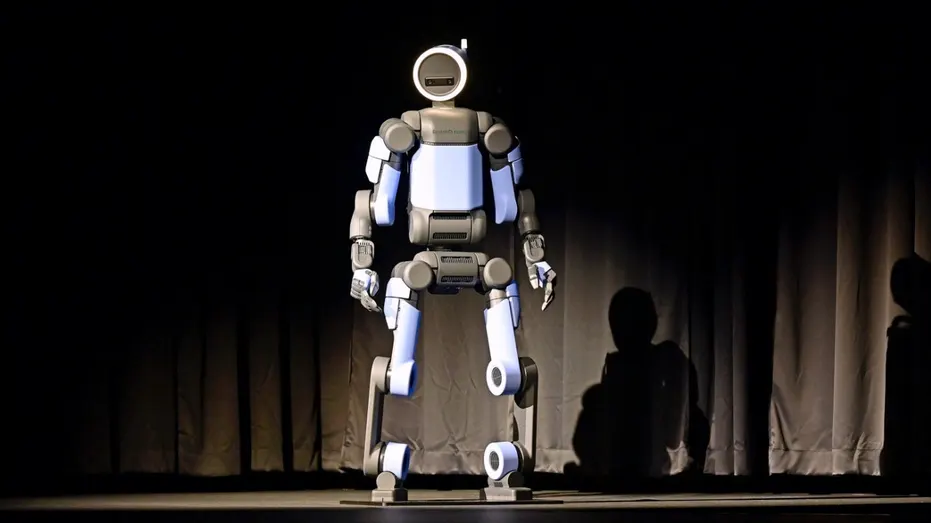
SouthernWorldwide.com – Hyundai is set to significantly increase the presence of humanoid robots in American car factories, with plans to deploy over 25,000 Boston Dynamics Atlas robots across its and Kia’s manufacturing facilities in the U.S.
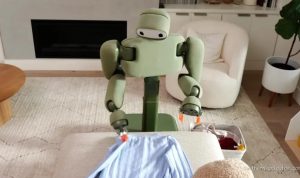
These human-shaped machines are designed to perform tasks that require bending, lifting, and balancing, and can navigate spaces originally built for human workers. This integration is poised to transform automotive manufacturing processes.
The move also brings to the forefront critical discussions regarding factory employment, workplace safety, and the extent to which consumers are prepared to embrace advanced automation in the products they purchase.
Hyundai Motor Group’s ambitious vision for these robots was reportedly detailed in investor relations materials following a session hosted by JPMorgan Chase.
Beyond deployment, the company intends to establish an annual production capacity of 30,000 Atlas robots by the year 2028. While a precise timeline for every plant has not been publicly disclosed, the robots are expected to commence operations at the Hyundai Motor Group Metaplant America in Georgia in 2028, with Kia’s Georgia plant to follow in 2029.
Like other major automakers, Hyundai is facing immense pressure to enhance production speed, develop more adaptable factories, and find effective solutions for labor shortages.
Humanoid robots like Atlas offer a compelling solution by being capable of working within existing human-centric environments, thereby minimizing the need for costly and extensive factory redesigns.
Furthermore, Atlas robots are expected to shoulder physically demanding tasks. The repetitive strain from lifting, carrying, and maneuvering awkward objects can take a significant toll on human workers over time.
By delegating these strenuous activities to robots, factories can potentially become safer environments. However, the successful implementation of this technology necessitates rigorous oversight to ensure predictable movement and safe, immediate stops in case of unforeseen circumstances.
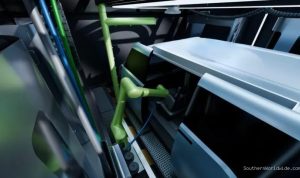
In a recent technical demonstration, Boston Dynamics showcased Atlas’s advanced capabilities by having it handle a substantial object. The robot adeptly squatted, lifted a mini-fridge, rotated its torso, and maintained balance while transporting the item.
According to Boston Dynamics, Atlas acquired this skill through reinforcement learning and extensive simulation training. Essentially, the robot practiced and refined its movements in a virtual environment before executing the task in the real world.
During the training phase, engineers manipulated variables such as the object’s weight, floor friction, grip force, and placement. This approach enabled Atlas to develop the crucial ability to adapt to changing conditions.
This adaptability is vital, as real-world factory work rarely adheres to perfect, static conditions. Components can shift, floor surfaces can vary, human colleagues move around, and the perceived weight of loads can change instantaneously.
Atlas is engineered to react in real-time, preventing it from freezing or failing when faced with unexpected task modifications.
While many robots primarily rely on visual input from cameras, Atlas also utilizes proprioception, which refers to its internal sense of body awareness. This concept, though technical in name, is easily relatable.
Much like how humans instinctively adjust their balance when the weight of a grocery bag shifts, Atlas employs sensors and sophisticated software to achieve a similar outcome.
It continuously monitors its balance, grip pressure, resistance, and body movements throughout its operations. Boston Dynamics has also highlighted that the new Atlas platform significantly bridges the gap between simulated movements and real-world performance.
This is partly achieved through a streamlined hardware design, symmetrical limb structures, and a limited number of actuator types.
Read more : GOP Lawmaker: Maine Voters Will Surprise Democrats Embracing Platner
Actuators are the robotic equivalent of joints and muscles, enabling movement. Hyundai’s reported plan to produce over 300,000 actuator units annually in its U.S. facilities underscores its intention to maintain significant control over the components that drive its humanoid robots.
A primary concern surrounding this widespread robot deployment is the potential impact on human workers. While companies often assert that robots will assume “dull, dirty, or dangerous” tasks, the reality for employees will require clear communication and planning.
The integration of robots could indeed lead to the creation of new job roles focused on robot maintenance, safety supervision, and factory software management.
Concurrently, it may lead to a reduced demand for certain physically demanding positions over time. This employment shift will be a critical aspect to monitor as Hyundai’s robot deployment progresses.
Hyundai will need to demonstrate that the Atlas robots enhance factory safety and productivity without adversely impacting its human workforce, a detail currently lacking in public statements.
The implications of this technological shift extend beyond auto workers and manufacturers, potentially affecting all car consumers. If humanoid robots enable factories to operate more efficiently, automakers may be able to adjust production schedules more rapidly in response to fluctuating demand.
This could, in turn, influence vehicle availability and reduce wait times for popular models.
Furthermore, robot-assisted manufacturing could play a role in determining vehicle costs. While automation has the potential to lower certain production expenses, these savings are not always immediately passed on to consumers.
Perhaps a more profound shift will be in consumer trust and perception. Customers may begin to question the proportion of their vehicle built by human hands versus robotic systems.
While this distinction doesn’t inherently dictate a car’s quality, it fundamentally alters the narrative surrounding its creation and journey to the consumer.
Hyundai’s strategic decision to deploy over 25,000 Atlas humanoid robots in the United States signals a pivotal moment for the automotive manufacturing sector. This initiative represents one of the most concrete indications that humanoid robots are transitioning from demonstration phases to performing substantive industrial roles.
The initial rollout in Georgia is expected to be a critical benchmark. Should Atlas prove successful in Hyundai and Kia’s facilities, other automotive manufacturers may feel compelled to accelerate their own robotics adoption plans.
However, the true test will occur on the factory floor. Atlas must demonstrate its ability to operate safely in close proximity to human workers, adeptly handle unpredictable tasks, and prove its value beyond impressive video demonstrations.
The technological advancements are undeniable and exciting, but the questions surrounding workforce impact are substantial and require responsible management.
Hyundai now faces the challenge of proving that both the technological potential and the workforce considerations can be addressed with utmost responsibility.