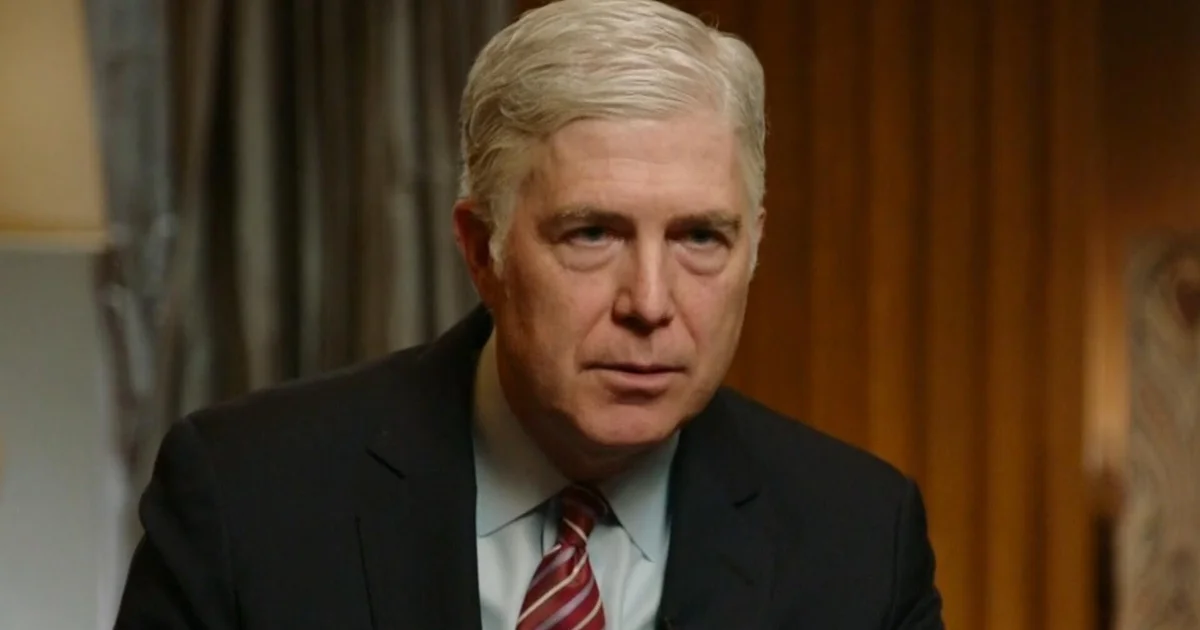
SouthernWorldwide.com – In a rare interview, Supreme Court Justice Neil Gorsuch discussed the current state of the Supreme Court, particularly regarding its perceived division, as the court approaches its busiest period with numerous decisions expected by July.
Justice Gorsuch, known for his conservative judicial philosophy, sat down with CBS News senior investigative correspondent Jan Crawford. The interview touched upon various aspects of his life and work, including the release of his new children’s book, “Our Journey Together.”
When asked about the Supreme Court’s reputation for being more divided than in previous eras, Justice Gorsuch acknowledged the intensity of the current judicial climate. He suggested that the perception of division might be amplified by the media’s focus on the ideological splits among the justices.
Gorsuch highlighted that while disagreements are a natural part of the judicial process, the court’s work is often characterized by rigorous debate and a commitment to legal principles. He emphasized that the justices engage in substantive discussions to reach their conclusions, even when they differ.
The justice also spoke about the importance of civility and respect among his colleagues, despite their differing legal viewpoints. He stated that maintaining a collegial atmosphere is crucial for the effective functioning of the court.
The interview provided a glimpse into Justice Gorsuch’s perspective on the challenges and responsibilities of serving on the nation’s highest court. His insights offered a counterpoint to some of the public narratives surrounding the judiciary’s internal dynamics.
Crawford’s conversation with Gorsuch underscored the balancing act justices undertake between their demanding professional duties and their personal lives, as exemplified by his participation in activities related to his new book.
The U.S. Supreme Court is indeed heading into a critical phase of its term. With a significant number of decisions pending, the public and legal experts are keenly observing how the court navigates these complex issues.
Justice Gorsuch’s participation in such interviews, though rare, offers valuable context to the public about the judiciary’s operations and the individuals who shape its decisions.
The conversation also touched upon the role of originalism, a judicial philosophy to which Gorsuch adheres, emphasizing the importance of interpreting the Constitution based on its original public meaning.
He reiterated his commitment to this approach, suggesting that it provides a stable and predictable framework for legal interpretation, grounding decisions in the text and history of the law.
The interview highlighted that even with ideological differences, the justices share a common goal of upholding the rule of law and serving the American people.
Gorsuch’s perspective offered a measured view on the court’s operations, aiming to demystify some of the public’s perceptions about its inner workings.
The discussion also implicitly touched upon the public’s engagement with the Supreme Court, and how external perceptions can sometimes differ from the internal realities of the court’s deliberations.
As the court continues its work, the insights from Justice Gorsuch provide a valuable perspective on the human element behind the landmark decisions that shape the nation.
The interview served to humanize the justices, showing them not just as arbiters of law but also as individuals with personal projects and thoughts on the broader implications of their work.
His comments on civility are particularly noteworthy in an era where political discourse can often be highly polarized.
The timing of the interview, coinciding with the court’s impending decisions, made Gorsuch’s remarks on the court’s functioning particularly timely.
Crawford’s journalistic approach aimed to elicit candid responses that would inform the public about the Supreme Court’s current state.
The justice’s willingness to engage in such interviews, despite their rarity, speaks to a desire to communicate the court’s perspective directly to the public.
Ultimately, the conversation offered a nuanced look at the Supreme Court, moving beyond simple narratives of division to explore the complexities of judicial decision-making.
Justice Gorsuch’s remarks contribute to a broader understanding of the judicial branch’s role in American democracy.
The interview concluded without delving into specific pending cases, adhering to the customary practice of justices not commenting on matters before the court.
The focus remained on the general principles and atmosphere of the Supreme Court, providing a window into the deliberative process.
Justice Gorsuch’s participation is a reminder of the importance of accessible information regarding the judiciary’s function.
The broader context of the court’s term, filled with significant cases, makes these discussions all the more relevant to the public.
His role as a justice involves not only interpreting laws but also contributing to the public’s understanding of the judicial system.
The interview with Jan Crawford is a significant contribution to the ongoing dialogue about the Supreme Court’s place in society.
The insights shared by Justice Gorsuch offer a valuable perspective for anyone interested in the workings of the highest court in the United States.
The discussion serves as a reminder that behind the legal arguments are individuals dedicated to the pursuit of justice.
The public’s understanding of the Supreme Court is crucial for a healthy democracy, and interviews like this play a vital role in fostering that understanding.
Justice Gorsuch’s reflections on civility and debate are essential for appreciating the nuances of judicial discourse.
The interview provided a platform for the justice to discuss his work and his views in a way that is both informative and accessible.
As the court continues to issue its rulings, the context provided by Justice Gorsuch’s remarks will remain valuable for interpreting the court’s direction.
The conversation highlighted the enduring principles that guide the Supreme Court, even amidst contemporary challenges.
The interview’s focus on the court’s internal dynamics, rather than specific controversial rulings, offered a unique perspective.
Justice Gorsuch’s participation helps to bridge the gap between the judiciary and the public it serves.
The discussion provided a valuable opportunity to hear directly from a Supreme Court justice about his experiences and perspectives.
The U.S. Supreme Court’s role is central to the nation’s legal framework, and understanding the justices’ views is key.
The interview with Justice Neil Gorsuch is a significant moment in understanding the human side of the Supreme Court.
His perspective on the court’s divisions offers a point of reflection for observers of the judiciary.
The conversation served as a reminder of the intellectual rigor that underpins the Supreme Court’s work.
The public’s perception of the court is shaped by many factors, and direct insights from justices are invaluable.
Justice Gorsuch’s remarks contribute to a more informed public discourse on the judiciary.
The interview is a testament to the ongoing importance of understanding the Supreme Court’s role in American life.
As the court’s term progresses, these insights will provide a helpful backdrop for analyzing its decisions.
Read more: The Takeout with Major Garrett
The discussion offered a balanced view, acknowledging challenges while emphasizing the court’s commitment to its mission.