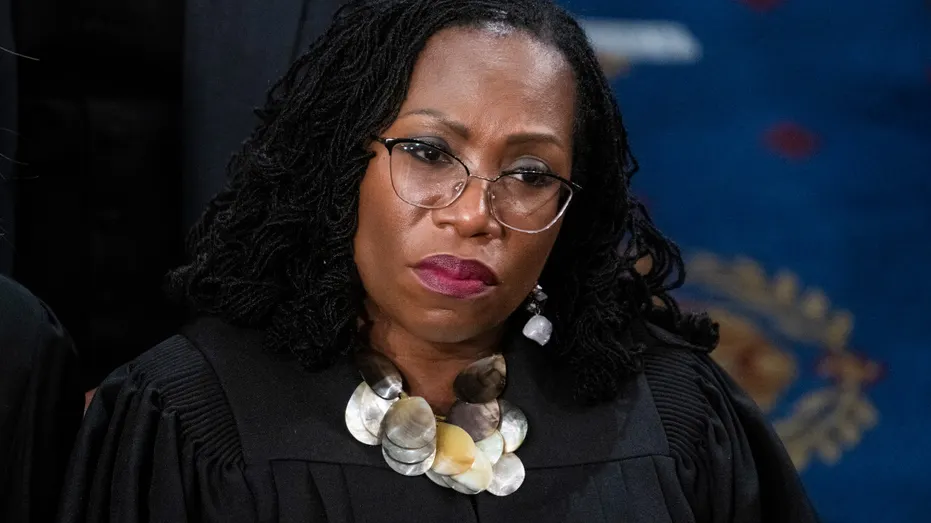
SouthernWorldwide.com – Justice Ketanji Brown Jackson has voiced her dissent regarding the Supreme Court’s recent decision to leverage a Louisiana gerrymandering ruling to guide lower courts on interpreting the Voting Rights Act. This action is seen as potentially undermining prior legal victories achieved by voting rights advocates.
The Supreme Court, on Monday, remanded a Mississippi case back to the U.S. District Court for further deliberation. This decision was made in light of their ruling in Louisiana v. Callais, which disallowed gerrymandering based on race.
Jackson, in her dissenting opinion, highlighted that the recent ruling did not address the private enforceability of Section 2 of the Voting Rights Act. She stated that, consequently, there appears to be no valid reason to overturn the lower court’s previous judgment.
The core of the dispute lies in how Section 2 of the Voting Rights Act is applied, particularly concerning the creation of electoral districts. Voting rights advocates argue that race should not be the predominant factor in drawing these lines, as it can dilute the voting power of minority groups.
The Supreme Court’s majority opinion in Louisiana v. Callais focused on the specific claim brought before it, which was about whether Section 2 could be enforced privately. However, in the Mississippi case, the Court’s decision to send it back for further consideration, referencing the Louisiana ruling, has raised concerns.
Critics argue that this move by the Supreme Court could lead lower courts to interpret Section 2 more narrowly. This could make it more challenging for plaintiffs to prove that a redistricting plan violates the Voting Rights Act based on racial discrimination.
Read more : US and Nigeria Strike ISIS Fighters Again After Killing Senior Leader
Justice Jackson’s dissent emphasizes the distinction between the legal questions addressed in the Louisiana case and the broader implications for voting rights litigation. She suggests that the Court is overstepping its bounds by using one ruling to influence cases that may involve different legal arguments.
The Voting Rights Act of 1965 was a landmark piece of legislation aimed at overcoming legal barriers at the state and local levels that prevented African Americans from exercising their right to vote, as guaranteed under the 15th Amendment.
Section 2 of the Act prohibits voting practices or procedures that discriminate on the basis of race, color, or membership in a language minority group. This includes practices that result in discrimination, even if there is no intent to discriminate.
The legal battles over gerrymandering have been ongoing for decades, with courts often tasked with balancing the need for fair representation with the constitutional rights of all voters.
The Supreme Court’s decision in the Louisiana case was seen by some as a victory for those challenging racial gerrymandering, as it affirmed that such practices are unlawful. However, the subsequent application of this ruling to other cases is now a point of contention.
Justice Jackson’s concern is that by instructing lower courts to reconsider cases in light of the Louisiana v. Callais ruling, the Supreme Court is effectively opening the door for challenges to existing redistricting plans that have been upheld under previous interpretations of the Voting Rights Act.
This could lead to a wave of new lawsuits and appeals, potentially re-litigating established voting rights protections. The outcome of these cases could significantly impact the political landscape and the representation of minority communities in government.
The implications of this ruling extend beyond just gerrymandering. It touches upon the broader issue of how the Supreme Court interprets and applies federal laws designed to protect civil rights.
Civil rights organizations are closely watching these developments, as they could have a profound effect on their ability to advocate for fair and equal representation for all citizens.
The dissenting opinion by Justice Jackson serves as a crucial counterpoint to the majority’s decision, offering a different perspective on the legal reasoning and its potential consequences.
Her argument underscores the importance of carefully considering the specific facts and legal questions in each case, rather than applying broad rulings in a way that might inadvertently weaken existing protections.
The ongoing debate highlights the complex and often contentious nature of voting rights law and the role of the judiciary in safeguarding democratic principles.
This is a developing news story and further updates will be provided as more information becomes available.