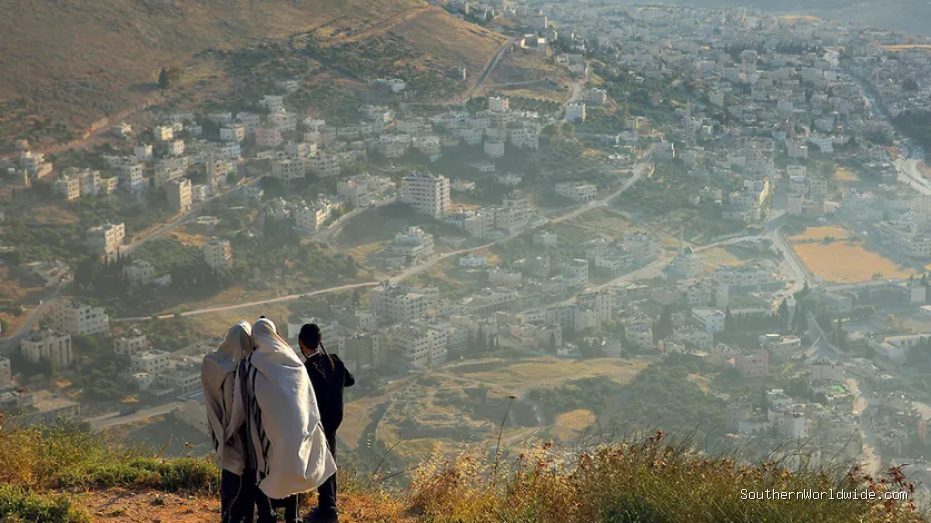
SouthernWorldwide.com – The Israeli government has officially designated Route 60, a vital artery connecting Nazareth in the north to Beersheba in the south, as the “Biblical Highway.” This move aims to create a Route 66-style tourist experience, drawing parallels to well-known historical routes in other countries. The highway traverses numerous sites of immense historical and religious significance.
The “Biblical Highway” has a history stretching back over 4,000 years. It winds along Israel’s central mountain ridge, beginning in Beersheba. This southern desert city is where Abraham is traditionally believed to have established an oasis and shared his teachings about monotheism.
The route continues from Beersheba to Hebron, a city renowned for the Cave of the Patriarchs. This sacred site, purchased by Abraham approximately 3,800 years ago, is traditionally considered the burial place of biblical patriarchs and matriarchs. A significant structure, built by King Herod around 2,000 years ago, marks the cave. Hebron also holds the distinction of being King David’s first capital, where he was crowned King of Israel about 3,000 years ago.
Further along the path is Bethlehem, the birthplace of Jesus. It is also the place where Jacob buried his wife Rachel, and it serves as a key setting in the Book of Ruth. The highway then leads to Jerusalem, the modern-day capital of Israel. Jerusalem is home to Mount Moriah, the traditional site of the Binding of Isaac, and the location of the First and Second Temples.
Continuing northward, the highway passes through Bet El. Here, Jacob famously experienced a prophetic dream of a ladder connecting heaven and earth while fleeing his brother Esau. Twenty years later, he returned to this very spot with his family and received the name Israel. The route then proceeds to Shiloh, which served as the spiritual epicenter for the Israelites for nearly 400 years following their entry into the Land of Israel.
North of Shiloh lies Shechem, where Joshua is said to have buried the bones of Joseph, which the Israelites had carried from Egypt during the Exodus. The highway then ascends Mount Tabor, the site where the prophetess Deborah sang her victory song. The route concludes in Nazareth, the hometown of Jesus, after passing through Megiddo, a location that has witnessed numerous pivotal battles throughout biblical history involving the armies of Israel and invading forces.
“Finally, the government is recognizing it. We have been advocating for this idea, which is similar to other roads around the world,” stated a proponent of the initiative. He drew comparisons to Germany’s “Romantische Straße” (Romantic Road), Spain’s “Camino de Santiago,” and the iconic Route 66 in the United States, highlighting that Route 60, now the “Biblical Highway,” holds similar cultural and historical weight for Israel.
The designation is seen as having significant educational, heritage, and tourism value. The Israeli government views the Bible as a cornerstone of Israel’s identity, and this initiative reflects a commitment to promoting the nation’s biblical heritage. The timing of the announcement, ahead of elections, is interpreted as a move to solidify Israel’s brand as the “land of the Bible.”
This initiative is particularly relevant in the context of what proponents describe as efforts by the Palestinian Authority to challenge and reframe historical narratives concerning sites of Jewish heritage. There are concerns that attempts are being made to “erase” Jewish historical and biblical connections to the land.
These efforts reportedly include attempts to reinterpret or displace long-standing traditions associated with significant locations such as the Western Wall, the Temple Mount, Rachel’s Tomb, and the Cave of the Patriarchs. Undermining the biblical heritage of Israel and the land is seen by some as an attempt to weaken the foundations of the Jewish state.
By renaming Route 60 as the “Biblical Highway,” the aim is to reinforce and celebrate the ancient identity of the Jewish people in the land. This is viewed as a crucial countermeasure against those who seek to diminish or remove this historical pillar.
Ze’ev Orenstein, Director of International Affairs at the City of David, emphasized that the initiative provides visitors with a unique opportunity to immerse themselves in biblical history by experiencing the very geography where these events unfolded. He suggested that this approach offers a tangible connection to the past.
It was also noted that Jordan has a marked “King’s Highway” that follows a route historically traveled by the Israelites. The comparison suggests that Israel’s designation of the “Biblical Highway” is not an unprecedented political act but rather an acknowledgment of historical and religious truth, similar to actions taken by neighboring countries to commemorate their own heritage.