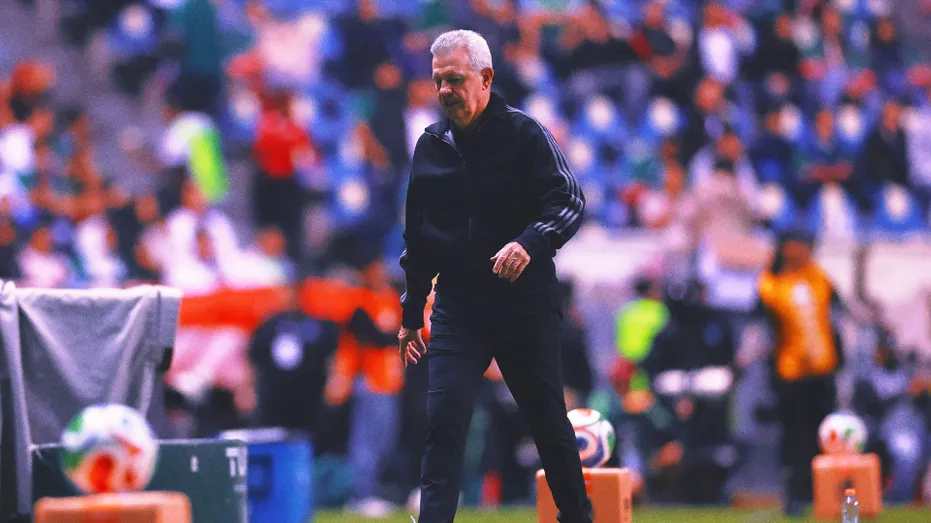
SouthernWorldwide.com – Javier Aguirre, currently at the helm of the Mexican national football team, is employing a strategy that harks back to the successful tactics of the 1986 World Cup. As a player in that tournament, Aguirre believed that Mexico’s extensive, year-long training camp was instrumental in their quarter-final finish, a feat they have only matched once since.
Now, as coach, he is attempting to recreate that winning formula for the upcoming home World Cup. Unlike many other national teams that must wait for their domestic leagues to conclude before assembling their squads, Mexico has begun gathering its players over a month before their opening match on June 11 against South Africa. This decision meant pulling players away from their Liga MX teams while their domestic season was still in progress.
“This is a project, not a whim — it’s a project to try and make this a great World Cup,” Aguirre stated. “We concluded that being at home and having these magnificent facilities we needed to be well prepared in every way. This meant having them ready five weeks before the World Cup.”
Aguirre, a seasoned manager embarking on his third World Cup journey with Mexico, was a key member of the 1986 squad. That team achieved a quarter-final berth, defeating Belgium and Bulgaria before being eliminated by the eventual finalists, West Germany, in a penalty shootout. This historical achievement mirrors Mexico’s best World Cup performance, which also occurred in 1970, another time the tournament was hosted on home soil.
“Being part of the national team and being able to play in a World Cup at home is priceless,” Aguirre remarked, emphasizing the significance of co-hosting the 48-team tournament with the U.S. and Canada.
The landscape of modern football presents distinct challenges compared to 1986. While the 1986 Mexican squad featured only one prominent European-based player, Hugo Sánchez, the current roster includes 14 players competing in European leagues. This shift necessitates a different approach to team preparation.
To secure his domestic players well in advance, Aguirre engaged in discussions with the owners of all 18 Liga MX first-division teams. He successfully convinced them that an extended training camp was essential for the team to perform at its peak on home soil. This comprehensive plan received approval in December, and the national team’s training facilities opened their doors on May 6, initially welcoming a group of 12 domestic players.
However, this strategic decision has not been without its critics. Prominent figures within Mexican football, most notably former national team manager Ricardo La Volpe, have voiced their reservations. La Volpe, who guided El Tri to the round of 16 in the 2006 World Cup, questioned Aguirre’s approach.
“I’m truly surprised, and I have a lot of respect for Javier Aguirre, but I don’t understand him for one simple reason: First, he doesn’t have most of the players, making the practices meaningless,” La Volpe argued. “I would say that if you can’t work with everyone you should let the players use the domestic playoffs to maintain their match rhythm.”
Due to the staggered arrival of players, Aguirre initially had to rely on youth academy players as sparring partners to fill out training sessions. Nevertheless, the manager leveraged his extensive network and diplomatic skills to persuade some European clubs to release their Mexican players ahead of schedule. This behind-the-scenes effort proved fruitful.
By the beginning of the previous week, Aguirre had 18 of his final 26 players available for a warm-up match against Ghana, which Mexico won 2-0. This demonstrated the effectiveness of his player acquisition strategy.
Mexico’s rigorous preparation continues with a series of friendly matches. They are scheduled to play Australia on Saturday in Pasadena, California, followed by a final test against Serbia in Toluca on June 4. This match against Serbia will be just one week before their high-stakes World Cup opener against South Africa at the iconic Azteca Stadium. In Group A, Mexico will also face South Korea and the Czech Republic.
Read more : Claude Lemieux's family honors NHL champion after Canadiens ceremony
The team’s performance at the 2022 World Cup in Qatar saw them eliminated at the group stage, underscoring the importance of this intensive preparation for the upcoming tournament.
To ensure optimal conditions for the national team, the Mexican Football Federation has made a substantial investment of 400 million pesos (approximately $23 million) in a comprehensive renovation of its elite training center, the Centro de Alto Rendimiento, located on the outskirts of Mexico City. This investment highlights the federation’s commitment to the World Cup.
“This investment reflects our responsibility toward the World Cup,” stated federation president Mikel Arriola. “We have built a facility that will provide the national team with the best possible conditions for preparation, on par with the world’s leading football powers. Hosting a World Cup demands that we raise all our standards, both on and off the field.”
The accommodations for the senior team have been significantly upgraded, with the number of private rooms expanding from 20 to 45. Additionally, new player entertainment lounges have been added to enhance the team’s living environment.
However, the most notable enhancement is the state-of-the-art facility housing a massive gymnasium. This gym has seen a dramatic expansion, growing from 1,200 to 6,000 square meters. The new complex also integrates a modernized medical wing, advanced physiotherapy and hydrotherapy labs, revamped locker rooms, dedicated coaches’ offices, and a specialized sports intelligence hub, all designed to support peak athletic performance.
While some critics question the tactical rationale behind the extended training camp, the players themselves have largely embraced the early lockdown. Beyond the tactical drills, the squad views this period of isolation as a crucial opportunity to build chemistry and camaraderie that extends beyond the football pitch.
“You have to be here to truly understand it,” said defender Israel Reyes. “People might say it’s a long time to be away but it’s helping us genuinely get to know one another.”
For Reyes and his teammates, the extended hours spent at the upgraded training center are instrumental in forging a collective identity. This sense of unity is expected to be a significant asset under the immense pressure of a home tournament.
“That camaraderie in the locker room is vital because we’re starting to feel like a brotherhood,” Reyes added. “On the field, it changes everything. You’re no longer just defending a teammate — you’re defending your brother.”
The 2026 FIFA World Cup is scheduled to take place from June 11 to July 19, 2026. The tournament, spanning three host countries, will conclude with the final on July 19 at the New York New Jersey Stadium in East Rutherford, New Jersey. All 104 matches will be broadcast live across FOX and FS1, with every game available for live and on-demand streaming within the FOX One and FOX Sports apps. A record 40 matches, representing over one-third of the tournament, will be aired in prime time across FOX and FS1.
The opening match on June 11, featuring Mexico against South Africa (3 p.m. ET), will be streamed for free on Tubi. Similarly, the USA’s opening match against Paraguay on June 12 (9 p.m. ET) will also be available for free streaming.