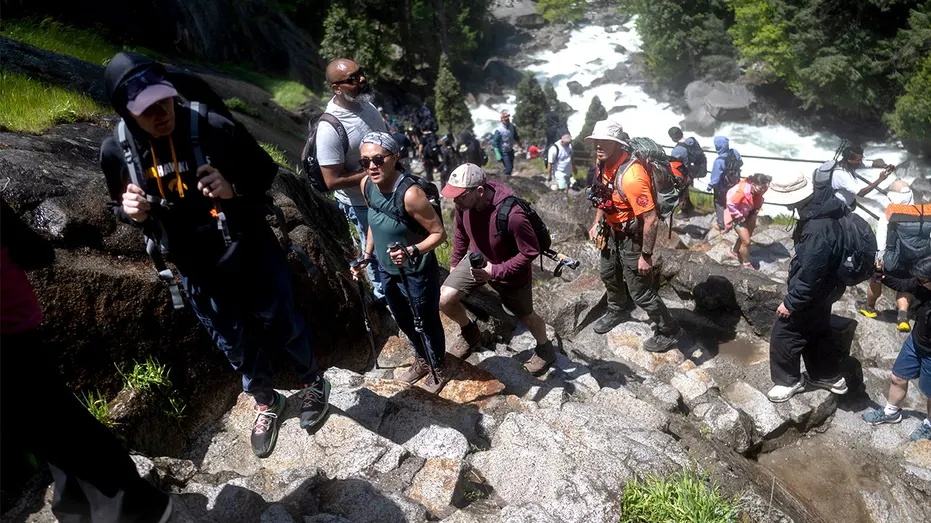
SouthernWorldwide.com – Yosemite National Park, renowned as one of America’s most stunning natural treasures, is currently grappling with visitor numbers that rival those of Disneyland.
This surge in tourism comes after the National Park Service (NPS) recently removed the requirement for advance reservations, a policy that had been in place even during the peak summer months.
The impact of this policy change is already evident. In March, Yosemite welcomed 225,817 recreational visitors, a significant increase compared to the 155,758 visitors recorded in March of the previous year. This marks the busiest month for the park since 2016, according to SFGate.
The NPS had implemented the removal of advance reservations to encourage greater visitation in 2026. However, reports from California media outlets suggest that this strategy has been overwhelmingly successful, perhaps even exceeding expectations.
The park is now experiencing overcrowding issues ahead of the busy summer season. Reports indicate that parking lots are filling up early in the day, shuttle buses are operating at full capacity, and visitors are circling the Yosemite Valley in search of parking spaces, as detailed by The Los Angeles Times.
Read more : Javier Aguirre's Mexico Camp Recalls 1986 World Cup Strategy
One visitor, San Jose resident Kunal Khandwala, described the shuttle service waits as “insane” after facing difficulties finding parking. This sentiment highlights the challenges faced by many trying to experience the park’s natural beauty.
John Buckley, executive director of the Central Sierra Environmental Resource Center (CSERC), provided a stark description of the crowded conditions to SFGate. He noted that on Saturdays, and often on Fridays and Sundays, the number of visitors exceeds the parking capacity.
This leads to vehicles being parked inappropriately along roadsides and a generally cramped experience for visitors. Buckley also shared an anecdote from a Yosemite visitor who described the crowds as “wall to wall,” making the experience feel akin to a day at Disneyland.
Discussions within a Facebook group dedicated to Yosemite visitors also reveal widespread complaints about the overcrowding. One user reported that on a recent Saturday, there was “absolutely no parking anywhere.”
Another visitor noted that “Every day has been busier,” while a third user advised, “Plan on every single day between Memorial Day and Labor Day to be exceedingly crowded.” This suggests a widespread expectation of significant crowds throughout the summer months.
One pragmatic suggestion from a Facebook user was, “Only way to avoid summer crowds — to not go in summer!” This reflects the growing challenge of experiencing popular natural attractions without encountering large numbers of people.
However, not all visitors have reported severe overcrowding. Conditions can vary significantly across the vast 1,169-square-mile park and throughout different times of the year.
Some users on social media have described experiencing minimal crowds, especially during the early hours of the day. One individual who visited in mid-March noted, “Just got back, crowds are very minimal, especially early in the day! I can’t [imagine] going there [during] peak season.”
Another user shared a more positive experience, describing beautiful weather and no issues with crowds. These accounts suggest that while some areas and times experience significant congestion, other periods might offer a more tranquil experience.
The NPS spokesperson affirmed that “America’s national parks are open and accessible, and we are pleased to see strong public interest in experiencing these treasured places.” This statement underscores the NPS’s commitment to providing access to these natural wonders, while acknowledging the challenges that come with their popularity.
The park’s strategy now relies on real-time traffic management measures. This includes temporary traffic diversions when parking areas reach capacity and the deployment of additional seasonal staff to manage high-use areas. This approach aims to mitigate congestion without resorting to reservation systems.
The NPS stated that these changes were intended to “support strong visitation in 2026.” While the goal of increasing visitor numbers has been achieved, the resulting overcrowding presents a new set of challenges for both park management and visitors seeking to enjoy the natural splendor of Yosemite.