SouthernWorldwide.com – A federal judge has halted the Trump administration’s directive that would have prevented recipients of the Supplemental Nutrition Assistance Program (SNAP) in five states from purchasing soda and candy with their benefits. The ruling stated that the Department of Agriculture exceeded its authority in approving these state-level restrictions.
Earlier this year, several states had gained approval from the Agriculture Department to implement bans on the purchase of sugary drinks and sweets. Health Secretary Robert F. Kennedy Jr. and Agriculture Secretary Brooke Rollins had championed these measures as a means to remove unhealthy foods from the substantial $100 billion federal program.
However, SNAP beneficiaries in Colorado, Iowa, Nebraska, Tennessee, and West Virginia took legal action against the agency in March. They argued that the ban would “destabilize food access” for individuals relying on food stamps. Furthermore, they contended that the restrictions would make it challenging for those with chronic illnesses to obtain necessary food and drink items for health management, including those needed to regulate blood sugar levels.
In her decision on Monday, Judge Amy Berman Jackson concurred with the plaintiffs’ arguments. She wrote that the Agriculture Department had overstepped its legal bounds by allowing states to enforce such bans.
“Congress established the definition of ‘food,’ and it did not grant the agency the power to alter or disregard that established definition,” she stated in her opinion. “It did not empower the agency to completely exclude certain food types from SNAP.”
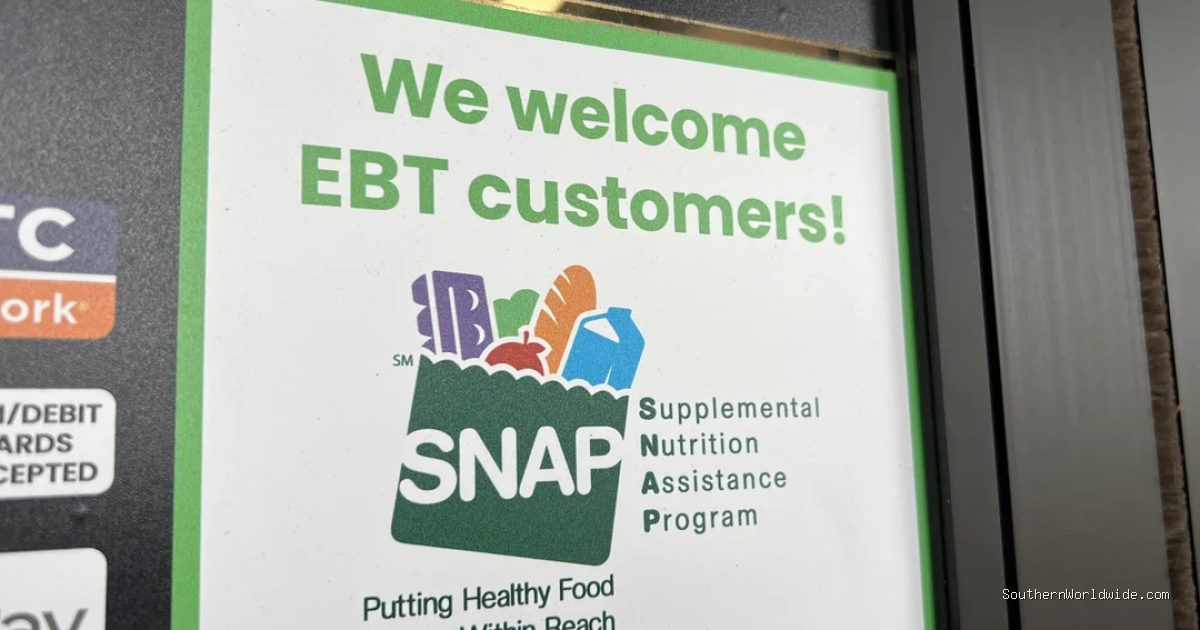
SNAP provides monthly financial assistance to low-income Americans to help them purchase groceries. Although it is a federally funded program, the administration of food stamps is handled by individual U.S. states.
The Agriculture Department defended its initiative and expressed its commitment to continuing the “Make America Healthy Again” campaign.
“The notion that taxpayer funds should not be utilized for the purchase of junk food should not be a point of contention,” a USDA spokesperson communicated to CBS News. “We will not retreat from the endeavor to Make America Healthy Again, including for the families and communities that depend on SNAP.”
While this particular ruling is specific to the five states involved in the lawsuit, it could have broader implications for the other 18 states that have similar bans in place, according to the Food Research & Action Center (FRAC), an organization dedicated to combating hunger.
“Other approved SNAP restriction demonstrations were based on the same USDA process, the same statutory authority, and many of the same legal and procedural assumptions that the court has now rejected,” Gina Plata-Nino, SNAP director for FRAC, noted in a blog post on Tuesday. “For this reason, the court’s decision may offer a blueprint for future legal challenges.”
A Setback for the “Make America Healthy Again” Initiative
This judicial decision represents a significant setback for the “Make America Healthy Again” campaign, which has been strongly advocated by Kennedy and Rollins. They have argued that taxpayers should not be funding products that contribute to widespread issues of obesity, diabetes, and chronic diseases.
“We cannot sustain a system that compels taxpayers to finance programs that contribute to people falling ill, only to then incur further costs to treat the very illnesses those programs help to foster,” Kennedy stated in a December announcement.
To date, the Agriculture Department has authorized 23 states to implement restrictions through waivers, permitting them to prevent SNAP recipients from buying specific food and beverage items that are typically allowed under federal law.
The Food and Nutrition Act, which governs SNAP, permits food stamps to be used for “any food or food product intended for human consumption,” with the exceptions of alcohol and ready-to-eat hot foods. The law also prohibits SNAP recipients from using their benefits to purchase tobacco products.
The National Center for Law and Economic Justice, a non-profit organization representing the plaintiffs, argued that the varying state-by-state definitions created confusion for both retailers and SNAP recipients.
“This ruling clarifies that the USDA cannot circumvent the legal safeguards that dictate how SNAP must operate nationwide,” Katie Deabler, senior attorney at the National Center for Law and Economic Justice, stated in a press release. “This decision makes it clear that the USDA cannot bypass the legal guardrails that establish how SNAP must operate across the country.”