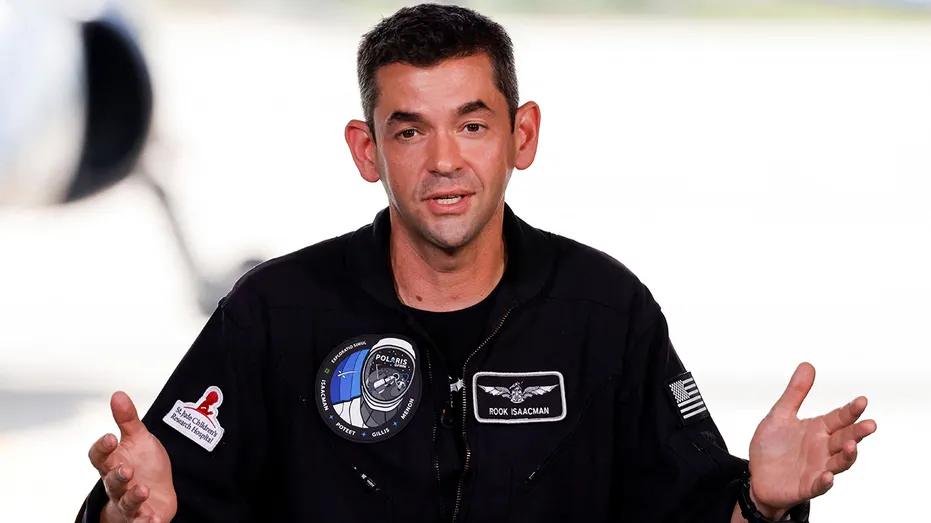
SouthernWorldwide.com – NASA Administrator Jared Isaacman has stated that the ongoing historic Artemis II mission would not have been possible without the influence of President Trump.
Isaacman emphasized that the current progress with Artemis II, which is nearing a critical juncture as the Orion spacecraft is set to pass the far side of the moon, is directly attributable to Trump’s initiatives.
“I want to be incredibly clear, we would not be at this moment right now with Artemis II if it wasn’t for President Trump,” Isaacman told Fox News. He further elaborated that without Trump’s direction, there would not be a viable plan for returning to the lunar surface and establishing a lasting presence.
Isaacman recalled that on his first day in office during Trump’s second term, a national space policy was established. This policy mandated frequent lunar missions, the construction of a moon base, and the development of advanced technologies like nuclear power and propulsion. These advancements are seen as crucial for future American astronaut missions to Mars.
The Artemis II mission, which launched from Cape Canaveral, Florida, last week, is designed to send humans farther from Earth than ever before. The mission’s primary objective is to orbit the moon and then return to Earth, with a planned landing in San Diego.
“In the next 24 hours or so, they’re gonna pass behind the far side of the moon, these four astronauts will have traveled farther away from Earth than any humans ever before, about 250,000 miles away,” Isaacman explained. He added that the mission is rigorously testing all aspects of the spacecraft, including its manual controls.
Isaacman reported that the spacecraft’s performance has exceeded expectations prior to launch. He indicated that the astronauts will commence their return journey to Earth shortly after passing the far side of the moon.
Comparing Artemis II to the successful Apollo programs of the 1960s and 1970s, Isaacman highlighted the significant technological advancements available to NASA today. He noted the stark contrast in the operational support required for modern missions.
Read more : Why Veterans Are Targeted by Scammers and How to Protect Yourself
“It is not even a close comparison,” Isaacman stated. “The operator consoles or flight controllers have multiple screens, lots of computing power that’s available to them right now. I mean there is certainly an army here supporting NASA, or an army at NASA that’s supporting this mission, but not the hundreds of thousands of people that you would have had during the Apollo era that had to bubble into that enormous endeavor.”
He emphasized that the current mission aims to build upon where Apollo 17 left off, but with a different objective. Instead of merely planting a flag and leaving footprints, the goal is to establish a permanent presence on the moon.
“That’s why when we pick up where Apollo 17 left off with this mission,” Isaacman continued, “it is not to return to the moon to plant the flag and leave the footprints, but to build an enduring presence, to build a moon base where we will turn the south pole of the moon into a scientific and technological proving ground for the capabilities we will need to master.”
The ultimate vision, he added, is to send astronauts to Mars and ensure their safe return.
Isaacman, a billionaire entrepreneur and a seasoned space enthusiast, was sworn in as NASA administrator in December. He previously commanded the first commercial spacewalk in September 2024.
While acknowledging the crucial role of the entire team, Isaacman also stressed the importance of looking ahead to the Artemis III mission. This mission, scheduled for mid-2027, is intended to test docking capabilities necessary for the ultimate goal of returning humans to the lunar surface in 2028.
“For everybody else, we got to start working on Artemis III,” Isaacman explained. He drew a parallel to the Apollo era, where Apollo 10 orbited the moon just miles above the surface, and Apollo 11, which successfully landed humans on the moon, launched only two months later. This historical precedent underscores the need for NASA to conduct multiple world-changing missions in rapid succession.