SouthernWorldwide.com – A new sodium-ion battery system from the Chinese battery giant CATL could significantly impact the power grid that supplies electricity to homes and businesses.
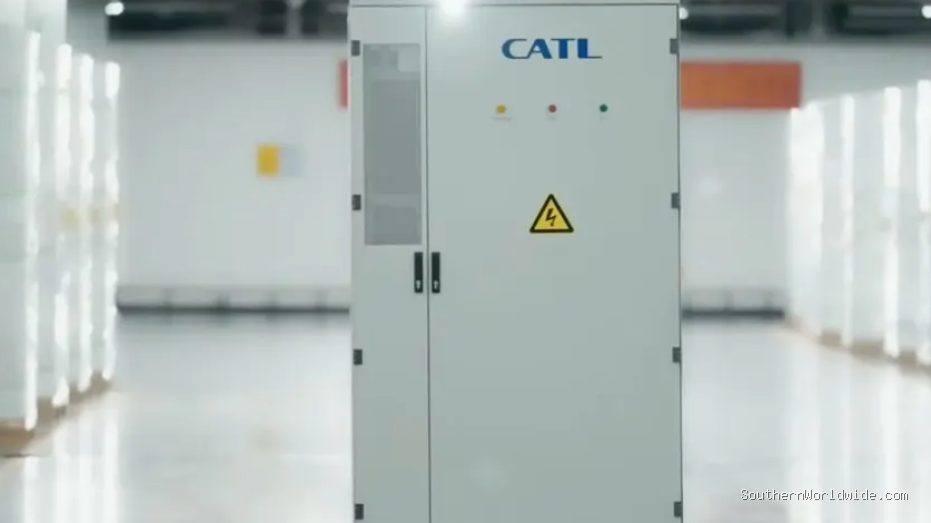
CATL has unveiled its TENER Sodium Energy Storage System, claiming it is the world’s first field-validated sodium-ion energy storage system ready for commercial deployment.
This battery is designed for large-scale energy storage facilities, crucial for supporting the grid as electricity demand escalates. Factors like the high power consumption of AI data centers, the strain on local grids during heatwaves, and the need to store intermittent solar and wind power make grid-scale storage increasingly vital.
While CATL has not yet announced a specific launch date for this system in the United States, it offers a glimpse into the future direction of grid storage solutions.
The TENER Sodium Energy Storage System was launched in Munich, Germany. CATL projects cumulative shipments to reach 1 gigawatt-hour by the end of 2026. Deliveries in China are slated to commence in September 2026, with global deliveries beginning in June 2027.
This timeline indicates a significant step forward for sodium-ion batteries towards commercial viability. The system is specifically engineered for stationary storage, meaning it can store electricity generated from sources like solar farms and wind projects for later use.
This capability is particularly important for managing peak demand periods, such as hot afternoons, or when renewable energy sources are not actively generating power.
Currently, most large-scale battery storage projects utilize lithium-based systems. While effective, lithium supply chains can be constrained, and prices can fluctuate with demand. CATL highlights that sodium is over 1,000 times more abundant than lithium and is globally distributed.
This abundance and widespread availability could make sodium-ion batteries a highly attractive option for grid storage applications, as size and weight are less critical compared to batteries for portable electronics or electric vehicles.
CATL does not anticipate sodium batteries replacing lithium batteries immediately. Instead, the company suggests that sodium and lithium technologies could complement each other in future energy storage systems.
The broader implication for consumers and energy providers is increased choice. A wider array of battery options could empower energy companies to reduce their reliance on a single material for grid storage.
AI BOOM: DEMAND FOR DATA CENTERS DRIVES INNOVATION BY ENERGY, TECH INDUSTRIES TO PRODUCE NEW POWER SOURCES
A key assertion from CATL is that the TENER Sodium system can be integrated into existing lithium iron phosphate energy storage platforms. The company states that the system shares the same physical footprint as LFP systems, potentially allowing developers to avoid costly modifications to enclosures, project redesigns, or recertification processes.
The system offers a rated capacity exceeding 30 megawatt-hours. Each module weighs approximately 42 metric tons (about 46 U.S. tons). CATL estimates that only 34 units are required for a 1-gigawatt-hour storage site. The modular design also supports flexible storage durations of 1, 2, 4, 6, and 8 hours, providing developers with greater flexibility to customize projects according to specific local power requirements.
Battery storage solutions must perform reliably in environments experiencing extreme temperatures, from intense heat to freezing cold. CATL claims the TENER Sodium is engineered for enhanced performance in extreme temperatures, improved safety, and reduced operating costs. The company also states that its battery management system provides the sodium-ion system with an additional 20 percent safety margin compared to lithium-ion batteries.
Furthermore, the system features a top-discharge airflow design, which CATL reports reduces heat generation by nearly 30 percent compared to conventional systems. The company also notes a reduction in auxiliary power consumption from the industry average of 2 percent down to 1 percent.
These features could be particularly beneficial for large grid storage projects, especially in regions prone to heatwaves, storms, or high power demand that can strain local electrical systems. CATL also indicates that the TENER Sodium operates at a noise level of only 65 decibels, which is 10 decibels lower than conventional systems. This could help mitigate community concerns regarding the placement of battery storage sites closer to areas where power is needed.
CATL asserts that the TENER Sodium has achieved full commercial maturity across its technology, production capacity, and supply chain readiness. The company has been engaged in research and development for sodium-ion batteries since 2016 and has invested approximately $1.4 billion over the past decade.
CATL has expanded its sodium-ion production lines at its Fuding base in China, adding 40 gigawatt-hours of annual capacity. An additional planned facility in Jining, Shandong, is expected to support 160 gigawatt-hours of sodium-ion battery production capacity. In April 2026, CATL announced a three-year, 60-gigawatt-hour sodium-ion energy storage order with HyperStrong, described as the world’s largest commercial contract for sodium-ion batteries.
These substantial figures underscore CATL’s serious commitment to sodium-ion storage as a commercial product. However, the adoption rate in the U.S. remains a separate consideration, as American utilities, regulators, and developers will need to evaluate factors such as cost, performance, supply chain risks, and security concerns.
While this new sodium-ion battery system may not be something consumers will purchase directly, the underlying technology could influence how electricity is stored and delivered. If sodium-ion storage proves to be reliable, it could provide energy companies with an additional method for supporting the grid, a capability that may become increasingly important as AI data centers continue to drive up electricity demand.
Enhanced energy storage can assist utilities in optimizing power usage and balancing supply during rapid demand increases. Nevertheless, it is important to note that advancements in battery chemistry alone will not resolve existing issues such as aging transmission lines, lengthy permitting processes, or local grid bottlenecks.
The key takeaway is that sodium-ion batteries are poised to become a component of the grid storage landscape. While not a singular solution, they offer the potential for energy companies to develop more adaptable and robust storage projects.
Your phone stores vital personal information, including emails, passwords, photos, and banking apps. In this replay of CyberGuy Live, Kurt the CyberGuy provides a step-by-step guide to simple phone security enhancements that can be implemented at your own pace. You will learn how to optimize your privacy settings, identify the latest phone scams, utilize trusted security tools, and receive a straightforward checklist to maintain your security. Watch the replay and access the checklist at: CyberGuyLive.com.
CATL’s new sodium-ion battery might seem like a distant energy development, especially with no announced U.S. rollout yet. However, its significance lies in the growing pressure on the grid from AI data centers, extreme weather events, and the imperative to store more renewable energy. The use of sodium, which CATL claims is far more abundant than lithium, is particularly noteworthy. If this technology demonstrates reliability in large-scale energy projects, it could offer utilities a novel way to store power and stabilize the grid during demand surges.
Would you feel comfortable with Chinese-manufactured battery systems supporting a portion of the U.S. electric grid if they contributed to more reliable power delivery? Share your thoughts with us by writing to CyberGuy.com.