SouthernWorldwide.com – As Californians head to the polls on Tuesday, Republicans are making their first moves to end long periods of electoral defeat, aiming to win key positions like governor and mayor of Los Angeles.
Meanwhile, President Donald Trump’s influence within the Republican Party will be tested again in Iowa’s gubernatorial race. In the same state, the Democratic nomination for the Senate is a focal point for the ongoing struggle between the party’s establishment and progressive factions.
California and Iowa are among the six states holding primary elections this week. These contests are significant as they will shape the upcoming November midterm elections, where Republicans will be fighting to maintain their narrow majorities in the Senate and House of Representatives.
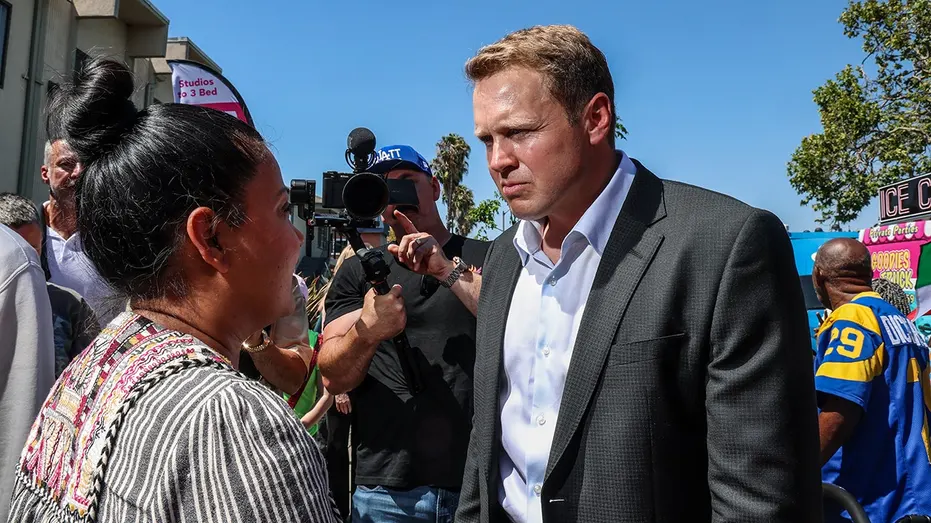
Perhaps the most nationally recognized election is in Los Angeles, a city that has not elected a Republican mayor in three decades. Spencer Pratt, a figure known from reality television and now an online influencer, is gaining momentum in his mayoral bid. His rise is attributed to his populist message and viral video campaigns.
THE CELEBRITY ENDORSEMENTS BOOSTING SPENCER PRATT IN THE LOS ANGELES MAYOR SHOWDOWN
Pratt, a Republican running as an independent in the predominantly liberal city, has received backing from Donald Trump. His campaign has also been bolstered by his personal experience of losing his home in last year’s devastating wildfires, which destroyed over 17,000 homes in Los Angeles County. Additionally, his focus on issues like homelessness, crime, and government accountability resonates with voters in a city long governed by Democrats.
Pratt is challenging current Mayor Karen Bass, a former Democratic congresswoman seeking her second four-year term. Bass has secured endorsements from prominent figures, including former Vice President Kamala Harris, a former California senator and state attorney general, and California’s two Democratic senators, Adam Schiff and Alex Padilla. Just last week, she also received the support of the term-limited Governor Gavin Newsom.
IS THERE A ‘GROWING REVOLT’ AGAINST CALIFORNIA’S ONE-PARTY RULE?
Mayor Bass is facing challenges from both the right, in the form of Spencer Pratt, and from the left, represented by progressive City Council member Nithya Raman. If no candidate secures over 50% of the vote in Tuesday’s nonpartisan mayoral election, the top two vote-getters will advance to a runoff in November.
In the race for governor, an impressive 61 candidates are vying to succeed Governor Newsom and lead California, the nation’s most populous state and the world’s fourth-largest economy.
However, in this “jungle primary” where all candidates appear on the same ballot regardless of party affiliation, with the top two advancing to the general election, only a select few contenders have a realistic chance of advancing.
Among the prominent candidates are Democrats Javier Becerra and Tom Steyer, along with Republican Steve Hilton.
Becerra, a former congressman and California attorney general who later served in President Biden’s administration, could become the first Latino governor of California in modern history. Steyer, a billionaire hedge fund founder turned environmental activist, previously sought the Democratic presidential nomination in 2020.
Also running is Republican Riverside County Sheriff Chad Bianco. Both Hilton and Bianco are hoping to become the first California Republican to win a gubernatorial election since Arnold Schwarzenegger’s re-election in 2006, two decades ago.
Bianco has positioned himself as the most conservative candidate in the gubernatorial field.
Other notable Democratic contenders include former Rep. Katie Porter, San Jose Mayor Matt Mahan, former Los Angeles Mayor Antonio Villaraigosa, and state Superintendent of Public Instruction Tony Thurmond.
Former Vice President Kamala Harris and Senator Alex Padilla had considered running for governor but announced last year that they would not pursue the office. This decision has resulted in a lack of a clear frontrunner for the gubernatorial race, a situation not seen in California for over a quarter of a century.
The gubernatorial race was largely overshadowed for much of last year by the devastating LA wildfires and President Trump’s immigration raids, which captured national headlines in California.
However, the gubernatorial contest gained significant attention earlier this year when one of the leading Democratic candidates, Rep. Eric Swalwell, withdrew from the race and subsequently resigned from Congress. This move followed allegations of sexual assault and misconduct, which he continues to deny.
Swalwell’s departure from the gubernatorial race created an opening for both Tom Steyer and Javier Becerra to gain traction in the polls. Steyer invested over $200 million of his personal funds to extensively advertise across various media platforms.
Bianco, who launched his gubernatorial campaign in April of last year, was among the top contenders until President Trump’s endorsement of Steve Hilton in early April significantly impacted his momentum.
In Iowa, the retirements of Republican Governor Kim Reynolds and GOP Senator Joni Ernst, coupled with the challenging midterm political climate for Republicans, have fueled Democratic optimism about their chances of winning seats in a state that has leaned Republican in the past decade.
President Trump, who won Iowa by 13 points in his 2024 presidential election victory, recently commented on the competitive GOP gubernatorial primary.
Read more : Battle between Bari Weiss and ‘60 Minutes’ explodes as Scott Pelley accuses her of murdering the show
The president endorsed Rep. Randy Feenstra, who is competing against entrepreneur and private school co-founder Zach Lahn, backed by the influential conservative group Turning Point USA, state Rep. Eddie Andrews, former state Rep. Brad Sherman, and former state administrative services director Adam Steen.
The Republican nominee will face Democratic state Auditor Rob Sand, who is running unopposed in his primary. Sand is currently the only Democrat holding statewide office in Iowa.
The significant influence of the president’s endorsement and his strong hold on the Republican Party have been evident in GOP primaries across the country in recent months. Trump’s endorsed candidates have successfully unseated incumbents he targeted in races in Indiana, Louisiana, Kentucky, and Texas.
Republican Rep. Ashley Hinson of Iowa is the strong frontrunner to secure her party’s Senate nomination to succeed the retiring Senator Joni Ernst.
Hinson, a former television news anchor in her third term representing Iowa’s 2nd Congressional District, faces a long-shot challenge from former state senator and past U.S. Senate candidate Jim Carlin. Hinson has received endorsements from Trump, Senate Majority Leader John Thune, and the National Republican Senatorial Committee. Hinson, who flipped a Democratic-held seat in northeastern Iowa in 2020, is widely considered a rising star within the Republican Party.
The Republican-held Senate seat in Iowa is a key target for Democrats, and this race is among about a dozen critical contests in this year’s midterm elections that will determine whether Republicans maintain their current 53-47 majority in the chamber.
Hinson will compete in the general election against the winner of a costly and contentious Democratic Senate primary between state Rep. Josh Turek, a Paralympian, and state Sen. Zach Wahls.
Wahls, a progressive, has the backing of Senator Elizabeth Warren of Massachusetts. Turek, a more moderate candidate who flipped a GOP-held Iowa House seat in 2022, is supported by former Transportation Secretary Pete Buttigieg. He also has the indirect support of longtime Senate Democratic leader Chuck Schumer of New York and Democratic Senatorial Campaign Committee Chair Kirsten Gillibrand. Additionally, VoteVets, an organization aligned with the Democratic establishment, has invested heavily in support of Turek.
Primaries in Iowa’s 1st and 3rd Congressional Districts will set the stage for general election matchups in crucial GOP-held seats that Democrats aim to flip.
This scenario is mirrored in New Jersey’s 7th Congressional District, another swing seat that Democrats are targeting in their bid to regain the House majority.
The incumbent Republican, Rep. Tom Kean Jr., has been in the national spotlight due to his three-month absence from Congress and the campaign trail, citing a “personal medical issue.”
In New Mexico, the race to succeed the term-limited Democratic Governor Michelle Lujan Grisham is a leading contest.
Former Rep. Deb Haaland, who served as Interior Secretary in the Biden administration and made history as the nation’s first Native American woman in a Cabinet position, is aiming to make history again as the first Native American woman elected governor. She faces Bernalillo County District Attorney Sam Bregman. Three prominent Republicans are vying for their party’s gubernatorial nomination.
Montana voters will choose their nominees in Tuesday’s primary to replace retiring Republican incumbent Senator Steve Daines.
Senator Daines and President Trump are backing former U.S. Attorney Kurt Alme, who entered the race in March shortly after Daines announced his retirement just before the state’s filing deadline, in what appeared to be a coordinated move. Alme is competing against two longshot rivals for the nomination.
Former state Rep. Reilly Neill appears to be the frontrunner for the Democratic nomination in the strongly Republican state.
The Republican and Democratic nominees will face off in the general election against former University of Montana president Seth Bodnar, who is running as an independent and has out-raised all other candidates in the race.
In South Dakota, a state dominated by Republicans, Governor Larry Rhoden is facing a crowded and competitive field as he seeks a full term as governor.
Rhoden was lieutenant governor and assumed the top job in early 2025 after then-Governor Kristi Noem stepped down to become Secretary of Homeland Security in the Trump administration.