SouthernWorldwide.com – Idaho’s night sky is a canvas of celestial wonders, offering a unique spectacle for astrophotographers. The Central Idaho Dark Sky Reserve, a vast expanse covering nearly a million acres across wilderness areas and the Sawtooth National Forest, provides an exceptional environment for observing the night sky with minimal light pollution.
This pristine dark sky region, along with the nearby Craters of the Moon National Monument & Preserve, which has earned the designation of an International Dark Sky Park, attracts numerous amateur astrophotographers. Advances in technology have enabled the creation of stunning imagery, with some photographs rivaling those taken by NASA’s Hubble telescope.
Members of the Idaho Astro Facebook Group are among those capturing these breathtaking celestial scenes. Their work showcases the beauty of nebulae, galaxies, comets, and more, all from the dark skies of Idaho.
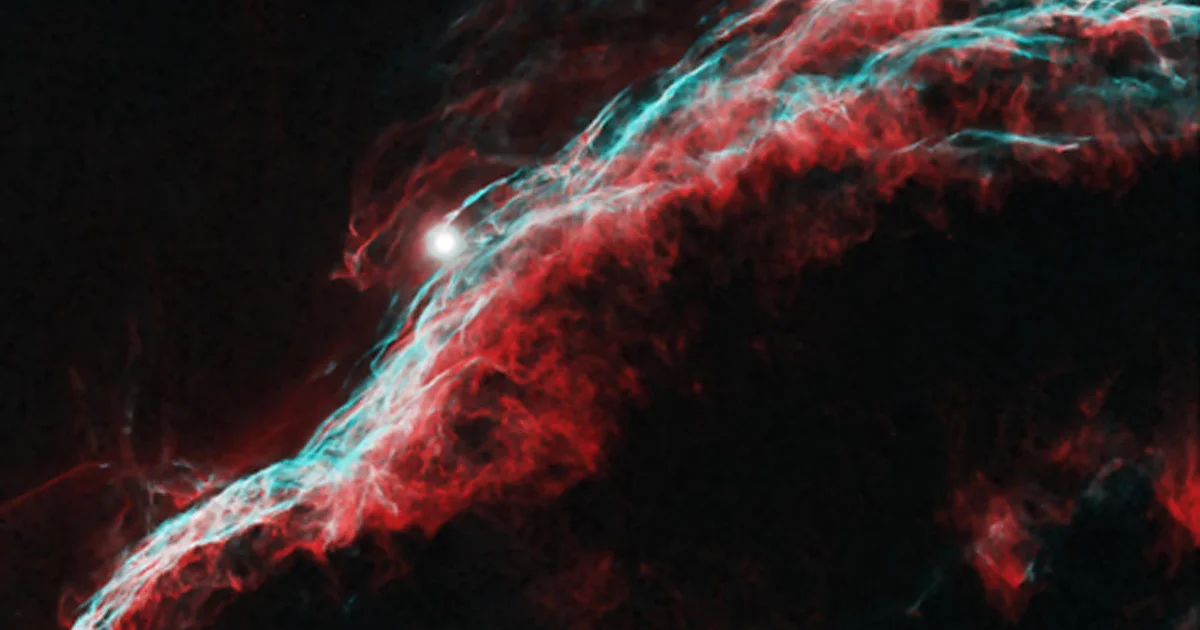
One such marvel is the Veil Nebula, located in the constellation Cygnus. This image, captured by Jordan Ragsdale, offers a glimpse into the intricate structures of this distant celestial object.
The spiral galaxy Messier 81, also known as Bode’s Galaxy, is another subject of fascination. Situated approximately 12 million light-years away in the constellation Ursa Major, its majestic form is beautifully rendered in this photograph by Robert Van Vugt.
The Pelican Nebula, identified by its designation IC 5070 and IC 5067 within the constellation Cygnus, is depicted in another striking image by Robert Van Vugt. Its unique shape and vibrant colors are a testament to the photographer’s skill and the clarity of the Idaho night sky.
Even our closest celestial neighbor, the Moon, offers a captivating subject for astrophotographers. Robert Van Vugt’s photograph of the Moon, taken in Meridian, Idaho, with a single exposure using a Nikon S7000, highlights the intricate details of its surface.
The Cocoon Nebula, cataloged as IC 5146 in the constellation Cygnus, is presented in a mesmerizing image by Robert Van Vugt, showcasing the delicate tendrils and glowing gas that give it its name.
Comet Neowise, a celestial visitor that graced our skies, was captured by Robert Van Vugt in July. The comet’s spectacular tail stretched across the dark expanse, a fleeting yet unforgettable sight.
The Eagle Nebula, also known as Messier 16, located in the constellation Serpens, is another breathtaking subject. Robert Van Vugt’s photograph reveals the intricate details of this star-forming region, including the famous “Pillars of Creation.”
The annual Perseids meteor shower provided a dazzling display, with David Stephen capturing a stunning image of the streaking meteors across the Idaho sky. These celestial fireworks are a highlight for stargazers every August.
The Elephant’s Trunk Nebula, found in the constellation Cepheus, was photographed by Joe Llenos from his backyard in Meridian, Idaho. This image showcases the nebula’s distinct shape and rich cosmic dust clouds.
Star clusters, like the ones captured by Jeremiah Sorrells, offer a glimpse into the densely packed collections of stars that populate our galaxy. These images reveal the sheer number and beauty of stellar groupings.
Jeremiah Sorrells also created a captivating time-lapse of star trails. This compilation of hundreds of images, each a 30-second exposure, illustrates the Earth’s rotation, with the North Star remaining stationary at the center of the celestial swirl.
The Orion Nebula, or Messier 42, a stellar nursery visible to the naked eye, is rendered in a High Dynamic Range (HDR) image by Jeremiah Sorrells. This technique captures the immense range of brightness within the nebula, from its brightest core to its fainter outer regions.
The unique geological formations of City of Rocks National Reserve, situated near the Idaho-Utah border, provide a dramatic foreground for astrophotography, as captured by Karl Beighley. The juxtaposition of earthly and celestial landscapes is striking.
Kevin Acheson captured the Owsley Bridge in Hagerman, Idaho, under a starry sky. The bridge, a man-made structure, stands in contrast to the natural, timeless beauty of the cosmos above.
A “False Daylight” phenomenon in Northern Idaho, southeast of Kellogg, was photographed by Kevin Acheson. This image captures a unique atmospheric or celestial event, adding another layer to the diverse night sky imagery.
The Milky Way, our own galaxy’s majestic band of stars, was beautifully photographed by Kevin Acheson at Salmon Falls Reservoir in Idaho. This image highlights the sheer density and brilliance of our galactic home.
Photographer Kim Starkey created a composite image titled “Sunflowers,” which creatively blends the beauty of terrestrial flowers with celestial imagery, perhaps suggesting a connection between earthly and cosmic beauty.
Kim Starkey’s “Touchdown” image, another composite, offers a unique perspective, possibly combining elements of the night sky with a terrestrial scene to evoke a sense of wonder.
Jordan Ragsdale’s image of the Moon showcases its familiar yet ever-intriguing surface, reminding us of our connection to Earth’s natural satellite.
The Reflection Nebula, NGC 6820, located in the constellation Vulpecula near a star cluster, is presented in a detailed photograph by Jordan Ragsdale, revealing the intricate interplay of light and dust.
The Dumbbell Nebula, Messier 27, in the constellation Vulpecula, is another stunning object captured by Jordan Ragsdale, showcasing its distinctive shape and vibrant colors.
The Seagull Nebula, IC 2177, is depicted in a captivating image by Jordan Ragsdale, highlighting the ethereal beauty of this vast interstellar cloud.
Jordan Ragsdale also captured a close-up of the sun, showcasing the dynamic and powerful nature of our star, including a solar flare, demonstrating the breadth of astrophotography subjects.
Tim Damon’s false-color image of nebulae, specifically the Bubble Nebula (NGC7635) and the Northern Lagoon Nebula (NGC7538), showcases the use of narrowband filters to reveal details not visible to the naked eye, offering a unique perspective on these celestial objects.
Ryan Hass’s image of the Moon provides a clear and detailed view of Earth’s closest celestial neighbor, underscoring the appeal of lunar photography.
Retired Idaho photography professor Tim Frazier, a lifelong astronomy enthusiast, captured the Andromeda galaxy (Messier 31), a galaxy located 2.5 million light-years away. Frazier commented on the exceptional viewing conditions in Idaho, citing the clear and stable air that allows for sharp and distinct celestial observations.
Joshua Perkins photographed the Tadpole Nebula (IC 410) from his backyard in Kuna, Idaho, demonstrating that incredible astrophotography can be achieved even from relatively light-polluted areas with the right techniques.
Perkins also captured the Lagoon Nebula, an interstellar cloud renowned for its beauty and located in the constellation Sagittarius.
Another image of the Pelican Nebula, also by Joshua Perkins, further illustrates the captivating nature of this celestial formation.
Matt Dieterich, a National Park Artist-in-Residence, created a panoramic view that includes the Milky Way and Comet Neowise, taken at Craters of the Moon National Monument. Dieterich also offers photography workshops, sharing his expertise in capturing the night sky.
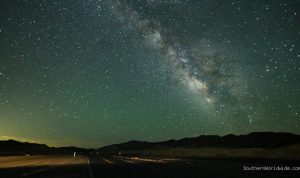
Wayne Sheridan, a retired scientist and amateur photographer, captured the Milky Way in Stanley, Idaho. He described it as the best experience he has had traveling the U.S. to view the Milky Way. The bright spot visible in his image is Jupiter.
For those interested in learning more about the dark skies of Idaho and astrophotography, several resources are available:
Read more : Kentucky Derby Winner Out of Preakness, Triple Crown Bid Ends
- Central Idaho Dark Sky Reserve: idahodarksky.org
- International Dark Sky Association: darksky.org
- Idaho Astro (Facebook Group): facebook.com/groups/IdahoAstro
This article was compiled by CBSNews.com senior producer David Morgan.