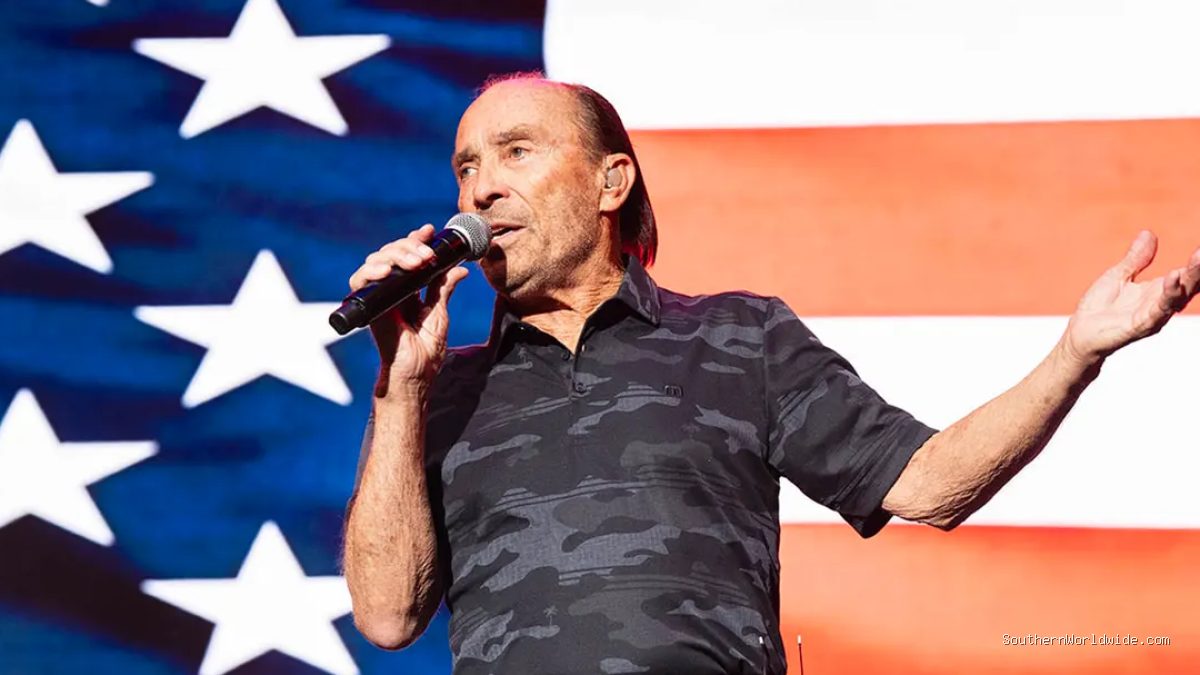
SouthernWorldwide.com – As the United States approaches its 250th anniversary, the iconic song “God Bless the U.S.A.” is set to resonate across diverse communities, from grand firework displays to intimate backyard gatherings.
Lee Greenwood, the artist behind the beloved patriotic anthem, shared that he penned the song over 40 years ago during a demanding period of touring. Since its creation, he has performed it extensively both domestically and internationally for American troops serving far from home, expressing that the song has never lost its significance for him.
However, Greenwood revealed a lesser-known aspect of music performance: the financial disparity faced by artists and musicians. While AM/FM radio stations profit from playing songs like “God Bless the U.S.A.” through advertising revenue, the creators of the music often receive no compensation. This situation stems from a long-standing legal loophole that has persisted for approximately a century.
Greenwood emphasized his appreciation for radio’s role in his career and life, clarifying that his concern is not to penalize local stations or hinder community connections. Instead, he advocates for the largest broadcast companies in America to adopt a principle already embraced by other platforms: when music is used to generate revenue, the musicians responsible for its creation should share in those earnings.
This principle, he argued, aligns with a fundamental American value: fair compensation for work that creates tangible value. Just as a farmer profits from their harvest or a factory worker is paid for their production, the creators of a musical recording should be similarly compensated.
Greenwood highlighted that recordings represent significant value created by the individuals involved. Yet, AM/FM radio has benefited from a “free pass” since broadcasting’s early days. Major broadcasting corporations continue to leverage this advantage, drawing substantial audiences by utilizing others’ work and accumulating billions in advertising revenue, while leaving performers without due compensation.
He characterized this as a government-granted favor to a specific industry, sustained by the millions spent by radio industry lobbyists to prevent legislative fixes in Congress. This practice, he asserted, is not reflective of a free market.
Greenwood clarified that his concern extends beyond his own financial well-being, for which he expressed gratitude. His primary focus is on session players, studio musicians, and backup singers—individuals whose contributions are vital but often go unrecognized. These working individuals, he stated, deserve to be paid for their labor, as they currently receive no compensation from AM/FM radio plays.
The argument that radio provides “free advertising” by driving record sales and concert ticket purchases, while potentially true, does not justify the uncompensated use of recordings. Greenwood pointed out that virtually every other platform that presents his music to listeners, including Spotify, SiriusXM, YouTube, and internet radio, compensates artists for their work. Only traditional AM/FM radio, he noted, plays music without payment.
This loophole has international repercussions as well. Because the United States does not compensate performers for radio plays, a stance shared with countries like Cuba, Iran, and North Korea, other nations withhold royalties rightfully earned by American artists, amounting to hundreds of millions of dollars annually. Furthermore, the European Union is considering withholding an additional $287 million per year from U.S. artists due to this disparity.
A legislative solution is currently under consideration in Congress. The American Music Fairness Act, a bipartisan proposal, aims to rectify this situation by requiring large radio corporations to adhere to standard industry practices. This narrowly tailored bill, championed by Senator Marsha Blackburn and Congressman Darrell Issa, would permit independent, local broadcasters to play music freely for a nominal daily fee, while compelling the largest and most influential radio corporations to finally meet their financial obligations.
The enactment of the American Music Fairness Act would not only ensure that American broadcasters compensate artists but also prompt countries worldwide to release withheld royalties. The EU’s proposed withholding of additional funds would consequently become moot.
Greenwood framed this as an ongoing struggle, recalling Frank Sinatra’s efforts forty years prior to urge Congress to close the radio loophole, an appeal that went unheeded. He expressed his determination to see the initiative started by Sinatra through to completion, and he conveyed optimism due to the current President’s proven ability to achieve legislative goals.
He cited President Trump’s signing of the Music Modernization Act during his first term, which ensured fair compensation for artists in the digital streaming era. Greenwood believes the American Music Fairness Act represents the unfinished aspect of that legislation and that President Trump is uniquely positioned to guide this bill to successful passage, unlike previous administrations.
America, Greenwood concluded, has historically upheld the promise that diligent work should be rewarded. This principle, he suggested, is a significant element of the nation’s 250th-anniversary celebrations. Closing a century-old loophole that has deprived artists of rightful compensation would serve as a fitting tribute to this foundational promise, allowing those who have created the soundtrack of America to finally share in the value their work generates.