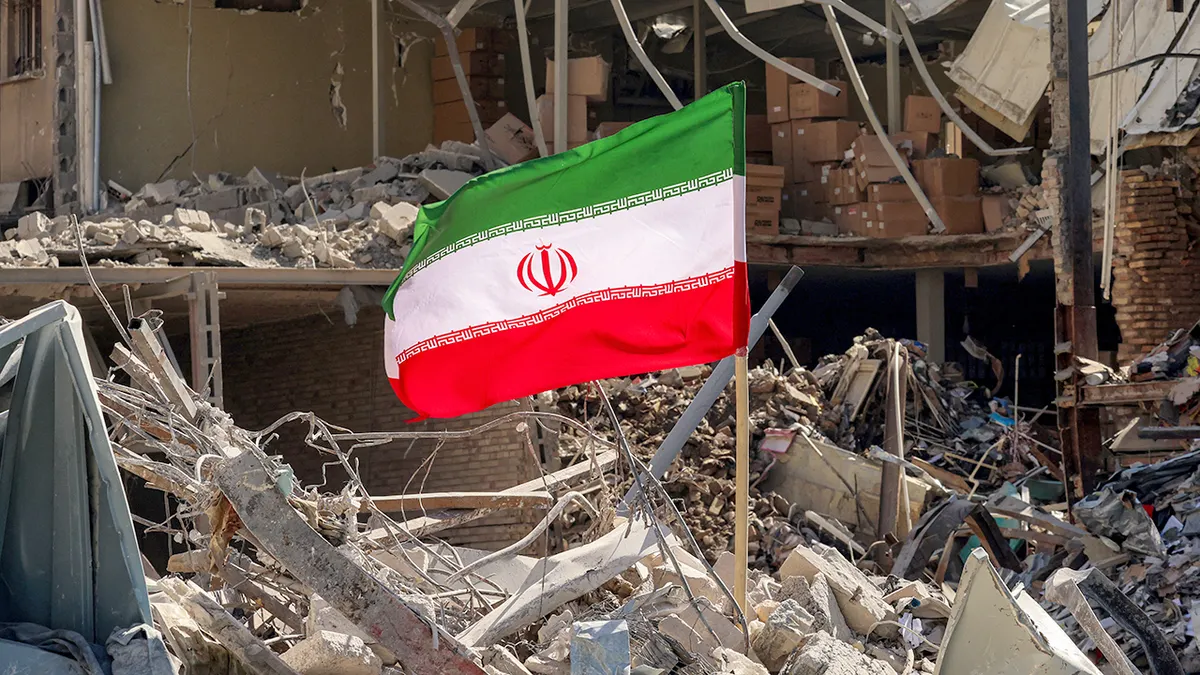
SouthernWorldwide.com – In the initial weeks of the United States’ engagement with the Islamic Republic of Iran, American and allied air power inflicted significant costs on Tehran. While this tactical success was welcomed, the strategic outcome remains unresolved, shaping the current situation.
The United States stands at a critical juncture, facing two distinct paths. One leads to increased military action, risking widespread regional and global catastrophe. The other offers a carefully managed de-escalation, but the existence of such an “off-ramp” is uncertain.
Developments in Beijing
Recently, President Trump concluded a significant summit with Chinese President Xi Jinping in Beijing. Both leaders affirmed the necessity of keeping the Strait of Hormuz open and preventing Iran from acquiring nuclear weapons. However, China did not present a concrete plan to exert pressure on Tehran.
Trump candidly stated in U.S. interviews that he did not seek China’s “help” because “when somebody helps you, they always want something on the other side.”
China’s actions revealed its stance. While Trump was in China, Iranian semi-official news agencies reported that Chinese vessels began transiting the Strait under new Iranian protocols, following requests from China’s foreign minister and ambassador to Iran. This indicated that Beijing was accommodating Tehran rather than pressuring it.
The Significance of These Events
President Trump declared the ceasefire “on life support” on May 10, after rejecting Tehran’s prior proposal as “just unacceptable.” On May 18, Tehran submitted another response through Pakistani mediation, simultaneously asserting that nuclear enrichment rights “cannot be negotiated,” framing enrichment as an existing right. This stance does not suggest a country moving towards a resolution.
The Strait of Hormuz remains a primary point of contention. On May 15, a vessel was seized off the UAE coast, and an Indian-flagged cargo ship sank near Oman following an attack. Iran’s senior vice president declared that the strait “belongs to Iran” and would not be surrendered “at any price.”
The top U.S. commander in the region, Admiral Brad Cooper, informed Congress that Iran’s military capabilities have been “dramatically degraded.” However, he noted that Tehran’s leaders are disrupting global shipping through rhetoric alone, threats that are “clearly heard by the merchant industry and the insurance industry.” He added that the U.S. possesses the capability to permanently reopen the strait but deferred the decision to policymakers.
The current situation has resulted in a dual blockade: the U.S. Navy blockading Iranian ports since April 13, and Iran blockading the Gulf. Neither side has shown any indication of backing down.
Limitations of Military Force
The argument for escalating military action holds emotional appeal. If Iran refuses to yield on nuclear enrichment or maritime control, further strikes might appear to be the only remaining option. However, historical precedent suggests otherwise.
Bombarding Iran’s electrical grid, major bridges, or civilian infrastructure could yield dramatic visuals but would not compel capitulation. Iran possesses approximately 460 kilograms of uranium enriched to 60 percent, putting them weeks away from weapons-grade material. Satellite imagery from March showed no new damage to the facility’s tunnels at Natanz following strikes that Trump had described as “obliterating” Iran’s nuclear program. Kinetic pressure can delay the nuclear issue but does not resolve it.
Wider bombardment could prompt Tehran to target desalination plants, power grids, and civilian infrastructure across Gulf states. Iran has already demonstrated a willingness to strike regionally, including seizing tankers, sinking a cargo vessel, and firing cruise missiles at commercial shipping throughout May. Escalation that leads to a complete closure of the Strait of Hormuz risks a global recession, not merely a regional disruption.
A Recurring Pattern
Iran and its proxies have endured significant strikes in the past and continued their resistance. Following major blows, they have reasserted maritime harassment, maintained proxy pressure, and preserved regime cohesion. Tactical successes did not translate into a strategic defeat for Tehran, and there is little reason to anticipate a different outcome now. Widespread bombardment is more likely to create a refugee crisis than foster political moderation. Regimes facing existential threats tend to dig in, rather than capitulate.
The Illusion of an Off-Ramp
Any agreement that Washington can realistically offer would likely resemble the 2015 Joint Comprehensive Plan of Action (JCPOA), involving capped enrichment levels, reduced stockpiles, international verification, and sanctions relief. The JCPOA limited enrichment to 3.67 percent and reduced Iran’s uranium stockpile from 10,000 kilograms to three hundred kilograms. Trump famously called that deal “the worst deal ever” and is not inclined to return to it. Furthermore, even those generous terms proved unsustainable. Iran’s current position is more hardened than it was in 2015.
Tehran’s foreign ministry has declared that nuclear enrichment is “a right that already exists” and is not subject to negotiation. This position has persisted through the JCPOA years, two military campaigns, and the death of its supreme leader. Trump’s demand for zero enrichment is something Iran will not accept, creating a gap that diplomacy cannot bridge. An agreement rejected by Iran is effectively no agreement. Conversely, an agreement signed by Iran, by definition, preserves its enrichment program, which contradicts the stated objectives of the administration.
The mathematical reality is stark. Iran’s 460 kilograms of uranium enriched to 60 percent will not be voluntarily relinquished. If the administration’s primary objective is a non-nuclear Iran, and Tehran refuses to sign any agreement that dismantles its enrichment program, then at some point, the United States may be compelled to forcibly remove the threat. There is no alternative solution.
Considerations for the Administration
Domestic politics cannot be overlooked. High energy prices and an unresolved conflict directly impact voter sentiment, especially with midterm elections approaching. Reuters analysts have warned that prolonging the conflict risks leaving the president in a weaker position than before the war began, draining political capital without achieving peace. A broader war that disrupts energy markets and threatens a global recession would be a far worse outcome than a negotiated framework for the Strait. However, the nuclear issue will not be resolved by a framework that Tehran refuses to endorse.
The True Crossroads
The United States can and should pursue de-escalation regarding the Strait of Hormuz. This is an achievable goal and is worth the diplomatic effort. However, the nuclear question presents a more complex challenge. As Clausewitz observed, war is an instrument of policy, not a substitute for it. The policy objective here is a non-nuclear Iran. The current instrument being used has not achieved this, nor will the available diplomatic options.
Baca juga di sini: Belichick: Brady Feud Was Fiction, Praises Quarterback's Leadership
No regime that has endured 39 days of American and Israeli strikes, witnessed the death of its supreme leader, and still declared enrichment non-negotiable is likely to surrender that leverage at a negotiation table in Islamabad. The true choice is not between escalation and diplomacy. It is this: either accept a nuclear-capable Iran as the permanent outcome of this conflict or accept the cost of physically eliminating the threat. Washington should make this decision deliberately, rather than by default when the ceasefire ultimately collapses.